Inside the making of FIPP Congress 2026: What does a media business need to survive the next decade?
As planning gets underway for Congress 2026 in Madrid, Cobus Heyl on fundamentals, the Trust Economy, and why the world’s turbulence belongs on the main stage.
The theme this year is “FIPP 101: The Fundamentals of Media’s Future.” Where did that idea come from?
Last year was FIPP’s centenary. A milestone like that invited a level of reflection, even as we looked ahead. What followed was a simple question: what actually matters now and into the future in a world of constant, rapid change?
The idea for “FIPP 101” came from CEO Alastair Lewis. For me, “101” is a nod to fundamentals. Not basics – fundamentals. The things that determine whether a media business survives and grows: trust, identity, audience ownership, efficiency, the ability to monetise what you’ve built. If I have to summarise it, I’d say it’s about how you develop “durability” in a chaotic world.
The industry isn’t just dealing with continued and increasing technological and consumer behavioural disruption. It’s operating in a world reshaped by geopolitics, where the assumptions of the last decade and more no longer hold. You can’t separate media strategy from what’s happening in Washington, in the Middle East, or wherever in trade and other relationships. Publishers don’t operate in a vacuum. The programme must take that seriously.
Last year was FIPP’s centenary. How do you follow on from that success?
What a centenary celebration that was. But that was then, and this is now. What I carry forward from one year to the next is the knowledge that FIPP is a genuinely global network of people who care deeply about the future of specialist media. Their businesses continue from one year to the next, and they come together once a year from 40+ countries to share, learn and re-connect.
The programme will be built for decision-makers who want to leave Madrid with something they can actually use as we head into 2027.
How do you start building a Congress programme?
It starts with what’s keeping senior media leaders up at night – the C-suite and SVP level, business-side and editorial leaders with commercial accountability. Not only what’s being written about, but what’s being wrestled with.
From there, I work backwards. What’s the underlying tension? Who’s already done something interesting in response to it? Can we get them on a stage in a way that’s useful rather than promotional?
The 2026 programme is built around some hard realities: AI is still reshaping everything from workflows to distribution to the nature of content and monetisation itself. Geopolitical instability is rewriting the context in which media businesses operate. And trust has become a critical strategic asset – not just a brand value you put in a mission statement. We’re not just in an Attention Economy. We’re in a Trust Economy. Publishers must take that opportunity.
Of course, we’re still about six months out from Congress, and much may still happen in the world. So part of planning the programme is keeping a level of flexibility to deal with any late developments that we absolutely have to include in conversations in Madrid.
What’s coming into sharpest focus as the programme takes shape?
The trust conversation is coming into real, sharp focus. We talked a lot about the Attention Economy, and rightly so. But I think the more fundamental shift right now is that we’re also in a Trust Economy. Misinformation, AI-generated content, platform algorithms optimised for engagement over accuracy – it’s only getting noisier. A complete free-for-all where it’s hard to tell what’s real and what’s not.
Governments are already responding. Australia has banned social media for children. The UK is possibly moving the same way. A US court recently found Meta and YouTube liable for algorithmic harm. That’s not background noise. That’s a structural shift in how the media ecosystem gets governed. And specialist publishers with genuine editorial standards are sitting in a strong position as it plays out. That story deserves a big stage, and it’s getting one. And I think the conversation is about more than just business strategy, it’s actually about the good for society.
How will the Congress programme reflect all this?
We’ll run two stages at Congress, the FIPP stage for the strategic big picture conversations and the 101 stages for practical case studies.
What’s also striking is the mood, and we’ll cover that on the FIPP stage. The world is genuinely turbulent right now and you might expect that to produce paralysis. It mustn’t. The main stage will tackle the bigger picture head on: Geopolitics, AI and its implications, where value is being created and destroyed, the boardroom decisions that follow from all of that. Those are not comfortable conversations, but they’re necessary ones.
On the 101 Stage, the case studies already submitted for consideration are truly impressive. These are people who’ve tried things, learned hard lessons, and are willing to share both. The standard we’re holding that stage to is to showcase real solutions, not just talk. The early signs are it’s going to deliver – with highly interesting case studies from different markets, different-sized players, and different types of specialist publisher products.

What do you want people to feel when they leave Madrid?
That they’re not facing disruption alone.
The structural shifts in media are real and they’re hard. AI, geopolitics, the trust deficit, the battle for attention, none of it is going away. But there are smart people all over the world working through the same problems and making real progress. Congress is where they find those people.
If they leave Madrid with one partnership they wouldn’t otherwise have formed, one idea you can put to work, one proof point that gives them more confidence in a decision you’ve been sitting on, or even just increased energy and inspiration – that’s Congress doing its job.
Cobus Heyl is Founder of That Coalition, which leads the programming for FIPP Congress.
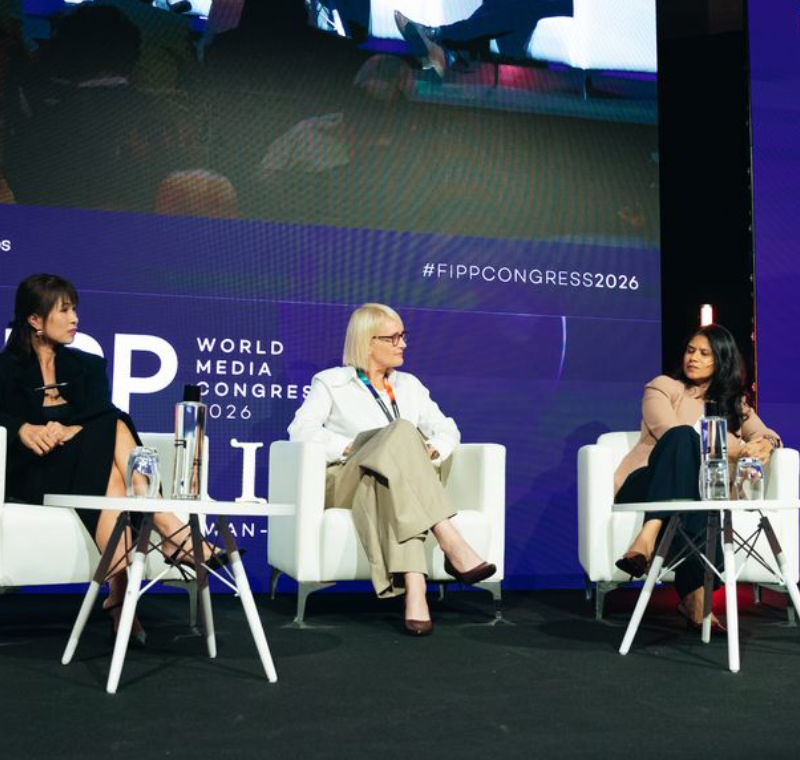
The FIPP World Media Congress 2026 takes place in Madrid, 13-15 October. Join us in Madrid – find out more and register at fippcongress.com.
FIPP Congress 2026 sponsors