
New FIPP report highlights the enduring impact of print advertising
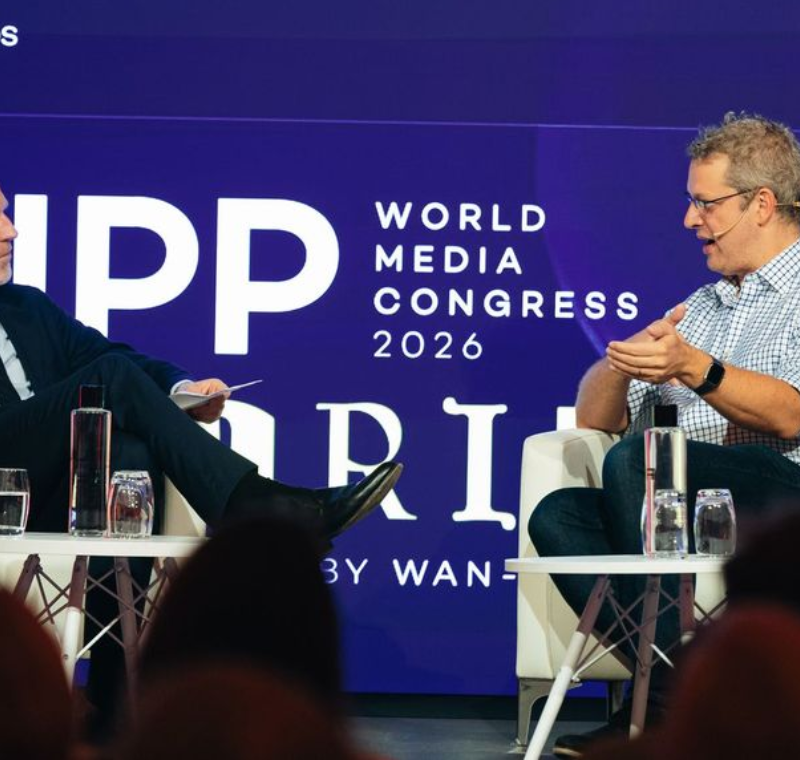
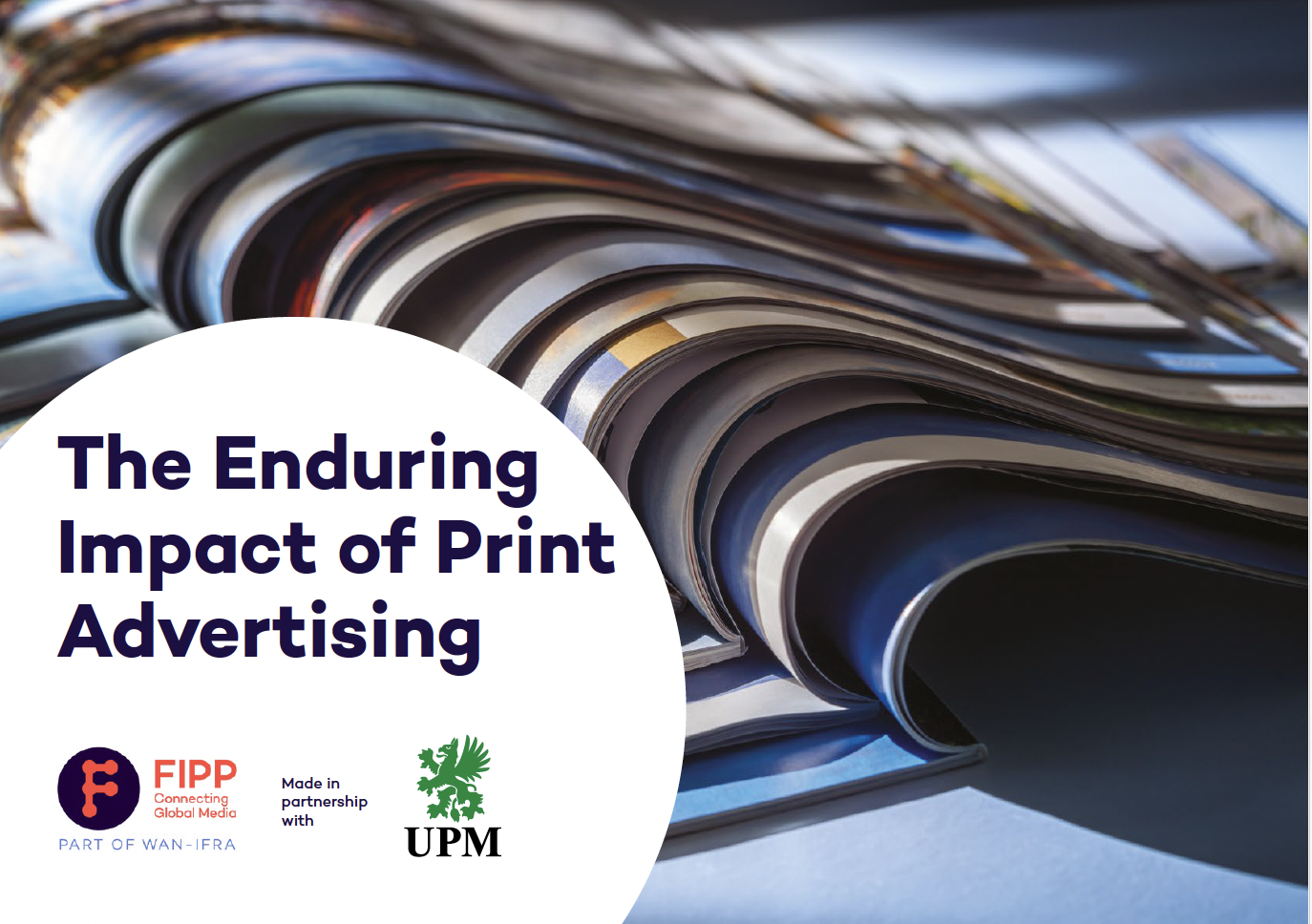
There has been a noticeable shift in the way the industry is talking about print. As conversations change from damage limitation to genuine excitement about the potential of paper, FIPP, in partnership with UPM, today launched a report on the impact of print advertising at the FIPP World Media Congress in Madrid.
Providing essential new industry data to help publishers sell print advertising in a competitive media landscape, The Enduring Impact of Print Advertising report reveals the high levels of trust that there are in print; how it provides a safe space in a marketing landscape; the long-term return on investment paper provides; and exactly what advertisers need from print magazine publishers.
The report is backed by the FIPP Global Print Impact Study, with two organisations, RAM and Salomo, carrying out extensive research on behalf of FIPP – surveying magazine readers, non-readers and advertising professionals.
The study was launched at the FIPP World Media Congress by Kati Murto, Vice President, Brand, Marketing, Communications and Sustainability at UPM; Publishing Director of Flashes & Flames and MediaVoices Peter Houston, who wrote the report; and customer strategy, data and insight specialist Amanda Wigginton, the consultant who led the research.
“This report is absolute gold dust for anyone in the business of media and looking to demonstrate the lasting appeal and effectiveness of print as a medium,” said FIPP CEO Alastair Lewis.
“Much has changed and it may no longer be a mass medium, but the question for so many publishers has moved from ‘how do we manage the decline?’ to something far more energising: ‘what if?
“I am incredibly grateful to FIPP’s wonderful strategic partners, UPM, for their support in making this report happen and to the brilliant Amanda Wiggington for putting it together.
“I truly believe this report will help many of our members to explore new opportunities in print and deliver real growth for their businesses, and that is exactly what WAN-IFRA and FIPP are all about.”
Kati Murto added: “It’s exciting to see the results backing our long-term belief in print as a unique platform for consumers and advertisers alike. The results confirm that the ROI of print is high and that the trusted and loved environment that magazines offer, is a unique place to engage with consumers in a space where they feel happy and are willing to be surrounded by relevant advertising.”
“It’s all about the context where brands want to be visible. Magazines provide an effective and brand-safe environment for reaching consumers.”
“This study demostrates our strong and long-standing collaboration with FIPP, where we look to bring value to the publishing industry”
A matter of trust
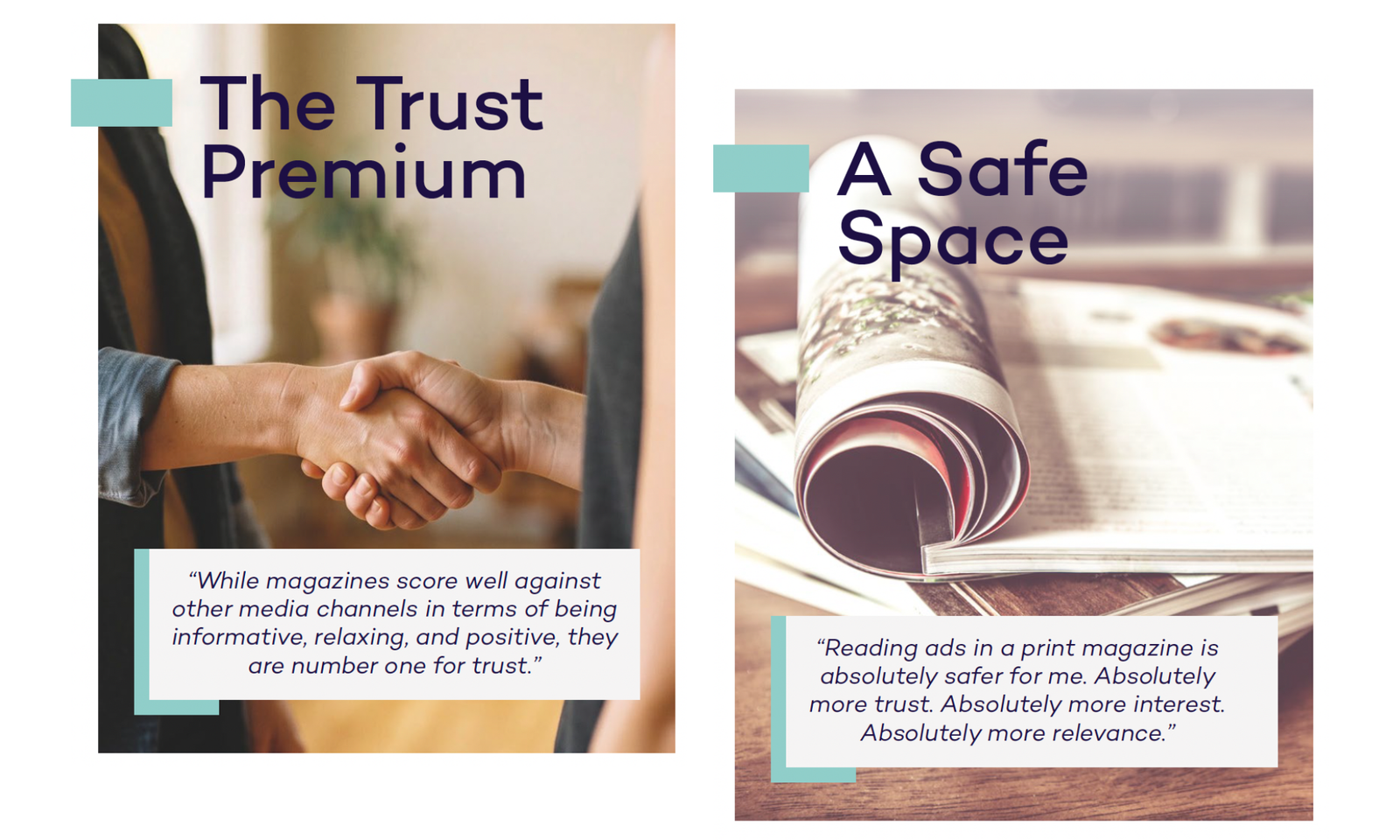
While trust in media organisations has eroded in recent times, magazine advertising is bucking the trend. Expert editorial, careful curation and finely tuned physicality means magazines are seen as a safe haven for advertisers in an age of disinformation and programmatic risk.
The Enduring Impact of Print Advertising shows magazines are the number one most trusted media type for advertising: 50% of the total sample trust ads for products and services and 52% agree magazine advertising is trustworthy outright.
Social media trails at 33% on the trustworthiness measure, and influencers sit at the bottom of the table at 28%. Only 14% of the study say they distrust magazine advertising.
Print’s place in the real world has become its biggest competitive advantage in
the age of AI. The survey shows that 76% of magazine readers appreciate that the content in print magazines has been edited by experts, with 58% saying they trust what they read.
In terms of advertising, 56% agree that ads in magazines feel vetted by the editorial team around them.
In what is the clearest indication that consumers prefer humans in charge, 66% of magazine readers agree that they trust their favourite magazine brand more because it’s been created by humans rather than generated by AI.
In world where we are stuck to screens for large parts of the day, the predictable, pleasure of turning pages is a big draw for magazine readers, with 76% respondents saying they enjoy the physical act of reading.
Two thirds (66%) of regular magazine readers agree that reading print magazines leaves them feeling good about themselves, rather than drained by screen time. More than 60% of readers say they use magazines to actively reduce their screen time.
With consumers feeling so strongly about print magazines, building brand trust with premium magazines is no longer just a reputation-management strategy for advertisers. Trust is now recognised as a hard asset with a direct, measurable impact on advertising ROI.
A safe space
In a marketing landscape increasingly controlled by algorithms and bombarded by bots, magazines offer brands a safe space amid the misinformation storm.
Ofcom’s research shows that 56% of social media feel they have seen false or misleading news content online in the past year.
Online advertising is increasingly seen as one of the culprits. According to an April 2026 report in SQ Magazine, Intrusive ads and privacy concerns have pushed more than 900 million users to install ad blocking software, costing publishers an estimated $54 billion annually.
In contrast to people who block advertising online or digital service subscribers that pay to avoid ads, the report shows a very positive impression of magazine advertising – 60% of readers see ads as part of the magazine experience; 46% would miss the ads if they were not there and 46% say the ads they see are relevant to them.
More than half (54%) of magazine readers said they were more likely to buy an unknown brand if it’s featured in a print magazine rather than a social media post.
A special bond
The Enduring Impact of Print Advertising dispels the myth that young people spend all their time on mobile phones and don’t read magazines. The study shows that, set against a digital backdrop defined by notification fatigue and infinite scroll, print’s finite, physical form is a welcome antidote to digital overwhelm.
The survey reveals that 41% of the youngest respondents (18-34) are reading magazines more nowadays. Across every age group, almost 30% of survey respondents say they are reading print magazines more often nowadays, climbing to 43% among regular magazine readers.
Of those surveyed, 55% say they enjoy the reading experience, while 46% want time out for themselves.
The study shows 62% of readers feel a close personal connection to their favourite magazine brand and its values. Almost two thirds (64%) agree that print gives them a more meaningful connection to their community than quick digital updates.
Readers don’t subscribe to just one niche, but are engaging with food, culture, wellbeing and finance content inside the same reading habit.
The central motivations for magazine readers’ broad range of interests are, first and foremost, a desire to learn (42%), followed by a hunger for ideas and inspiration (38%). This is equal with wanting to relax and unwind (38%) and the pull of pure entertainment (33%).
More than half (54%) of magazine readers say they are willing to pay for a subscription for quality content from their favourite magazine brand, while 69% view their magazine as a valuable investment of their own time and attention, and 77% agree that time spent reading magazines is time well spent.
Importantly for advertisers, 72% of readers pay more attention to ads when they directly relate to their passions, while 63% of regular readers say magazine ads make them happy compared with 39% for influencer ads.
A good investment
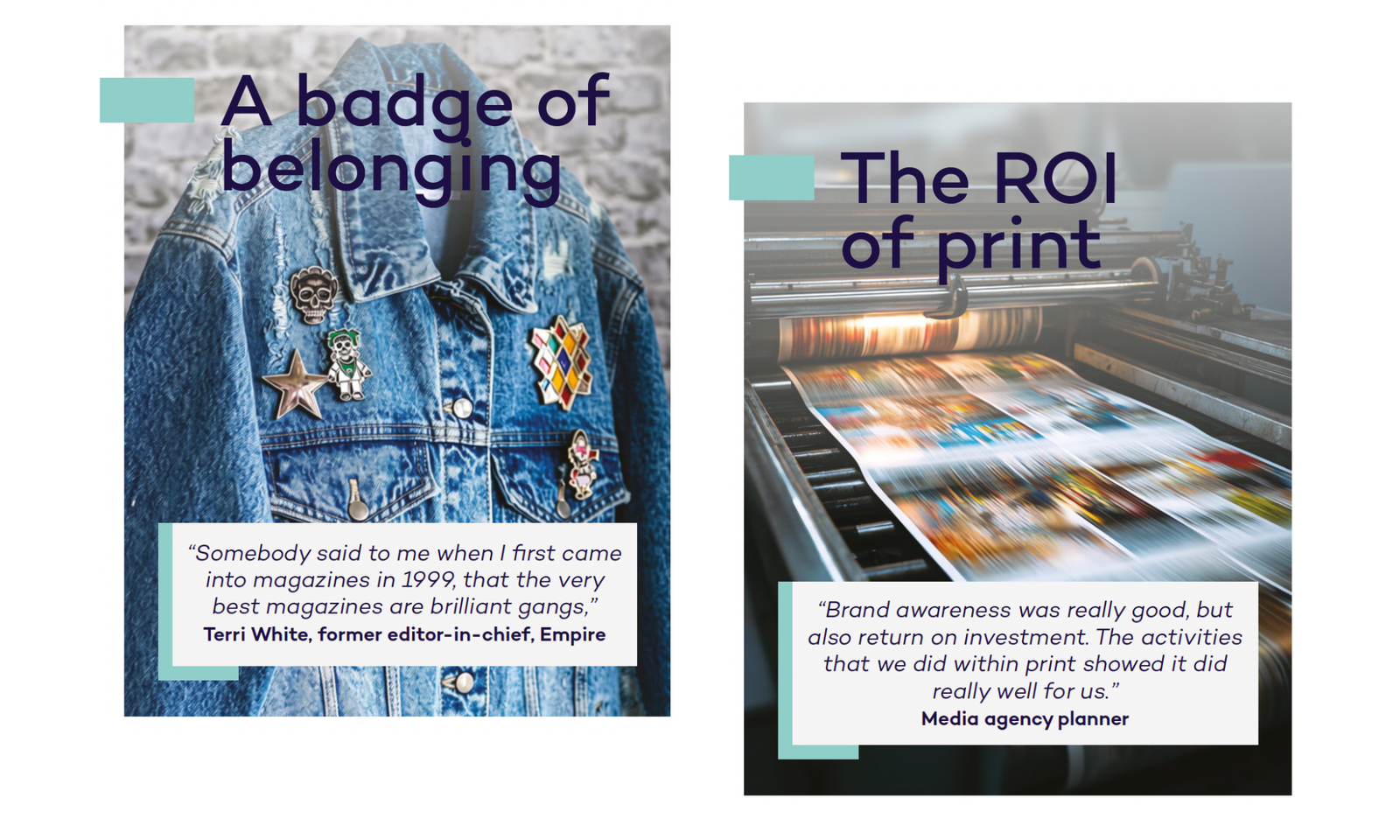
Perhaps the most important number to come out of the report is the one on the long-term ROI of print advertising: print advertising delivers a £6.36 return for every £1 spent.
The problem for magazine publishers is the perception that a declining channel must be a declining performer, that fewer titles and lower circulation figures mean weaker advertising returns.
However, the RAMetrics five-year analysis of more than 3,500 campaigns show all key metrics are stable, while overall impact of moving people through the purchase journey is significant.
The study reveals that 51% of people give magazines their full attention when engaging with them, second only to television’s 52%. If the sample is narrowed just to magazine readers, the number climbs to 57%, rising again to 66% among regular readers.
Of readers surveyed, 64% agree that they often read the same magazine several times, while 41% of readers say they’re unlikely to do something else while reading a magazine, second only to newspapers at 44%, and well ahead of screen-based formats built for the split-tab, second-screen habit.
And nothing beats the emotional punch packed by print. In the FIPP Global Print Impact Study, 45% of respondents agree that magazine ads make them feel happy, a figure that jumps to 63% among regular magazine readers.
Only 15% of print readers take no action at all after seeing a magazine ad. The remaining group take some form of action: 34% search for more information; 39% discover a new product; 27% recommend the product to a friend and 30% go on to buy.
As part of the study, marketing professionals managing diverse campaigns across a range of industries were asked what they need from print magazine publishers to help them secure increased investment.
Continuing to provide unique access to specialised, hard-to-reach audiences that can be difficult to engage through digital channels; integrating partnership opportunities to get the full print effect; making brand safety a key differentiator; developing print as a gateway to a multi-channel world; and measuring everything to reinforce ROI in every way you can are some of the invaluable feedback received from social media marketers and media planners.
A print version of The Enduring Impact of Print Advertising is available to FIPP World Media Congress delegates for free. You can download here the extended digital version.