
Don’t go after somebody else’s community: what the global south told FIPP Congress
Publishers from South Africa, India and Vietnam told the FIPP World Media Congress in Madrid that the audiences the industry calls “next” are already reading, on phones, on TikTok and on WhatsApp. Time’s Mark Howard warned that those same platforms are turning into AI gateways.
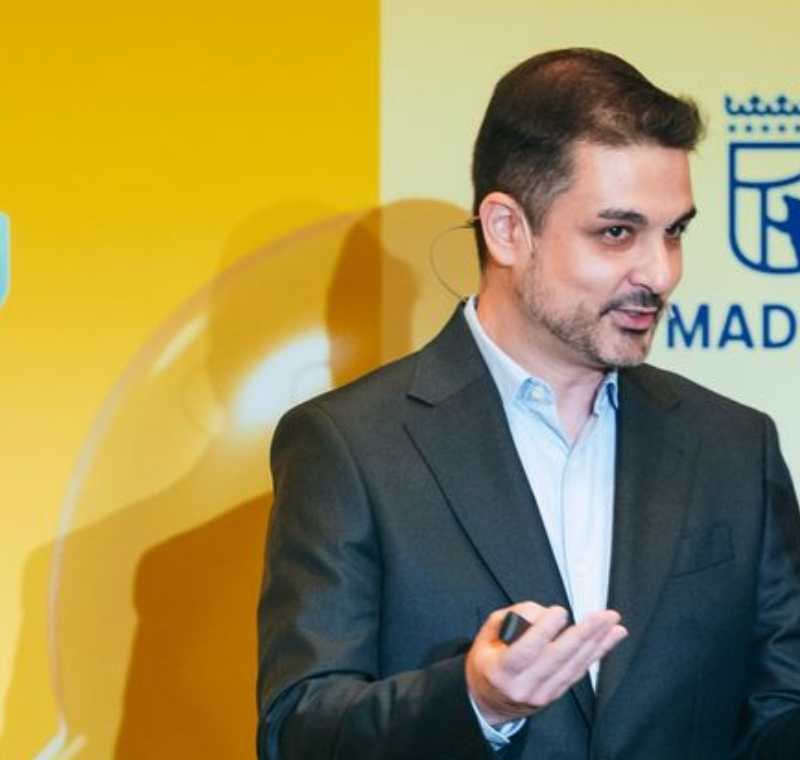
Suprio Guha Thakurta opened the session with a correction to its own title. The panel was called “The Next Billion Readers”, and The Economist’s former Chief Strategy Officer wanted to assure the room that the global south had been reading for quite a while. The question he put to his four guests was whether these markets need fundamentally different business models. The answer was yes, and the models being built in Cape Town, Kerala and Ho Chi Minh City looked further along than most in New York and London.
Inequality, language and TikTok set the terms
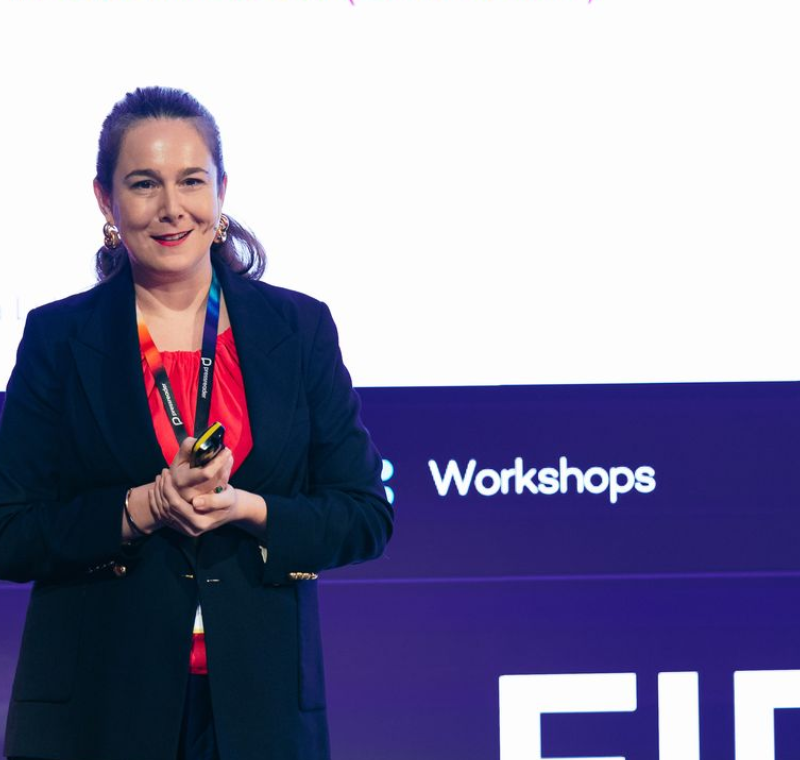
Hami Tran, Publisher of Marie Claire Vietnam, began with her British mother-in-law, who still pictures a country recovering from the war. Vietnam’s economy is growing at about 8% a year, its population is young and its commercial centre is Ho Chi Minh City, not the capital. “Everything social first,” she said. When the government wants to say something to its citizens, it says it on TikTok. Print is declining, yet young readers tell her they “miss print” and rush to buy special editions.
Minette Ferreira, Chief Executive of Media24, called South Africa an early warning of what happens when global media disruption meets extreme inequality. A small slice of the population accounts for around 80% of household income and consumer spend; most households live on less than R10,000, about €500, a month. Ferreira put Meta and Google’s share of digital advertising at 97%. “That leaves 3% for us as publishers. That is not a business.”
Mariam M Mathew, Chief Executive of Manorama Online, part of a 138-year-old newspaper group in Kerala, dismissed the idea of a single Indian digital consumer. Each state has its language, and each language its nuances. “Language by itself is not a business strategy,” she said; a relationship with a community is.
Three product stacks built around something other than news
Each has turned that diagnosis into a product stack. Media24 launched News24 in 1998 as a free, digital-first service because, in a young democracy, “that right to know is really important”. News24 went behind a paywall in August 2020; the Afrikaans Netwerk24 serves a smaller audience willing to pay. For the mass market it built Daily Sun, a free tabloid launched in the early 2000s for township readers whom a distribution network designed around white suburbs had never reached. It became the country’s biggest daily. Then its readers went mobile, skipping the desktop, and print circulation collapsed. Media24 is rebuilding the brand around that mobile audience, including a WhatsApp community of about 600,000. “Whether we’re going to crack it is an open question,” Ferreira said.
Manorama’s answer is to accompany readers through life, from children’s magazines to literary titles, and to be useful between news cycles. “If you’re just coming to us for the news, it’s not going to work,” Mathew said. Readers will not pay for news; they pay for a matrimonial service launched 20 years ago, for property listings, ticketing and education products.
Marie Claire Vietnam has moved furthest from the traditional publisher, using almost none of the brand’s international content, shooting its own covers and telling Vietnamese stories. A client hands it a product; it works out how a talent should speak about it, runs the conversation across its social channels and builds events around it. “We’re not just a media company, we’re like an agency,” Tran said, with one advantage over agencies: it owns the channels. Events and client work bring in close to half its revenue.
Branded content and events are carrying the numbers
Ferreira said branded content has risen this financial year to about half of Media24’s digital advertising revenue. “We can’t deliver on reach, but we can deliver on quality time spent.” Events scrapped in March 2020 are back, built around niches: workshops for farmers and for family businesses, which make up most of South African commerce. Mathew said what Manorama sells is a relationship. Direct sales make up more than half of its digital advertising, and its events are intellectual property “which cannot be replicated”.
Time wants in, and the pipes are turning into AI
Mark Howard, Chief Operating Officer of Time, was the one publisher on the panel trying to get into these markets from outside. He announced on the same stage a year ago that the 103-year-old brand would expand through licensing partners producing original journalism in their own languages. This week’s conversations in Madrid, he said, were about new partners in the global south; Latin America is next. A partnership with Reliance will produce the first Time100 Next India list, with a gala in Mumbai in December. There is no playbook, he said, and one would not work. “The way you know your market and how to connect with audiences is hugely valuable to us.”
The next billion will not arrive through the mechanisms the industry built its careers on, he warned; they will come through the channels Tran and Ferreira had just described. “It’s TikTok, it’s WhatsApp.” One of the most frequent AI crawlers on Time’s site is TikTok’s, and TikTok has just announced an AI-driven experience inside its app; WhatsApp belongs to Meta, which has launched Meta AI. AI, he said, “is going to be the gateway to these next consumers”, and the most important new audience has already arrived: the agents reading publishers’ sites. Subscriptions, advertising and commerce remain the only three business models; the task for the coming year is making them work on the agentic web.
Print is where the panel converged. Tran’s readers want it; Mathew’s literature festival sells books to the young; Howard’s partners want the red border, because “people want to be on the cover of a magazine”. It makes the least money, he said, and the rest of the business gets built on it.
Asked for one lesson the West might take from them, Mathew needed two sentences. “Be distinct for your own communities. Don’t go after somebody else’s community.” Howard had already supplied the catch. Those communities gather on TikTok and WhatsApp, and the companies that own those channels are now putting AI between the publisher and the reader.
John Rahim is Editor of The Media Stack.