
Fashion through a new filter
Could Vogue’s AR collab with Snapchat help democratise fashion?
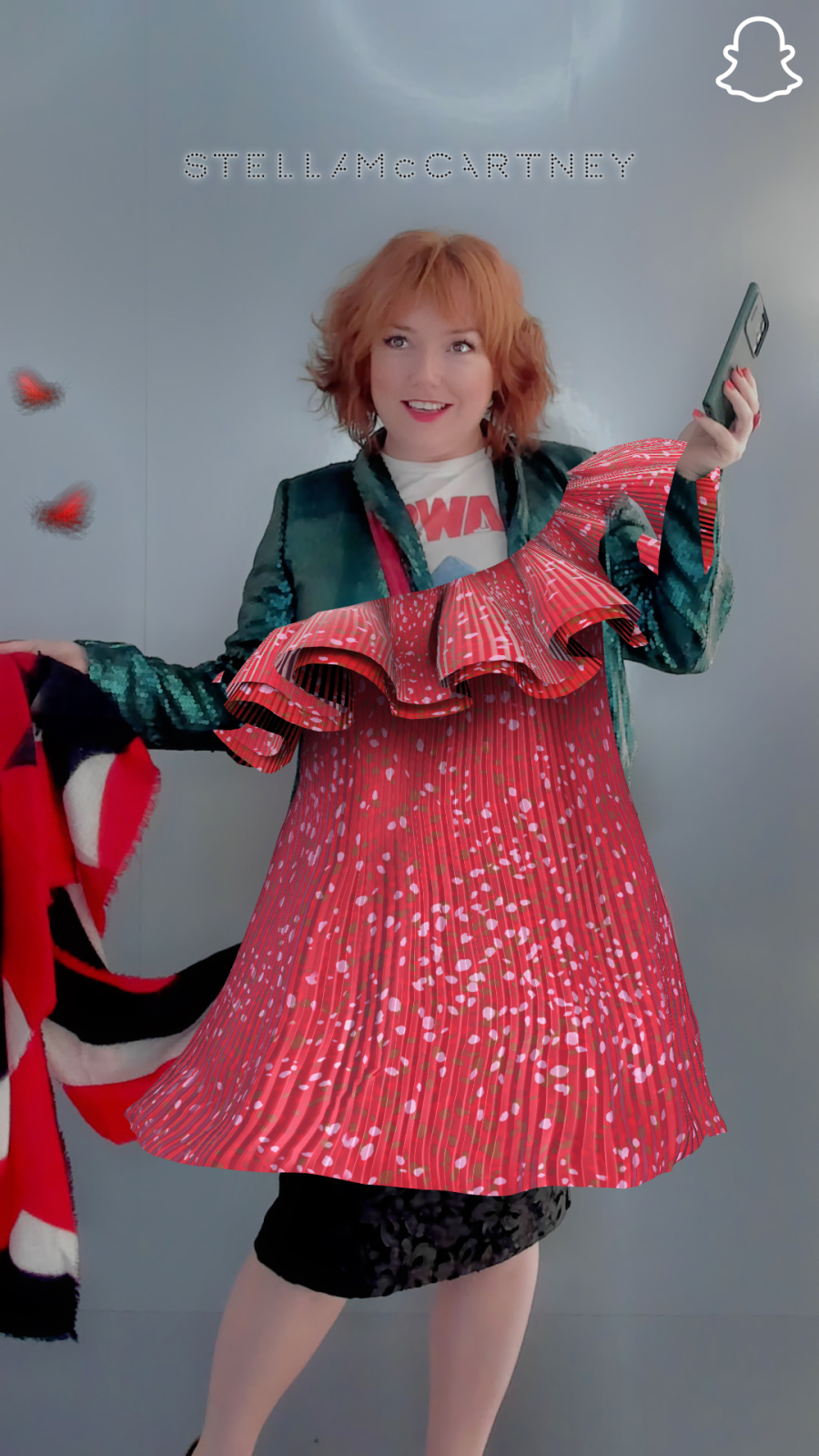
On Friday I tried on a dress by Stella McCartney. I’d never tried on a designer dress before. And I had certainly never tried on a virtual designer dress.
The phrase “a whole new world’ is perhaps overused these days, but it’s a term I feel was justified when walking into Vogue X Snapchat: Redefining the Body. This ground-breaking exhibition – a collaboration between Vogue UK and technology company Snap Inc – explores what role augmented reality (AR) could play in the future of fashion. It has innovation at its very heart: it’s where fashion meets digital and takes anyone with a smartphone along for the ride. And it demonstrates the potential for changing the way we interact with design and designers, our relationship with print media – even our own bodies.
Fashion fans like myself, who are unlikely to find a seat on the front row, will no doubt find the experience particularly glorious. With this exhibition, Vogue Editor Edward Enninful positions fashion design – and the Vogue brand – in a space where tradition and history collide with artistic expression, ecology, technology and invention.
The exhibition’s appeal is summarised neatly by Nina Joyce, VP of Communications UK, Condé Nast. “AR is more exciting than VR – the latter takes you out of your world, where the former expands your existing world,” she said. “We want people to be struck by the potential of AR in the fashion space, and visualise how it can drive the industry forward.” She describes Enninful, who curated the exhibition, as “a true innovator”. “It was he who saw the potential for Vogue – already a brand that pushes boundaries – to collaborate with Snap, who are innovators in the digital space.”
Joyce is no stranger to innovation herself. With successful stints on Refinery29 and Vice, she also oversaw the transformation of I-D to digital-first. (When I say her career is “cool AF”, she laughingly agrees.) Which boundaries is she and the Vogue team hoping to push beyond with this exhibition?
“We think the combination of high fashion and accessible technology will help to make fashion more democratic. It can put people in contact with designers like never before.” It is this idea of ‘democracy’ in fashion that makes the exhibition so remarkable.
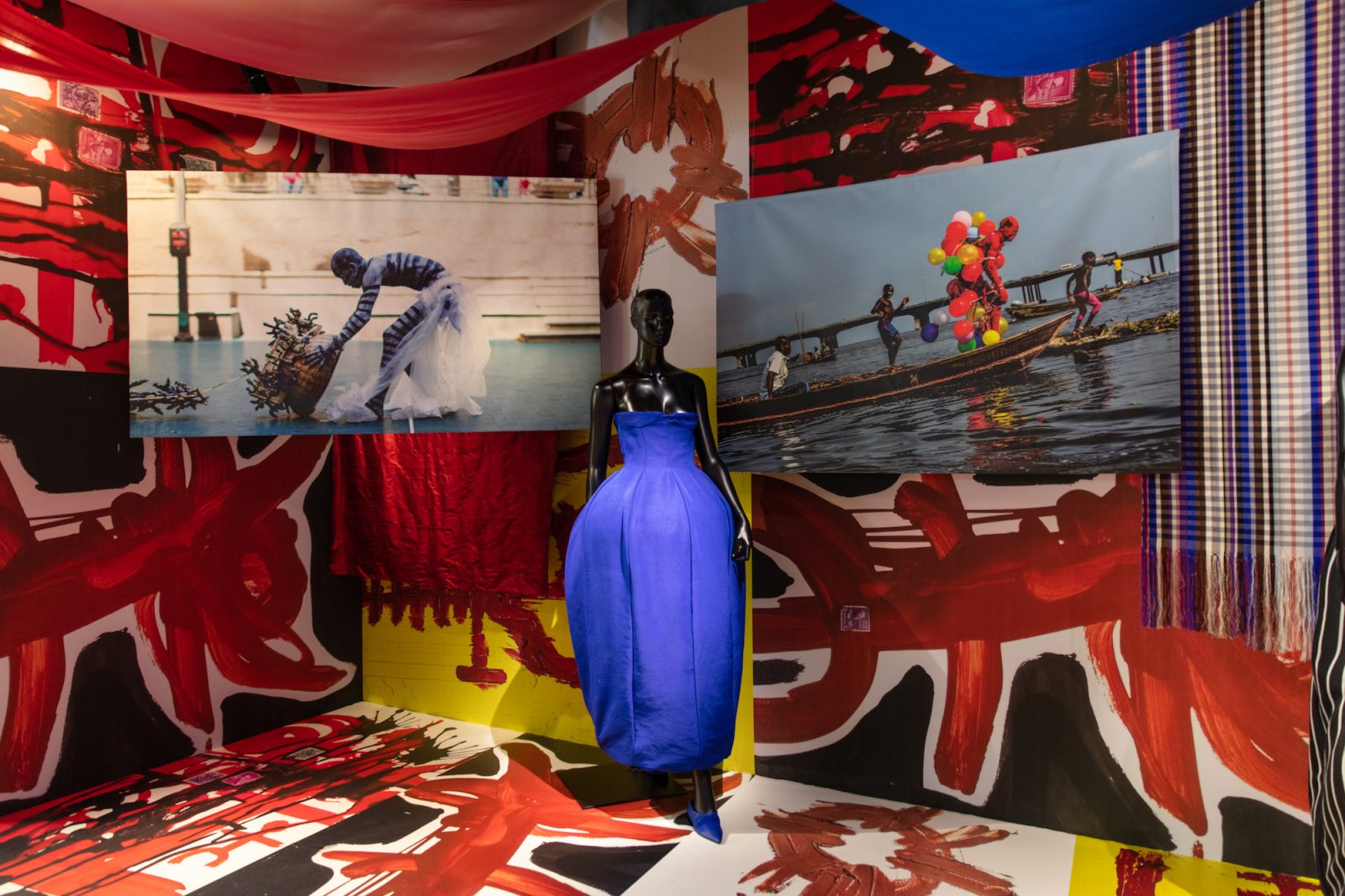
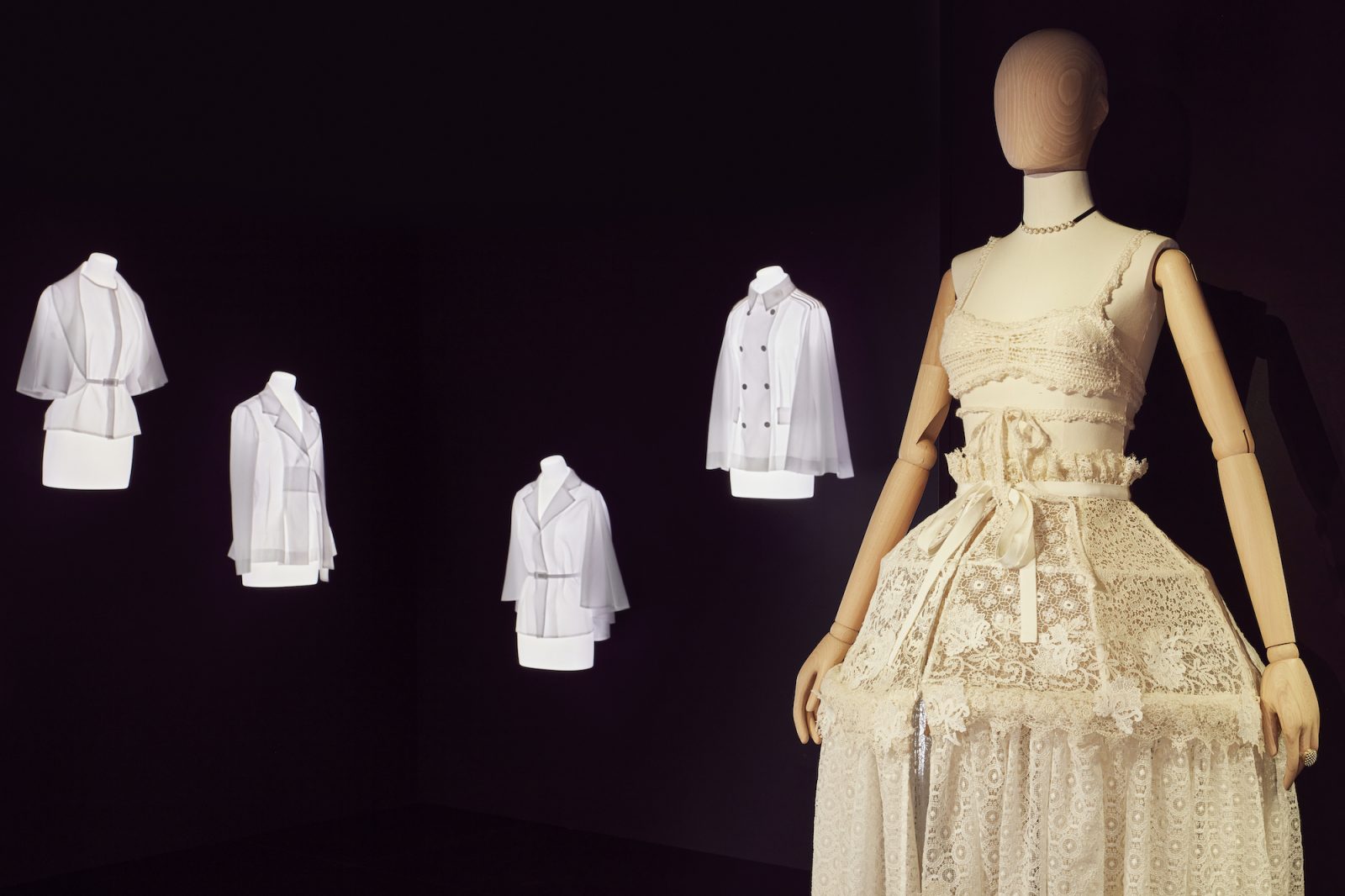
West African designer Kenneth Ize’s stiff handwoven gowns stand against a backdrop of paintings by Nigerian multimedia artist Jelili Atiku, while a Snapchat filter allows you to scroll through a collection of Atiku’s works and their backstories. In stark contrast were the tailored white pieces from Dior’s S/S 2023 collection which were lit from within, and which, when combined with the camera-imposed old Parisian street map, had a haunting, nostalgic quality.
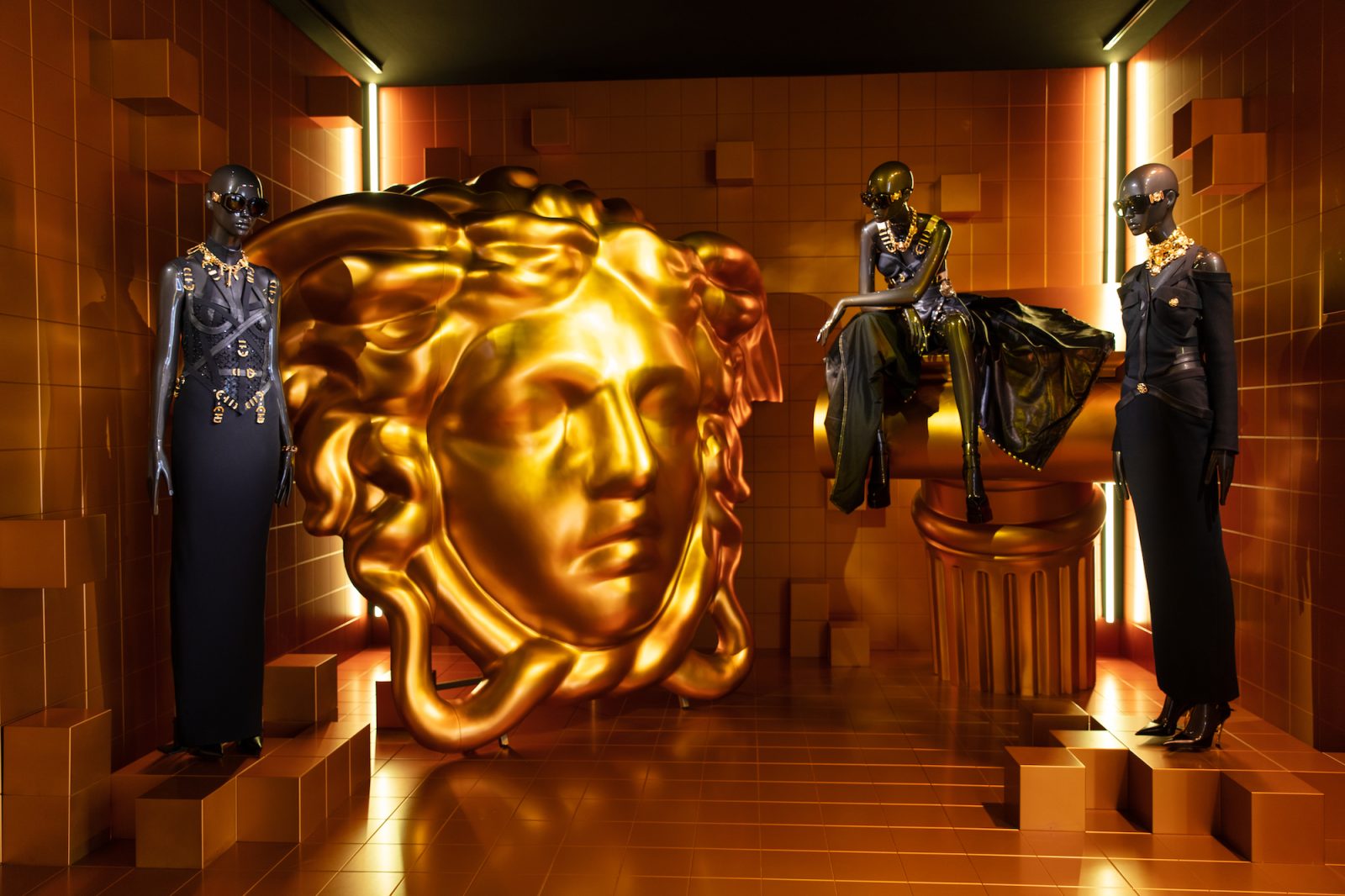
Ecology met excess as the Stella McCartney and Versace rooms stood side by side. McCartney has been committed to sustainability since the launch of her eponymous brand over 20 years ago, and this was exemplified by her delicately pleated dresses, made from mushrooms and showcased in a brightly lit and trippy space. The subsequent journey into Medusa’s lair – where iconic 90s Versace pieces featuring gold chains and buckles stood alongside a huge gorgon head with writhing gold snakes – was delightfully jarring in comparison.
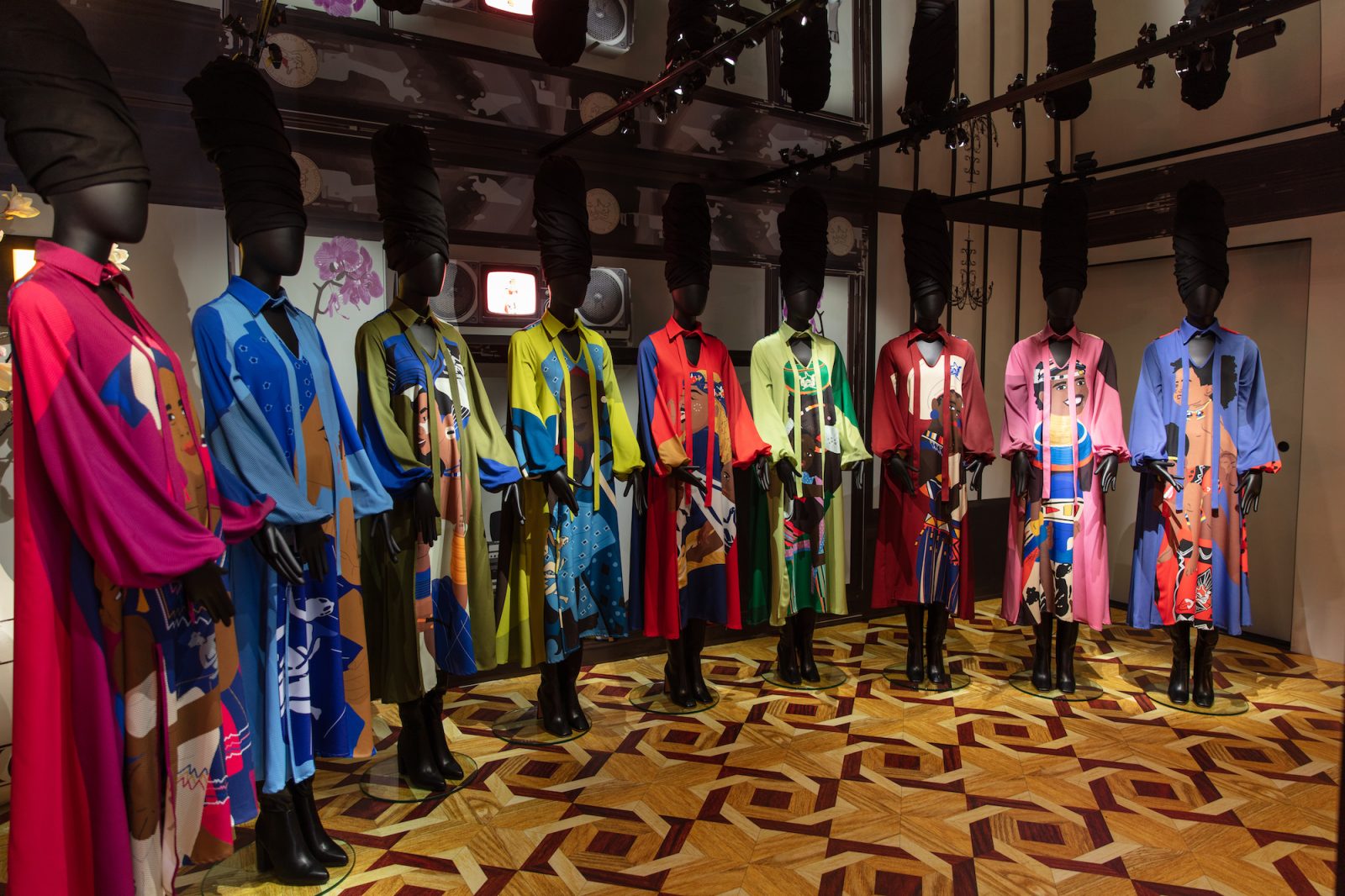
Richard Quinn’s space was a tumult of colour, with Snapchat’s three-dimensional flowers blooming at every turn – a decidedly contemporary take on florals, especially when juxtaposed with the traditional, even retro vibes of Thebe Magugu in the sixth and final room. The inspiration for Magugu’s nine-dress collection came from traditional South African culture, represented within the room by replicas of prints and objects from his childhood. Snapchat allowed viewers to distort the dresses and furniture, emphasising the feeling of flitting between past and present.
In addition, the six spaces had the option to ‘virtually try on’ pieces from the brands’ collections, whether it was the dress made of mushrooms, chic majestic outerwear by Richard Quinn or Versace’s leather straps and chains (more flattering, incidentally, than I expected). For those of us who live in fear of changing room mirrors – or who are simply too intimidated to swan into a Versace store – this was an interesting detail; for the first time in a long time, I enjoyed seeing myself in the ‘dressing room’ mirror. The idea that filters could make people feel more comfortable with their bodies, rather than gradually eroding their self-esteem, is one I would love to see explored further.
Of course, Enninful is celebrated for his inclusive approach to representation in the fashion world, and it was impossible not to see the exhibition through this filter. In Redefining the Body, younger labels share top billing with established fashion houses; older fashion aficionados can experiment alongside a Snapchat-savvy generation…I, a Burnley girl in a Jaws t-shirt, almost rubbed shoulders with that bloke who plays Draco Malfoy.
So ultimately, the thrill of trying on previously inaccessible brands was for me, the star of the show. Of course I enjoyed the immersive experience of being surrounded by floating mushrooms, ducking oversized golden snakes, losing myself in an old French map. But on Friday, I tried on a dress by Stella McCartney – and I’d never tried on a designer dress before.
Vogue x Snapchat: Redefining the Body is a free exhibition on Central London’s Regent Street, showing until 5 March 2023.