
From Amazon to Immediate: How the UK publisher is embedding a product mindset throughout its operations
If you want to embed customer obsession and experimentation into publishing, there are few better companies to learn from than Amazon. The $2 trillion technology company has certainly acted as an inspiration for Immediate as the UK publisher has reinvented its culture and infrastructure to deliver better digital experiences by applying product-thinking principles.
Acting as a perfect bridge between the two companies has been Laura Cushing, Immediate’s Product Director, who spent more than seven years at Amazon, working her way up to Head of Product Management.
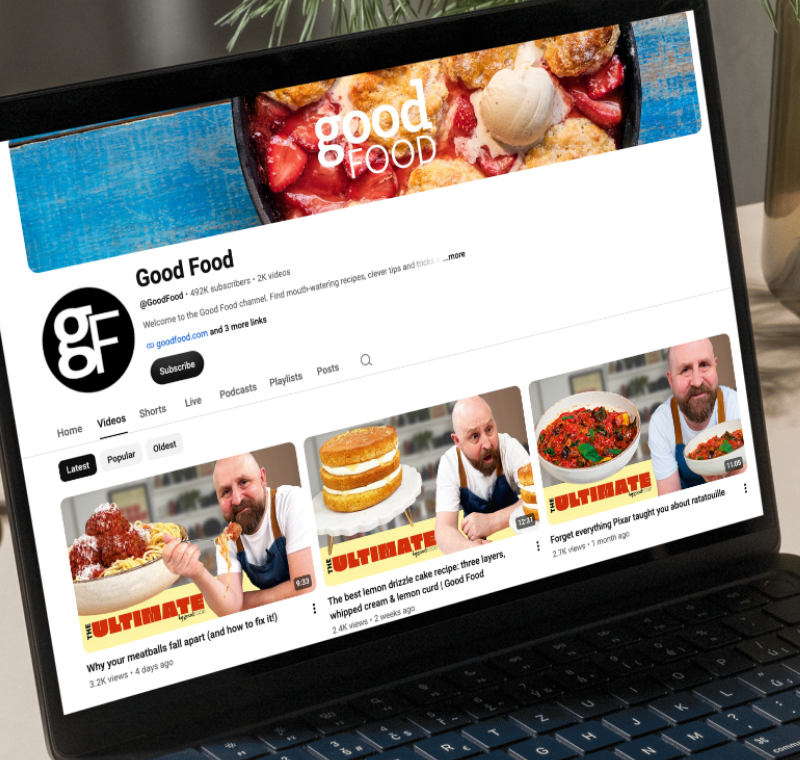
Cushing leads the product development of Immediate’s portfolio of websites, digital products and apps, including market-leading brands like Good Food, Radio Times and BBC Gardeners’ World Magazine.
During her time at Amazon, Cushing saw the importance of making products as accessible and useful to customers as possible. It’s a lesson she has brought to Immediate – stressing the importance of not just quality content, but the reader’s journey to that content.

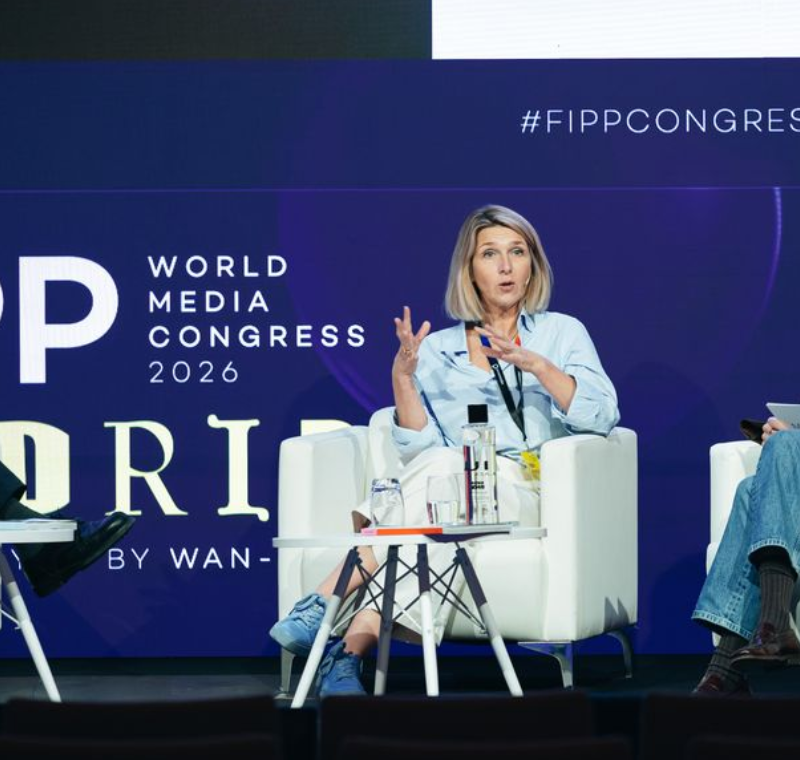
“You can have the best content – it can be award-winning, stand by itself and be this gorgeous piece of art. But if it’s hard to find, not useful for you, or if you can’t do anything with it, that’s where the experience of the product starts to fall down,” she pointed out, speaking at the FIPP World Media Congress.
“And so, one of the things I’m trying to infuse with my company is thinking about the whole experience. Whether it’s a push notification that you get on your phone or whether it’s the print magazine, it’s that ecosystem that customers care about and it can take one bad experience, one paper cut, one friction point for them to not come back to that content.”
Beating the press release piñata
Cushing joined Amazon in 2017, working in the food department primarily with small and medium businesses – figuring how the tech giant can take their products, list them on Amazon and distribute that to customers around the world. She soon became familiar with a job tool known as “working backwards”.
“’Working backwards’ is a very unique term that was woven into the DNA of Amazon,” she recalled. “Essentially whenever anyone comes up with an idea – and anyone can come up with an idea whether you’ve just started or whether you’re very senior at the company – everyone had to follow the same innovation process. And that was to write a press release.
“It was basically envisioning. Imagine you’re shipping a product or a feature or an experience – on the day that it launches, what do you want customers to know about it? How are you solving their problems? What was it like before and what is it like now?”
While the press release had to be short (only one page) the process of writing something that was succinct could be a challenge.
“I think the beauty of it was people would come into the process and they’d be really protective of their press release,” said Cushing. “But they moved on to thinking about it as a piñata – if it’s not beaten up, if there’s not red ink through it, you probably haven’t socialised it enough.
“You probably haven’t gotten enough unique perspectives. It’s a tool to help socialise an idea and bring in everyone else’s perspectives.”

BREAKING: Congress 2026 tickets just dropped
48th FIPP WORLD MEDIA CONGRESS
13-15 October 2026, Madrid, Spain,
From products to press
Cushing moved to Immediate in March last year and it hasn’t taken her long to pick up on the differences between working for a tech and media company.
“There’s an approach in tech, which is the product is everything except the merchandise they’re trying to sell on the product detail page,” she pointed out. “So, it’s the experience of going onto the app, it’s searching, it’s evaluating, it’s purchasing.
“Then, when you transition over to publishing it’s a case of – is product everything but the content? Is it the content? Is it a combination of both? I think that’s the question and the identity of product where perhaps publishers are different.”
Cushing joined Immediate during a time when the media group was looking to change its approach to customer service.
“When I joined, it was really serendipitous that Immediate were rethinking their customer service,” she said. “I’ve always seen customer service as one of the greatest sources of inspiration for product.
“A lot of times you’ll have the product team over here and customer service over there, but if you’re not speaking daily with customers, if you’re not reading their emails, if you’re not on calls hearing the pain that they go through, it’s hard to build products that they’re going to come back to.
“You need to be really focused on how those trends are evolving over time. So, one of my favourite things to do is read emails and understand how that’s trending over time.”
For Cushing, a customer unhappy that their magazine has not showed up on time, is an opportunity to learn and get better.
“It helps you rethink what’s at the core of that. It’s not that the magazine is late, it’s about something they’ve been craving month over month, year over year. This is embedded in their life and we’re not providing that for them. So, then what can we do from a digital perspective to help them when they don’t have their print magazine?”
Break stuff and learn fast
Cushing described Amazon’s approach to customer relations during her time at the company as “fast learning”.
“I wouldn’t use the term winning, it’s more about learning. If you’re not taking experiments or tests that fail – and inform that within your product decisions – what does that tell you about customers? What is the value of it? Can they use it? Is it feasible from an engineering perspective? Is it viable from a business perspective?
“If you’re not breaking things, you’re not learning. And the more you want to learn, the more you need to break things. And I think that’s a hard concept to embed in the team. You’re also trying to balance a high standard of a product. So, it’s these two tensions that have to be held true.”
Cushing admits trying to step on the gas and the break at the same time can be difficult for her and her team.
“My team will often say: ‘Laura, in one meeting you’re telling us to go faster, and in another you’re saying, hold up – let’s make sure we’ve really thought through this before we release this to the customer.”
“I think one thing that helps bring the two of them together is the idea of a minimum viable product. What do we need to put out into the market that is going to help customers, that is going to bring the business outcomes we want from an engineering perspective in a way that’s usable for customers?
“And so oftentimes, maybe a team will go in one direction, but it’s really pulling those all together. And that’s what the press release does. It distills where we want to go and how we are going to do that.”
Overall, Cushing has enjoyed the fact that the publishing industry can move quicker than Big Tech when it comes to launches.
“There are less layers, there’s less people, there’s less teams. I know we’re in matrixed organisations, but Amazon has 1.3 million people, so getting a decision to launch something in 23 different countries could take a while because you want to consider the local implications.
“And in publishing you can move much quicker.”