On a run: Andy Dixon on how Runner’s World UK continues to set the pace for sports magazines after 30 years
Andy Dixon admits his running schedule has become a lot less hectic since first joining Runner’s World UK magazine as editor-in-chief 16 years ago. “For that first five to 10 years I really immersed myself into training for marathons, chasing PBs (personal bests) and trying to be as competitive as I could,” he recalls.
“Now, my reasons and motivations for running have changed. I’m 51 so, realistically, my PBs are in the past. Most runner’s journeys get to a stage where the PBs don’t become so important anymore and then you find different motivations to run. I now run to stay fit and enjoy the meditative part of it.”

Delving into why everyday runners run – as opposed to just focusing on the superstar athletes – is a shift in focus that’s allowed Runner’s World UK, which is published by Hearst UK, to remain relevant and ahead of the chasing pack of competitors. The new editorial approach can be seen in the brand’s landmark print editions over the last decade.
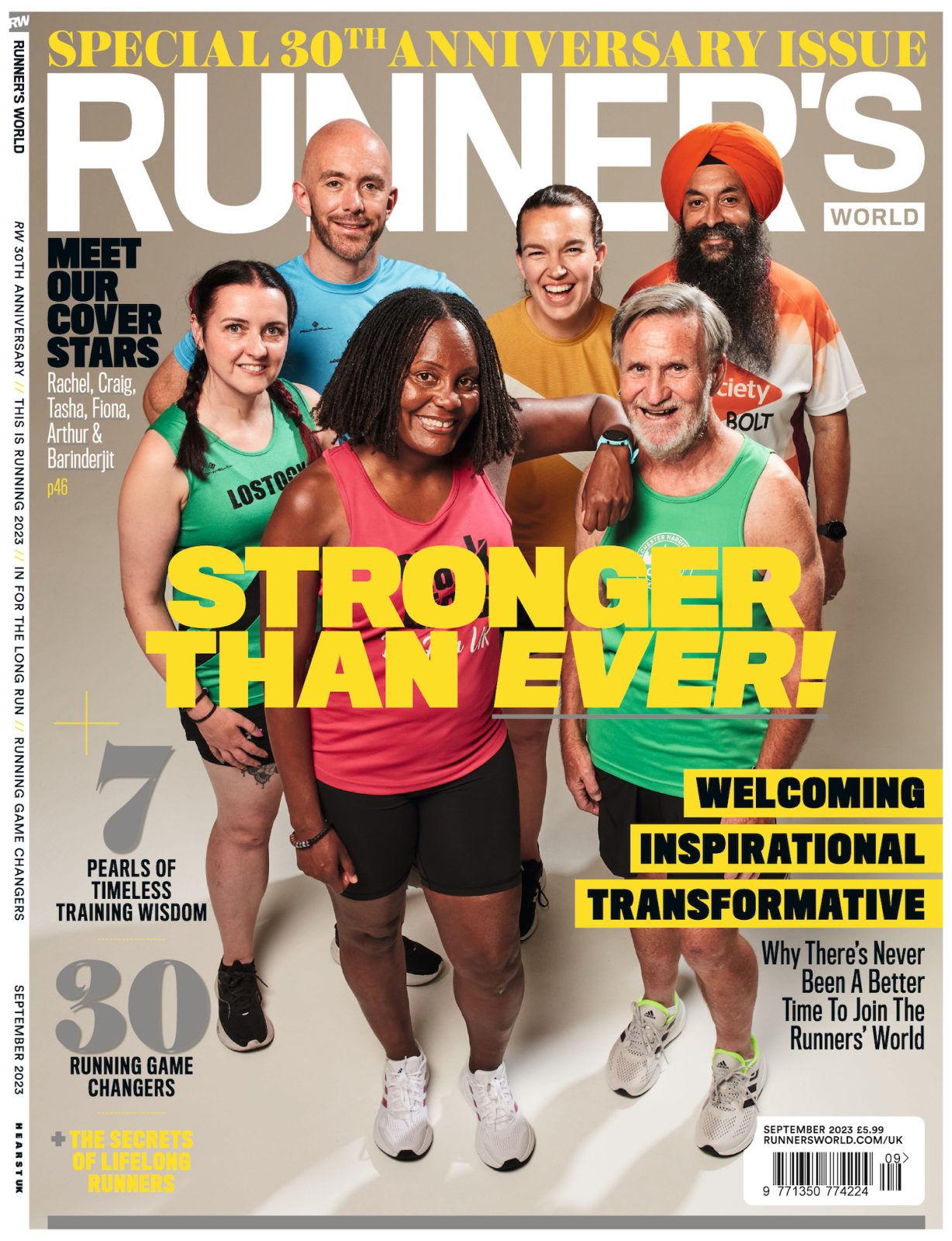
While the 20th anniversary edition had Paula Radcliffe on the cover and the 25-year anniversary Mo Farah, the 30-year celebratory issue, which hit shelves recently, features a diverse selection of six everyday runners, each with an interesting story to tell.
There’s Tasha Thompson who started Black Girls Do Run to make races more representative, Rachel Stevens who used running to help her get through cancer and 72-year-old veteran Arthur Whiston who shows it’s never too late to lace up trainers.
“The stories of everyday runners is the thread that joins everything together,” says Dixon. “So, for the 30-year anniversary issue we felt the time was right to salute, for want of a better phrase, ordinary runners by putting them on the cover and thanking them, while also being broadly representative and showing different genders, age groups, ethnicities and backgrounds.
“I think the biggest evolution in our coverage over the last 16 years has been that there’s a lot more focus on the everyday runner. We put more focus on the human side of running. Clearly, we’re a service magazine and brand and advice and expertise are very important, but in terms of the editorial mix, we’ve kind of turned the dial to look at what people’s stories and motivations are for getting into running.”
Running a different race
Since becoming editor-in-chief in 2007, the scale of the operation Dixon manages has grown enormously, to the point where he now sees himself as a “brand editor”. What started with a print magazine and website has blossomed into a multi-platform business with popular social media channels, a very successful podcast, ecommerce revenue, accreditation and licensing.
Acting as the cornerstone of the Runner’s World UK brand is the print magazine. “It’s because of the print product that Runner’s World has earned its trust and authority which is absolutely integral to its brand value,” says Dixon.
“If we’d just been digital only, it would be harder for us to have that authority. I think the fact that we’ve been going for 30 years as a print magazine gives us a lot of kudos and a lot of respect from runners. And 88% of our print circulation is made-up of subscribers, so it still brings in a good chunk of the brand’s overall revenue.”
The trust Runner’s World UK has built up is key to the success of one of its newer revenue streams – ecommerce. Leveraging its reputation as an authority on all things running, the brand helps to sell merchandise alongside reviews of the latest must-have kit.
Runner’s World UK’s ecommerce journey started before the outbreak of Covid, with the pandemic then sending things skyrocketing as people looked to buy treadmills during lockdown.
“Everything kind of got accelerated during the pandemic and since then it’s become a key part of our overall offering,” says Dixon. “Trust plays an important part because there’s no point us just saying every product is great – click here to buy. What people want from Runner’s World is expert and reasoned opinions. They want to know the shoe we’re reviewing or recommending is worth the money and will work for them.
“It’s a balancing act. You can’t recommend stuff that you don’t believe in yourself. So, we try and balance our objectivity with the idea that ecommerce is driven by people buying things on your recommendation.”

Runner’s World UK has also struck a real chord with its community through its weekly podcast, which has reached more than 3 and half million downloads – success, says Dixon, built on the light, jovial tone of hosts Rick Pearson and Ben Hobson.
“It’s not like it’s a comedy podcast, but I think they bring a lightness of tone and a levity to proceedings even when they’ve got a serious guest,” he adds. “I think their approach when they’re talking to people is to try and tease out the human aspect of that person. So, yes, it’s a podcast about running but it’s a chat with a human being and hopefully an interesting one.”
The road ahead
The strong bond Runner’s World UK has built with it readers is set to be further strengthened with the launch of a membership scheme in 2024.
“Because we’ve got such an engaged group of not just subscribers but return visitors to the website and listeners to the podcast, we feel we’ve got an audience that respects us,” Dixon says. “So, I think memberships will be something that’s coming online next year and that’ll be subscription plus basically.
“You’ll get the magazine, but you’ll also get access to exclusive content and newsletters and access to an expert panel. There’ll be ways you can interact with a physio, a running coach, nutritionist. We’re very excited and we see big potential in that.”
Dixon says there will also be an even greater focus on sustainability at Runner’s World UK over the next few years.
“Running and runners are attuned to the outdoors because that’s where most people do it, but we’re aware that races and shoes have an impact,” he says. “That’s something that we’re trying to raise awareness about amongst runners, to think before they ditch their shoes – can they get another 50 or 100 miles out of them before they buy a new pair?”
As Dixon looks ahead to the next 30 years of Runner’s World UK, he’s excited at the prospect of covering a scene that’s become more open and inviting.
“It’s got a lot more diverse and it is always broadening itself,” he points out. “I think that’s the beauty of running. One of the good things about the advent of social media was it just allowed people to kind of group together.
“If you go back long enough you could be an individual runner, but if you wanted to run in a group, your route into that was as a club runner. Clubs are very important and still a lifeblood of the sport but what social media has allowed people to do is join into kind of smaller ad hoc crews and groups and that’s encouraged new people into the sport from different corners of society.
“You’ve got a lot more young people coming in from urban environments or people who might not have previously seen themselves as runners. I think this idea of what it means to be a runner has become a lot broader. You don’t have to be a certain body type. You don’t have to run races if you don’t want to. You can just run for fun.”

![[New!] FIPP Global AI in Media Tracker – November 2025](https://www.fipp.com/wp-content/uploads/2025/06/articles-header-800x760.png)