
Online media outshines mainstream media in Kenya
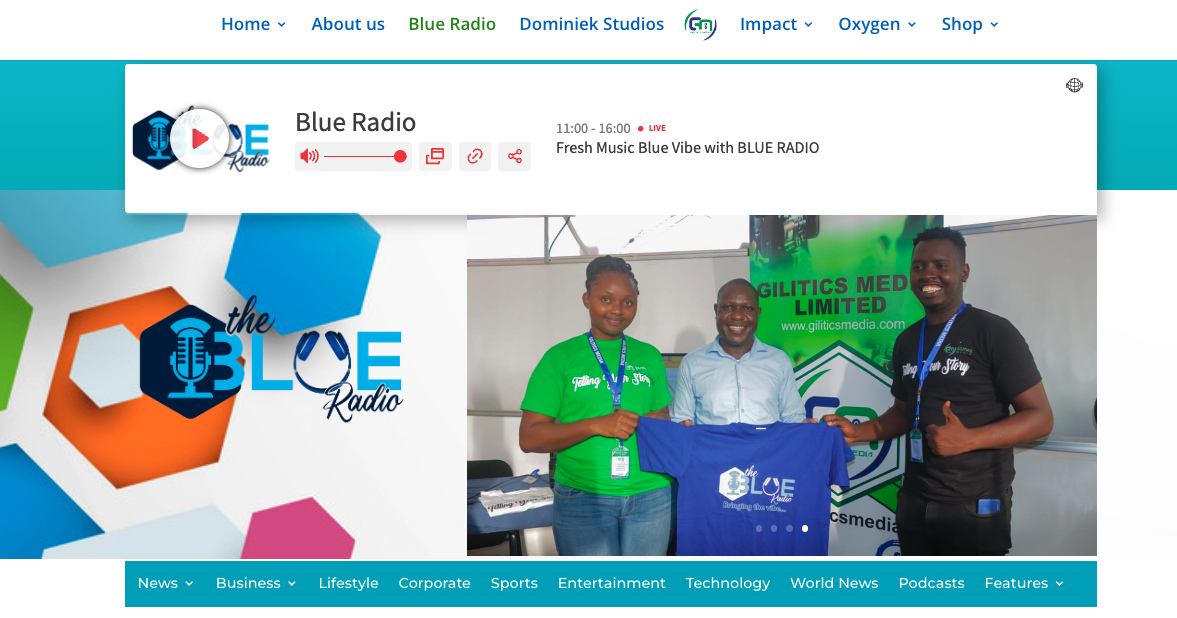
On the coast of Kenya sits Blue Radio – an outlet that promotes the education of the blue economy among the young people in these seaside communities.
It’s the brainchild of two journalism graduates, 28-year-old Gilbert Were and 25-year-old Johnson Muema, who between them founded Gilitics Media, a digital media start-up in the city of Mombasa. “In 2019 we participated in a tech incubation challenge by TechBridge Hub,” recalls Were. “We won 100,000 Kenyan shillings (US $653) as a cash prize, so we took that and decided we’d use it to register the company and launch the website.”
Now, according to the station manager Ian Kiptoo, Blue Radio is busy tapping into the talent from across the region, allowing it to raise up and positively shape the community and to boost the economy. “We have sourced a hip-hop artist as a presenter from the community,” he says. “And this makes the community feel part of the station and we source information from the communities here.”

Moreover, strategic placement, as well as using social media platforms, has allowed Blue Radio to highlight blue-economy information and combine it with entertainment for the newest generations here. Kiptoo explains: “As an online radio station, we make content that suits the community through radio shows that accommodate a blue economy segment, as well as hosting podcasts and sharing in social media platforms.” But there’s a key point beyond just their story and their success. For, understanding how social media works, has enabled massive coverage thus initiating more content circulation.
This is part of the bigger trend within this sphere, with Kiptoo “urging media professionals to cultivate and convert their social media platforms, so as to add value to the online community and eventually they can and will benefit from the online platforms”.
It’s little wonder. According to data from Statista in January 2023, Kenya had a social media user base of 10.5 million, ranking as the third largest within the observed timeframe. This marked a three-fold increase in social media users compared to the figures recorded in 2014. A majority of people in the country used social media to keep in touch with their loved ones or to read news stories, with both categories having a share of 50 per cent and upwards.
A survey conducted as of January 2023 found that WhatsApp and Facebook were the most frequently used social media platforms in Kenya. Around 80 to 90 per cent of respondents mentioned each channel. Over 70 per cent reported using Meta’s Instagram, while nearly 68 per cent were on TikTok. The websites with the highest traffic were Google with 253 million visitors in 2022, whereas YouTube had 183 million visitors. The distribution of these visitors shows that the majority of the nation’s people use their mobile phones to connect to the World Wide Web.
Back at Blue Radio, one presenter at the station is Omondi Obunga from Kisauni, one of the regions in Mombasa County. And his path has seen him replace the gun with the microphone. Previously, his only outlet and escape away from crime seemed to be football, but that dream died when the local pitch was taken away. “I was involved in crime gangs in 2013,” he recalls, “where I was involved in radicalisation. My friends were killed, some gunned down, and others were beaten through mob justice, and I realised it was time to change my behaviour so as not to lose my life.”
His journey from there to here shows another benefit of such new media initiatives, even if gaining credibility so his talent might be considered took perseverance. “I had given up in life,” Obunga continues. “I started singing hip hop music, but it was hard, as my music was not being played on radio. I felt bad as that was the only way I could keep away from crime. I was later mentored in a programme that highlights getting young people away from crime, and to focus on bettering their lives.”
As a platform that considers community talent, the confident presenter says he is positive as Blue Radio gives him more courage to press on. “I see Blue Radio as being very different to more traditional media. It is diverse and it focuses on what it wants to deliver to the target audience.”
Moreover, Ali Mwalimu, a long-serving media practitioner and a media viability consultant, notes that the media industry in Kenya is changing and there is a necessity to keep up with trends so such businesses can survive. “The media in Kenya is very different to before, and no longer relies on the traditional ways to source news. There are new ways in the industry to generate income and hence incorporating new ways to meet the new trends in the media industry, such as use of online, and creating content to suit online markets, is vital.”
He delves deeper into the impact this can have as, according to Mwalimu, online media houses have impacted lives in Kenya, boosting the economy in the education sector. “As media viability consultants, we have been able to mentor an online media house that focuses on children’s content and there is a lot of changes in their content,” he explains. “We have also engaged small and medium media houses in coming up with human resource management policies, as such media industries have no proper guidelines in the human resource docket as one may be employed with multiple duties.”
Additionally, Josephat Kioko, a senior journalist in Mombasa, lauds the creativity that the new and burgeoning online media industry has adopted. This is particularly timely, as a number of more traditional and mainstream media houses have opted to lay off journalists rather than adapting and sourcing more ways to accommodate these journalists.
“The technology has really changed, people are able to work remotely and earn money through social media platforms,” he says. “This new media is an opportunity for young people in this area. Learning to create advertisements on the likes of YouTube and Google is the trend to tap new markets. New media has created opportunities to work, as the mainstream media has also shifted to online platforms hence adding revenue.”
What it means is that far from the media dying a slow death, it has merely shifted. The opportunities are everywhere and people should follow this new path. Indeed, the Kenyan example, and the likes of Blue Radio, are proof of this. In fact, mainstream media here has also shifted hugely to having digital platforms but the vast majority of media workers feel challenged by this new media taking charge.
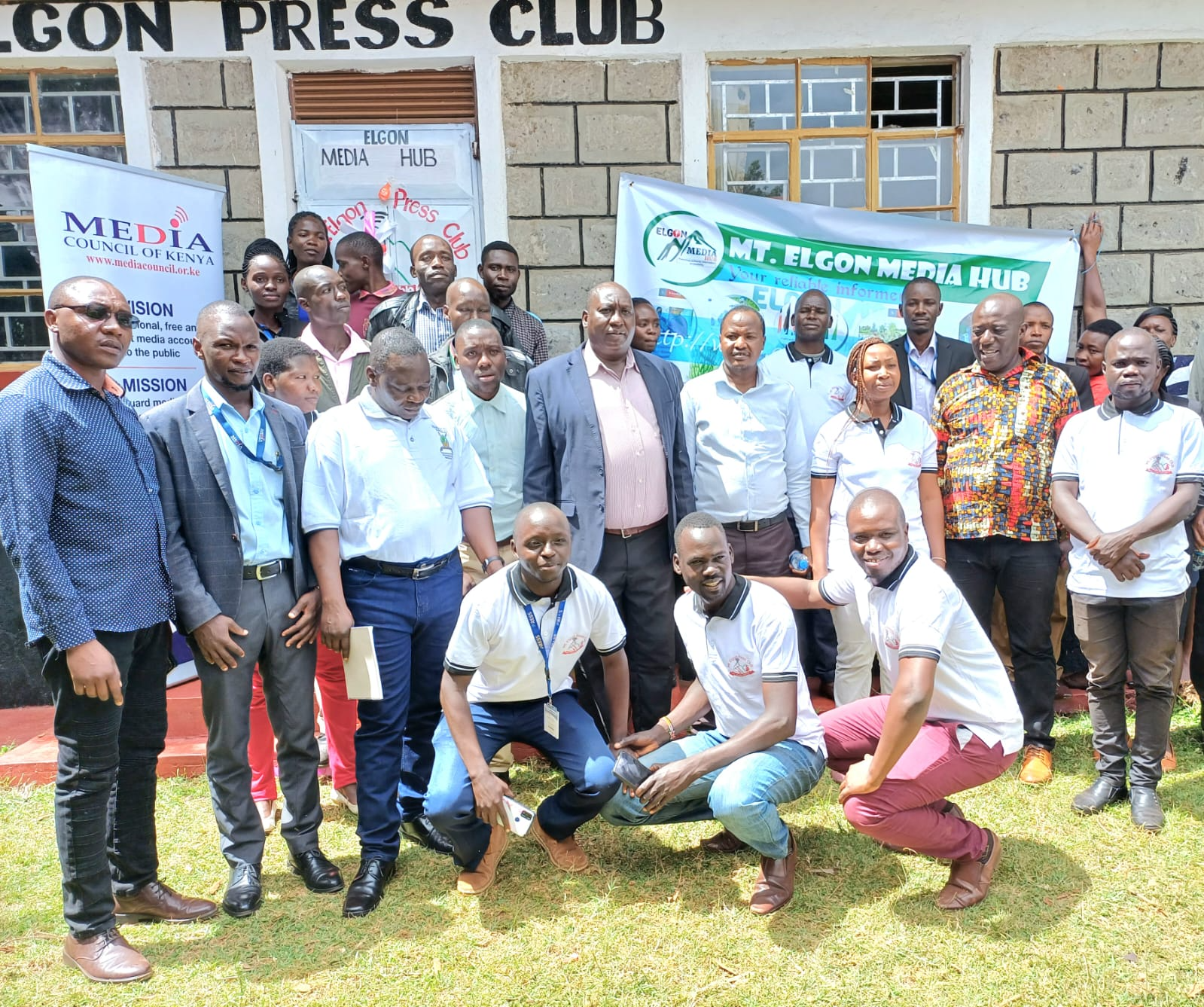
“But media practitioners should not be threatened by new media,” stresses Kioko. “Instead, they should up their game and work to tap the market.” This is a message echoed by the Media Council of Kenya which has urged journalists to integrate contemporary journalism into their reporting. The Kisumu Regional Coordinator for this organisation, Evans Teddy, has repeatedly told the journalists to embrace modern journalism.
“The formation of the Press Club is an accurate reflection of modern journalism, where journalists and content creators redefine their information packaging and dissemination approaches as a way of responding to diverse audience needs,” Teddy says. And he has underscored the significance of the press club as a tool for building community awareness on local issues, a sense of regional identity, and a response to diverse audience needs.
“I want to assure you,” he concludes. “That the Council remains committed to creating a conducive environment for media players in Kenya. We are determined to protect the media space and ensure continuous development.”