
FIPP100: How AIM has changed the media landscape in India
In 2020, magazine publishers in India faced an existential crisis. With Covid spreading across the world, a local media industry already under strain faced disaster if immediate action wasn’t taken. During these troubled times the Association of Indian Magazines (AIM) stood up.
The National Association, which represents more than 300 magazine titles across Indian languages, changed its focus, with members going from competitors to collaborators. The shift changed the Indian magazine landscape dramatically, as AIM helped to build a subscription system that ended publishers’ overreliance on newsstand sales.
From there, AIM has gone from strength to strength, with members effectively interacting with each other, and the Indian government, to try and solve obstacles facing publishers.
Among its many successes, AIM has partnered with Prasar Bharati, the government-owned public broadcaster, to launch a dedicated Magazine Store on their newly launched WAVES OTT, which is being shaped to serve all archival and new content being produced by the broadcaster across all Indian languages.
And in a rapidly changing retail landscape, AIM is actively creating space for magazine publishers on leading e-commerce platforms, including Amazon, Flipkart, Blinkit and Meesho.
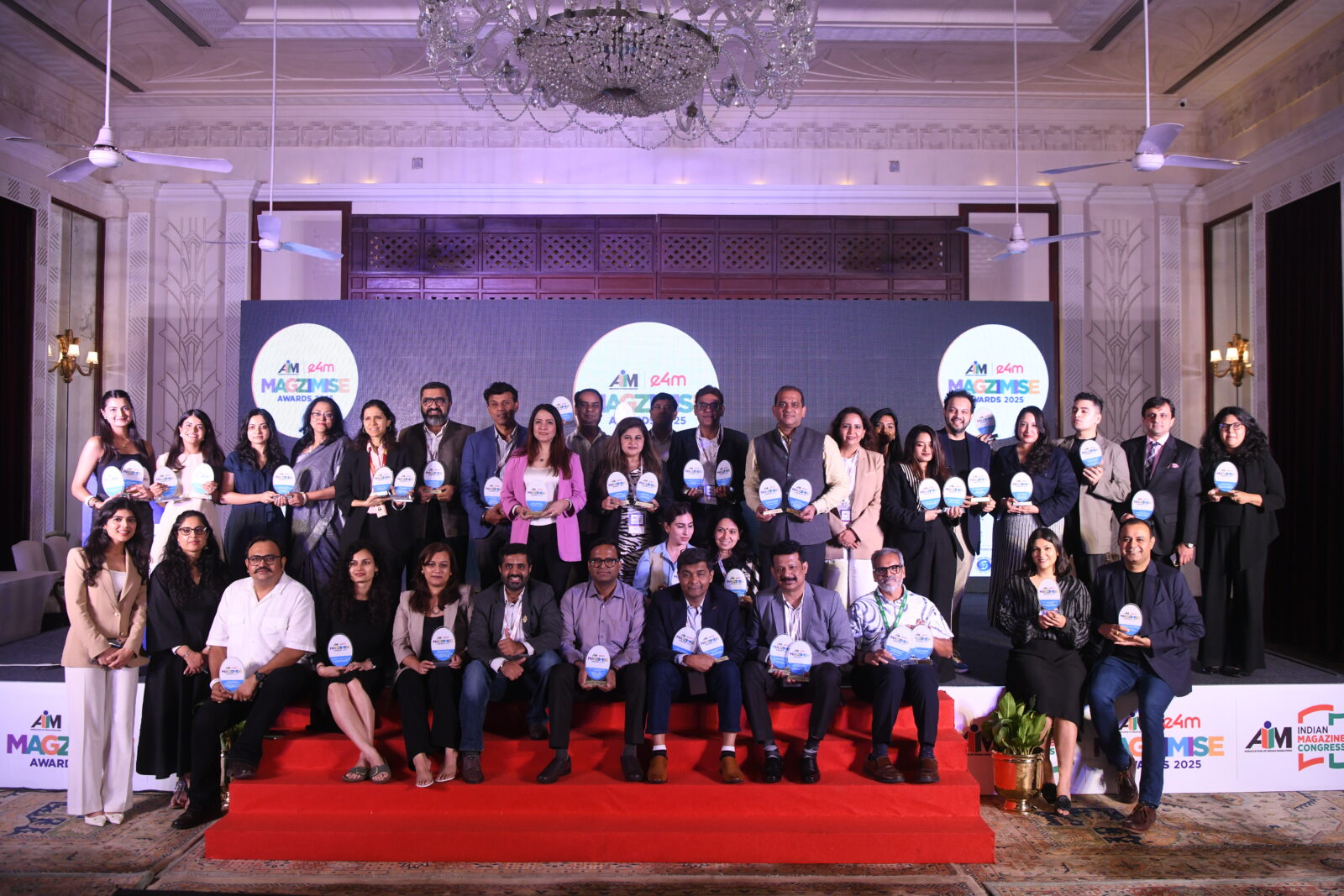
The Association also stages popular events including the Indian Magazine Congress (IMC). The latest edition, held on 8 August, was attended by magazine editors, publishers, digital media heads, policymakers, marketers, industry analysts, researchers, printers and distributors, as well as senior government officials and ministers to deliberate on the evolving role of magazines.
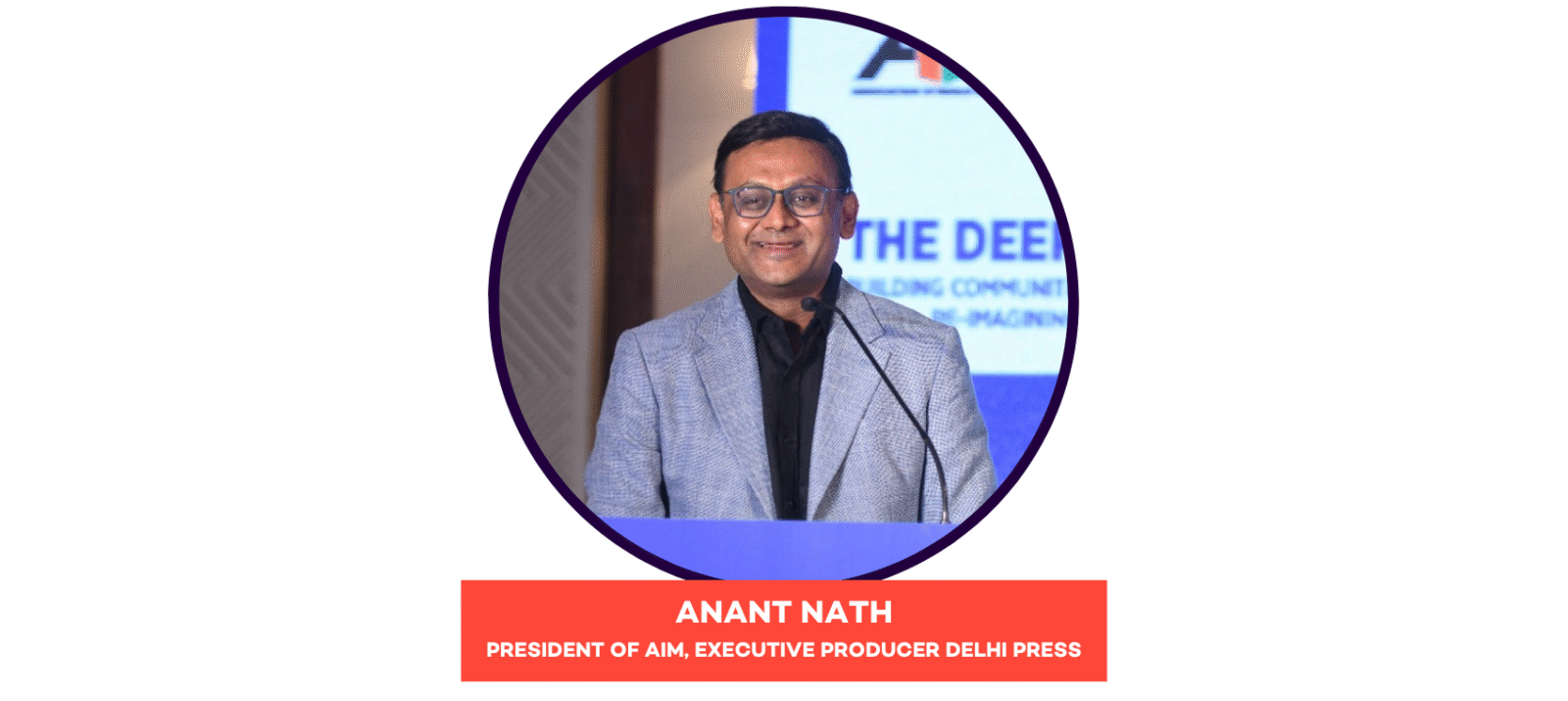
As part of our series of centenary celebration interviews with National Associations around the FIPP Centenary, we sat down with Anant Nath, President of AIM and Executive Publisher of Delhi Press, to talk about the changes to magazine publishing in India and the untapped potential of print in the country.
How has AIM evolved over the last few years?
Information-sharing among the publishers has been a key defining aspect of the Association in the last four years. In 2020, with the outbreak of Covid, the template was set at AIM of coming together to work in a far more cohesive and coherent manner to figure out common challenges and figure out solutions to those common challenges. In the pre-Covid era, even though publishing was going downhill, there was an old school approach of ‘we are also competitors and therefore we only come together on very specific issues.’ This changed to – ‘Ok, we are not just competitors. We are all together, we all sink or sail together’. So, we really opened our doors to everybody, all of us within the small group of publishers that were part of the leadership of the Association of Indian Magazines and tried to identify the common problems we are facing and find solutions to that.
So, having Covid as a common concern really focused your minds?
Yes, absolutely. While there was a slow decline going on in the Industry for the last five or six years, Covid was an existential threat. It was one of those things that if we didn’t come out of this with a viable option, it would be the end of the road for us in every possible way. So, the necessity to collaborate became far more important, far more obvious. And I think the willingness to collaborate was a common ground that brought us together. The two most important things that we realised we had to work together on was instilling faith amongst advertisers that magazines are a viable medium even now, but more importantly, fixing the more underlying problem, which is how do we build magazine distribution again?
India as a market has been conventionally dependent on newsstand sales. Pre-Covid most of the publishers were largely depending on newsstand sales and subscriptions were a very small part of it. The number of newsstands in the country had been declining in the lead-up to Covid and during the pandemic the newsstands all shut. So, at AIM we all said you – ‘Guys, we have to build the subscription system in the country’. We asked the question – ‘Why is it that India doesn’t have a subscription economy?’ The one common problem we identified was that the subscription delivery system in India is extremely broken. The Indian Post itself, which gives a very concessional rate of posting, were not delivering magazines or they were delivering magazines late. As a result, there was no faith from the public that their magazine was going to show up.

How did you solve the problem?
The first thing we did was go to India Post, the leading 10-12 publishers, and we lobbied heavily. We went all the way to the Minister and we got a new service called Magazine Post rolled out in 2022. And the defining feature of it was, whilst the regular post would charge only ₹1 for posting one copy, the Magazine Post will charge anywhere between 8 to ₹12, but they would give us a service which was otherwise worth ₹30-35 – a short, time-bound delivery, which was tracked and which sent SMS and WhatsApp alerts to the customer of where in the delivery process the magazine was. They introduced this service which was at a far more concessional rate for the same quality. And I think that’s been one of the big success stories of the Association.
How has this AIM campaign changed the magazine landscape?
Since the magazine subscription delivery system had been fixed, AIM decided to focus more energy on building subscriptions, on selling subscriptions. All of us doubled down on subscription marketing. As a result, at our publishing house, it has gone from 90% newsstand and 10% subscription, to 65% subscription and 35% newsstand. And we are now, month-on-month, getting more revenue from readers than we did in the pre-Covid era. There has been lot of knowledge-sharing, figuring out who the online partners are to align with. We all went to distribution companies and agencies like WH Smith, as well as other chains, to negotiate better terms. Rather than approaching a distribution partner individually we all go collectively now, so you know they cannot be undercutting our pricing. All of us get the same benefit because we said it doesn’t matter whether you’re a two-magazine publisher or you’re a 25-magazine publisher, we have to look after everybody and get the best terms for all of us.
What are some of the main challenges still facing magazines in India?
I think the big problem that still remains is the advertising psyche, because advertisers have still not come back to the magazine as a medium. All of us, when we exchange notes, are selling enough magazines as compared to the pre-Covid era, but we are all still somewhere between 50 to 60% of advertising revenues and that’s where I think we have not been able to yet change the psyche. The Association has tried. Every year we organise an annual event where we call a lot of marketers and tell them about what magazines are doing. We run campaigns in our own magazines showing that magazines are great for branded content. But I think there is more work to be done in terms of still changing the psyche of advertisers. Our engagement with the ministries has also increased a lot. In India right now there is Ministry of Information and Broadcasting which is the overall ministry that governs media in the country. Then there is a Ministry of Railways, which is the ministry responsible for shipment of magazines, and the Ministry of Information Technology, which governs the online space. It so happens that there is one Minister for all these ministries, so what we’ve done in the last few months is meet with the Minister. We are in constant touch with the ministry secretariat to solve some problems for magazines even further.
One example is we are now working very closely with Indian Railways – the biggest employer in the country. There is scope for selling magazines through the vast Indian Railways network within the trains. Indian Railways also runs a very big e-commerce platform that we want to use to sell magazines. As of now, what the railways have authorised is they’ve given us the go ahead to sell the physical magazine on some of the trains. We are also in the process in creating a magazine store across all the consumer-facing apps in close collaboration with the government-funded Open Network for Digital Commerce (ONDC). Our focus is to make sure that every major e-commerce platform has an online magazine store.

How will AI continue to change magazines in India?
I think the debate, issues and consensus are similar to what is probably there in the West. AI is creating a challenge in the short run because it suddenly leads to a lot of new content that is far more easily produced, but eventually it will become commoditised. So long as we are embracing AI to do our job in a faster manner, we have a game on there. But we have to be very cognisant that if we are producing the same content that AI is producing, then obviously we have a problem. We need to go beyond, which we can because human intelligence is still emotional intelligence. In India we will probably learn from the best examples around the world. We will reinvent the wheel. We will not create a new wheel. We will wait to see what are the best practices from Europe and America and probably adapt that.
What is the state of print in India?
I think the problems are similar to what you would be facing elsewhere – that a much larger consumption of content is on digital. Most print publishers have seen their numbers go down, but I think we’re all very clear that it won’t be the death or print. We have to figure out how do we make it sustainable with the smaller circulation. I think in a country as big as India, the potential to sell magazines is still big, because of very deep logistics issues, Indian magazines were never very deeply penetrated. At the height of the number of newspapers being sold in India, somewhere between 80 to 100 million new households were getting a newspaper. The magazine penetration was one tenth or less of that.
So, when we talk about declining print circulation you first have to reach saturation of the market and then you will decline. We never reached the saturation. We were always a very small percentage because we didn’t have subscriptions, so we could not reach the last mile. We were constrained by the availability of newsstands in the country. It’s not that India was a very great newsstand friendly country. Even at the peak, the newsstand density in India was not very high. So as a result, we’ve never really explored the true potential of the country. Now with the help of online, very counterintuitively we can sell more print magazines because we can now find the buyer and we can deliver to the buyer. So, I feel magazines for the next 10 years has a reasonable potential in the country. Finding the buyer is the problem so I think we need to keep innovating.