
From Trump to Bad Bunny: Why Time remains a hugely relevant brand at 102
As its run-in with President Donald Trump over the use of a “super bad” cover image shows, Time magazine continues to make headlines at the age of 102.
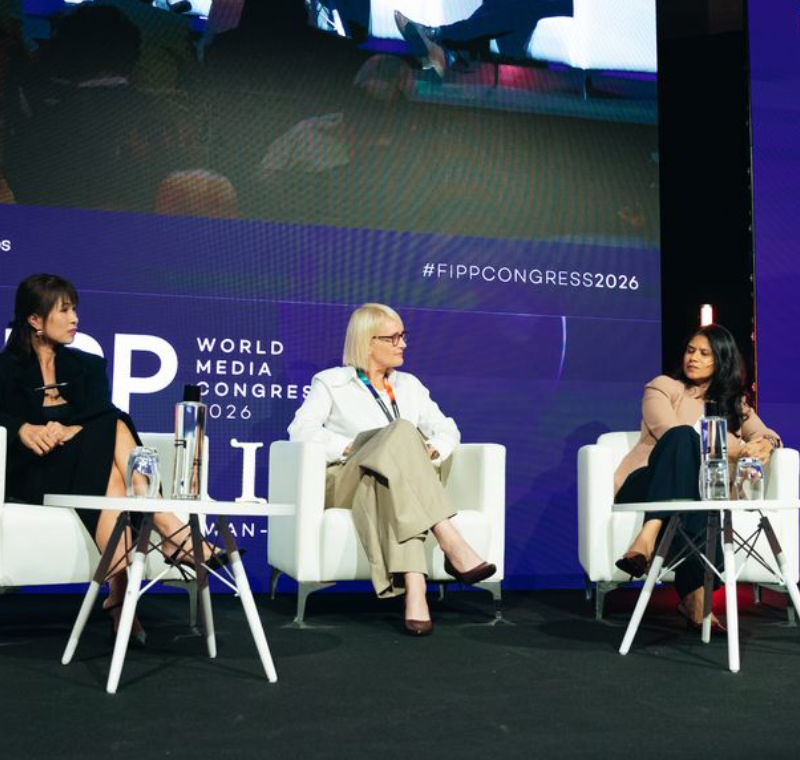
At this year’s FIPP World Media Congress, Mark Howard, Chief Operating Officer, Time, USA sat down with Yulia Boyle, FIPP Chair and Founder and Principal, YPB Global, to reflect on how the brand is blending legacy and innovation in today’s global media landscape.
Despite the grumblings coming out of the White House, Howard said Time had a “tremendous relationship with the current president”.
“For decades he has been a big fan of Time. He even told us, when we were with him in December after being named Time Person of the Year in 2024, that he loved half of the covers that he’s been on.
“So, we think that we’re doing something right if he likes half and he then doesn’t like the other half. We feel like we’ve done our jobs as journalists.”
Heading in a new direction
Under the stewardship of Howard and Jessica Sibley, the CEO of Time, the magazine has shown remarkable growth since 2022. Under its 3.0 Plan, advertising sales are up 23% and events business up over 50%.
Another eye-catching statistic is that Time currently has the youngest ever audience, half of which are 35 and under.
“We have been on this tremendous transformation journey, and we are extremely privileged to be the stewards of this iconic brand,” Howard said. “It’s 102 years old right now. It’s globally recognised for our iconic red border. And with that comes a tremendous amount of responsibility to uphold the legacy of all the great journalists and everything that has come before us.
“However, when Jess arrived at the end of 2022, the brand was in need of some serious reinvigoration. It had gone through multiple ownership changes and had gone independent in 2018 as a standalone media company. So, Jess wrote the 3.0 plan as an opportunity to come in and really take back control of the Time brand globally, build a platform of franchises and live events, and recalibrate what the revenue model was.”
In what was a very bold move, Time dropped its paywall in 2023 at a time when most media companies were rushing towards a subscription model for their websites.
“We saw it as an opportunity to, instead of hoping that consumers would spend a few dollars with us every month, build much deeper, multifaceted relationships with global brands who viewed us as more of a partner,” said Howard. “A longer-term opportunity to build relationships where we could harness the platforms that we had built and build longer-lasting, deeper relationships with those brands.
“It was a very bold move, and I give Jess a tremendous amount of credit for making that decision because it was counter-conventional to what the industry was doing.
At the end of the day, it came down to alignment with our mission values. And the mission has always been to be the most trusted, influential media brand in the world.”
Crossing borders
As part of its global expansion plans, Time has launched Time Africa and Time France.
“We felt that it was the right time for us to really go deeper into specific markets in different regions and to work with local editorial teams to be able to tell great stories of the individuals and ideas in those markets – the same way we’ve been doing it universally out of our global newsroom,” explained Howard. “So, we’re very excited about the prospects.”
Howard has been instrumental in negotiating with Big Tech and is the architect of most of the 15 AI deals that Time has launched in just a few years.
“There was essentially three paths that you could take as a media company – you could litigate, you can negotiate, or you could do nothing and be a passive observer and wait to see how things shake out,” he said.
“We did not view the third option as an option at all. Litigation is extremely expensive and time-consuming and it will take a while still for a number of those cases to be resolved. So, we really leaned into negotiate and we felt that by being a partner, by trying to be aggressive with what we did, was going be a bigger payoff for us in terms of our evolution.”

Bad Bunny and being yourself
Time’s reputation as an influential brand was underlined in 2023 when Bad Bunny gave one of only two interviews he was doing at the time to the brand – the story translated from Spanish into English.
“To give story to Time was a function of trust. And we talk a lot about trust as the number one core value of Time. It is the overriding North Star in principle for everything that we do,” Howard said.
“And we think that the fact that he gave us his story showed that he trusted us to tell his story the right way, that he could give us that access, give us the ability to be the one to bring it to a broader, outside-of-the-music-industry audience – a global audience.”
Turning to what he thinks the North Star for the FIPP World Media Congress was, Howard had a clear message to delegates: be yourself.
“We are trying to be the best version of us. We are not trying to be the next fill in the blank. There are lots of companies out there that are doing incredible things, but we don’t chase that. So, we don’t chase old trends, and we don’t chase other people’s models. We are making Time the best version of itself every single day.
“And we think about this as a tremendous moment of transformation in the media space – accelerated exponentially by all things AI. But we think that we are at this critical, pivotal moment of transformation and you need to embrace it. You need to lean into it. And, every day, filter everything through your own lens of your own business and being that best version of yourself.”