
The fundamentals, examined: Seven themes at FIPP Congress 2026
This October, the FIPP World Media Congress returns to Madrid with a programme built around a question: what are the fundamentals that will carry the industry forward? Here are some of the topics that will be under discussion across three days of sessions, case studies and conversations.
1. The audience comes first
The publishers building for the long-term are the ones who understand that owning a relationship with a specific, loyal audience is a fundamentally different proposition from aggregating traffic – and make their editorial, commercial and product decisions around that distinction. From passionate niche communities to DTC models and prosumer audiences, the business case for knowing exactly who you’re publishing for has never been stronger.
2. The creator opportunity
The creator economy is no longer something publishers observe from the outside. Increasingly, forward-thinking media businesses are building creator ecosystems as a structural part of what they do – not as a marketing channel, but as a way to extend reach, deepen community and open new revenue streams. Congress will tackle practical questions such as: how do you maintain editorial standards and brand consistency at scale? How do you turn a creator relationship into a durable business asset rather than a one-off campaign?
3. Print’s second act
Publishers treating print as a deliberate, high-value, collectible object are finding it works. What has changed is the intent behind it, and the commercial model built around it. Congress will explore premium print reinvention, revenue diversification, and what a serious commitment to print looks like in practice.
4. New revenue architecture
The monetisation conversation has moved on. As AI-generated search results reduce the traffic that once fed programmatic revenue, the publishers on solid ground 2026 operate under a more varied set of structures – AI licensing, B2B growth strategies, direct-to-consumer models, strategic acquisitions, and brand partnerships built on genuine editorial authority. Congress will ask: what’s working and why?
5. Global perspectives
Africa’s media market is larger and faster-moving than the global industry has typically given it credit for. The MENA region is evolving just as quickly, with publishers navigating distinct cultural markets while building brands with genuine international ambition. Some of the most significant growth opportunities in media are emerging outside established Western markets, and raise strategic questions around rights, distribution, audience trust and commercial models that deserve a place at the centre of the conversation.
6. Trust, storytelling and who holds the cards
Who has leverage in publishing right now – publishers, platforms, or advertisers? How does editorial credibility survive commercial pressure? And in a content environment flooded with AI-generated material, what does it actually take to build audience trust through consistency and editorial credibility rather than reputation alone? These are not new questions, but the context around them has shifted: AI is muddying questions of authorship and accountability, platform relationships remain volatile, and audiences are more sceptical than ever.
7. The fundamentals are human
As AI absorbs more of the conversation around tools, workflows and efficiency, a different question is emerging: what do we actually need humans for, and how do we protect their ability to do it well? Sustained pressure doesn’t just exhaust people, it demonstrably reduces the quality of creative thinking. And in an industry where creativity is the product, that’s not a people issue, but a strategic one.
The programme is taking shape, and it’s a good one.
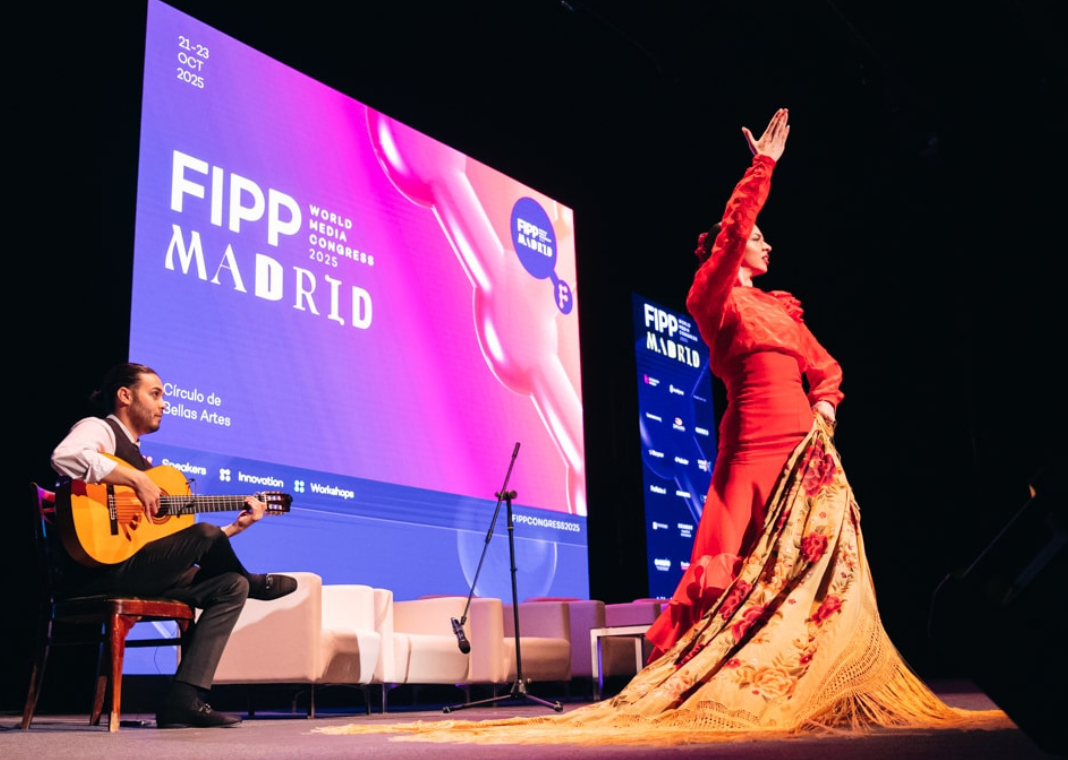
48th FIPP WORLD MEDIA CONGRESS
13-15 October 2026, Madrid, Spain
Last few tickets remaining!
Join the global media community in Madrid before the final places disappear.
Want to stay where the action is?
Contact us to find out about accommodation at the Congress venue, Hotel RIU Plaza España.
FIPP Congress 2026 sponsors