Legacy of trust: How The Atlantic forges a close connection with its readers through fearless reporting
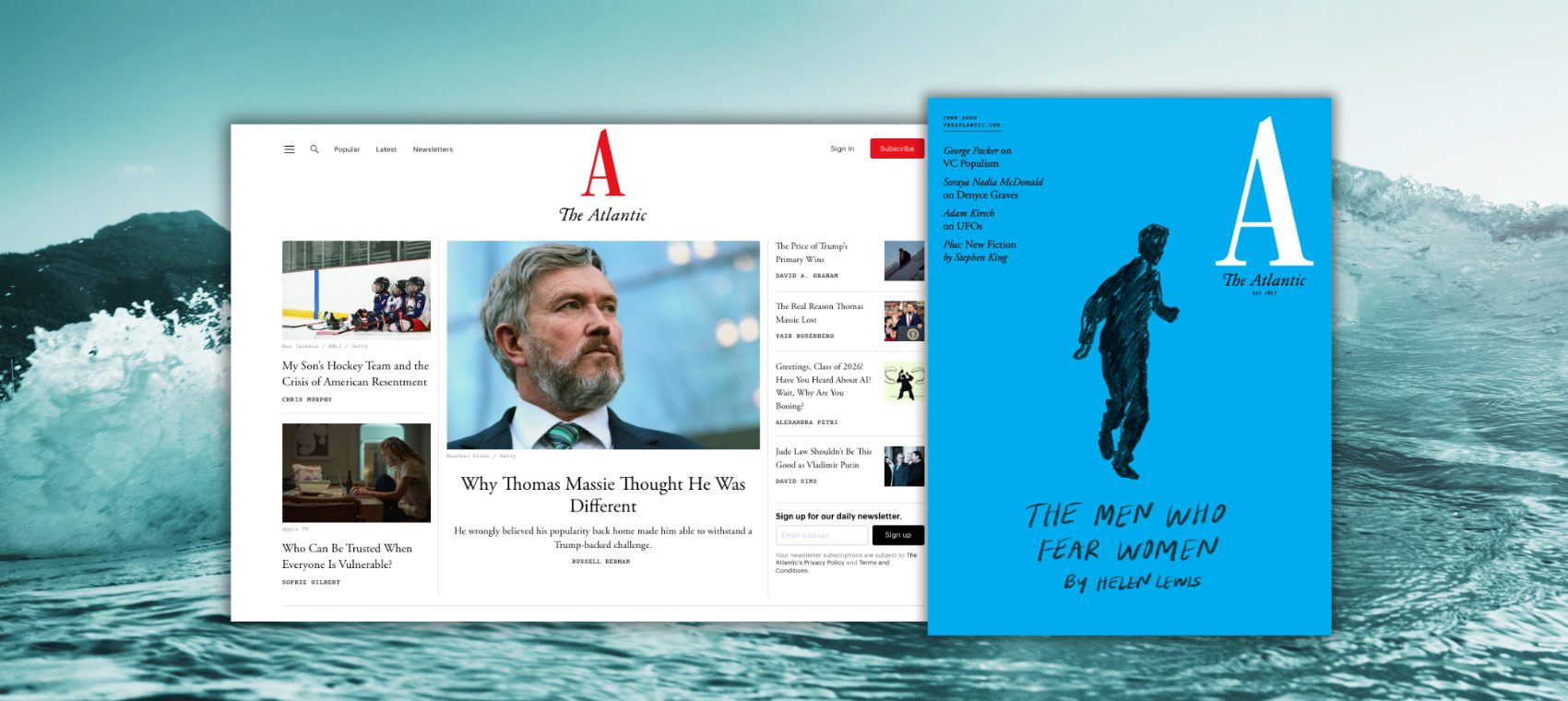
“Journalism and factual, independent reporting are always important, but more so today than ever before,” says Megha Garibaldi, Chief Growth Officer at The Atlantic, as she contemplates the continued impact of the 169-year-old magazine’s investigative articles. “And I think The Atlantic is providing that value to readers in terms of bringing incredible long-form journalism from writers who are truly fantastic.”
Recent reporting from The Atlantic’s team of reporters has thrust the American magazine into the global spotlight twice. First, there was ‘Signalgate’ – the controversy that saw former US National Security Advisor Mike Walz erroneously add The Atlantic’s editor-in-chief Jeffrey Goldberg to a messaging service group chat discussing military operations.
Then, more recently, an article by staff writer Sarah Fitzpatrick alleged that FBI director Kash Patel has “alarmed colleagues with episodes of excessive drinking and unexplained absences”. Patel has responded with a defamation lawsuit calling for $250 million in damages.
“Our editor-in-chief has always said that he wants to build the greatest collective of non-fiction writers in the English-speaking world,” adds Garibaldi.
“The work that we are doing today really does align with the mission that was set 169 years ago by the founders of The Atlantic [the magazine’s foundational mission strived for non-partisan, rigorous journalism]. And I think that consistency in terms of the importance of work like this has always remained, and it’s only elevated in value now.
“And particularly from a reader perspective, I think readers are recognising exactly that. We need good journalism. We need truthful journalism. We need independent journalism. And that’s where we are.”

In it together
The close ties The Atlantic forges with its readers through the grit and quality of its reporting are reflected in the uptick in subscribers.
Since launching a digital subscription in late 2019, the magazine has raked nearly 1.5 million subscribers paying anywhere upwards of $80 a year. In early 2025, The Atlantic added more new subscribers in the first three months than in the entire year of 2024 – boosted by Signalgate which broke in March 2025.
“It’s important to understand the value associated with your brand and how that intersects with your business model,” says Garibaldi. “And all of this wraps around the core, which is the journalism.
“There are really significant moments like Signal where there is a recognition of what is being reported on and that it’s important – but also that the way it’s being handled is the right way. That’s when the support element kicks up.”
“In addition to speaking to this element of doing the right thing at the right time journalistically, there’s this balance that we see from our readers and our subscribers in terms of their intentions of when and why they’re subscribing.
“Of course, people are subscribing because it’s incredible to receive The Atlantic once a month in their homes and have direct access to the daily stories that we are publishing. In addition to that, people also want to support us. Is that the sole reason? No, but are there moments where you see that heightened? Absolutely, yes.”
Trump bump 2.0
While The Atlantic has drawn the ire of Donald Trump on a number of occasions – the US president calling the magazine “third rate” and “failing” on Truth Social in 2023 – there is a flip side to getting blasted by the most powerful man in the world.
Since Trump entered the political landscape in earnest a decade ago, many publications have, of course, benefitted from an increase in news consumption known as the ‘Trump bump’.
But while The Atlantic’s coverage of the Trump administration has led to spikes in traffic and subscription, Garibaldi cautions against drawing parallels with the past.
“Trump bumps have looked different in 2016 versus in 2026,” she notes. “In 2016 you had a high level of discoverability from search and a high level of advantages in terms of social discoverability. We are now in a different audience and social web environment.
“That said, when The Atlantic is in focus because of our incredible journalism, you do see waves of incoming subscriptions and incoming traffic. How can you compare that with something that happened in 2016? That could look like a difference of millions of uniques, but potentially a much more advantageous conversion rate.”

Turning the page
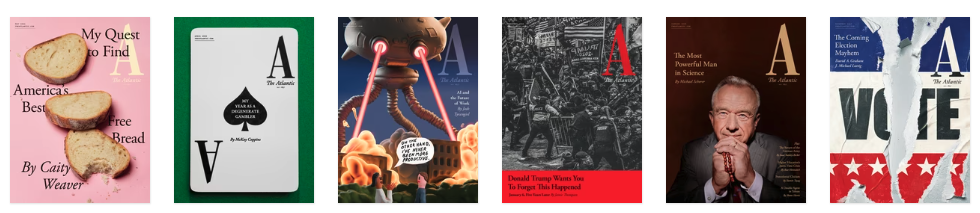
While The Atlantic has seen a massive expansion in editorial and audience across platforms – online, in podcasts, to its games, and on social – it has at the same time invested in its print publication while growing its subscription business.
In fact, last year the magazine increased its print frequency from 10 to 12 issues per year for the first time since 2002.
“The shape of print and what it does to a business has changed so remarkably,” says Garibaldi “If you think about the 90s when print was at the forefront in terms of distribution, it looks vastly different. Print is a central part of the value we provide to our subscribers.”
There are major benefits to having a stronger print presence – first and foremost, to have more issues to publish The Atlantic’s much-vaunted magazine journalism, and from a subscriber standpoint, to help reduce churn and to boost brand awareness.
“Subscribers retain at better rates when they subscribe to The Atlantic’s print tier,” Garibaldi points out. “And there is a lot of value in terms of our beautiful magazines having a presence on newsstands from a brand perspective.
“From a journalism perspective, our newsroom finds incredible value in terms of having 12 issues and filling those 12 issues with different stories as well as the powerful cover stories.
“And so collectively that is meaningful for us. Does that mean that it’s going to increase our circulation by tenfold, or it’s going to increase our revenue by tenfold? Not necessarily, but it is part of the strategic plan in terms of building value.”
Looking forward… and back
Like all media brands, The Atlantic is wrestling with the growing influence of AI and how best to integrate new tech. The magazine has clear red lines, however.
“Because we have clarity in terms of the editorial principles, we are a magazine for humans, by humans, about humans. That’s the core principle,” says Garibaldi. “So, we’re never going to use AI to write or replace the original journalism.
“But of course, AI does lend itself to numerous advantages in terms of productivity and of all the concentric circles that you then build upon from a business perspective in terms of increasing efficiency, like targeting and workflows. So, we are experimenting on that front, and we obviously have a clear view of our partnerships policies as well.”
While marching into the future with purpose, The Atlantic continues to be shaped by its rich past. Created in 1857 by a group of prominent abolitionists and writers, the magazine has stayed true to the vow of its founders to showcase literary talent and “understand and interrogate the American idea” while being “of no party or clique”.
“The Atlantic’s history is incredibly important – this legacy of 169 years,” says Garibaldi. “The covers and the pages of the magazine have been graced by so many prolific names from Harriet Beecher Stowe, Nathaniel Hawthorne, to scientists like Oppenheimer. And this storied legacy really does matter today and informs so much of our modern-day strategy.
“In terms of how we market our brand, how advertisers view us, how our readers view us, that does play a role. It plays a role in terms of how we look at design. It plays a role in terms of how we craft the experience for our readers and subscribers.
“And that is huge. It is a foundational piece that is very important to the functioning of The Atlantic.”