Cafeyn CEO Laurent Kayser on life after the Readly merger
When Ari Assuied, the trailblazing founder and CEO of French digital media streaming platform Cafeyn Group, passed away suddenly in 2023, it fell to Laurent Kayser to lead the company into the future. From the moment he was appointed, Kayser made it clear he would strive to further develop Cafeyn into the “European champion” Assuied had always envisaged. Earlier this year, that dream became a reality.
Having made the initial announcement in 2022, Cafeyn finally completed its acquisition of Readly’s non-Nordic operations in April, marking a landmark moment in the company’s European expansion. The deal saw Cafeyn acquire Readly’s operations in the UK, Germany, Switzerland and Australia from Bonnier – taking the French’s group to combined revenues of €100m.
To ensure continuity for readers, the original Readly application will continue to be owned and operated by Bonnier News for the Nordic markets. Non-Nordic subscribers will transition to a new application managed by Cafeyn, which will retain the Readly brand in these markets. It’s a structure that enables publishers to reach audiences across multiple markets through two complementary subscription platforms.
The merger follows the Cafeyn’s acquisition of Toutabo/ePresse (formally Readly France) in 2024, strengthening the company’s position in the French online press and media distribution market.
We sat down with Laurent Kayser to discuss the latest Readly merger, how the platform is approaching AI integration and why the company’s passion to bring quality journalism to the masses burns brighter than ever.
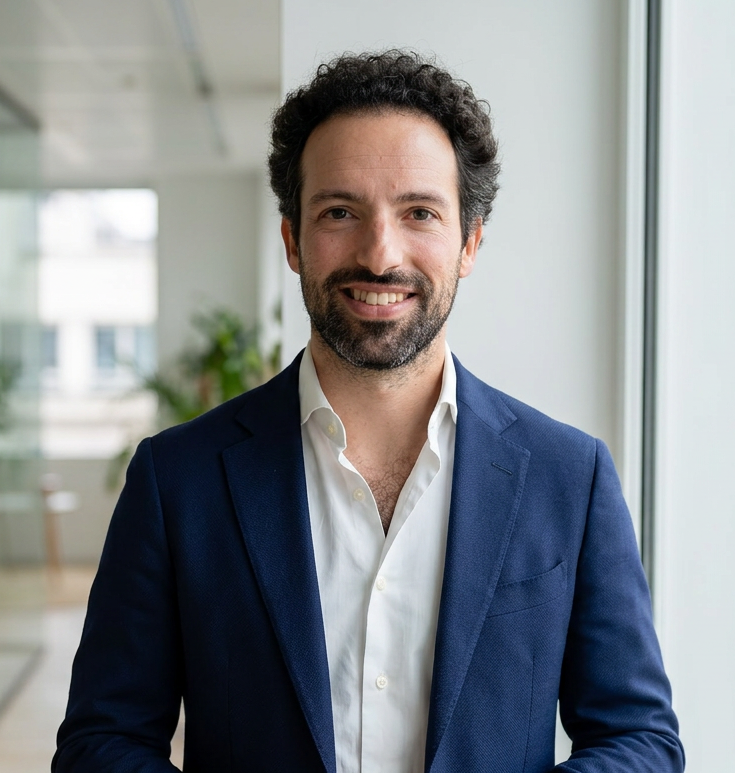
You’ve described the Readly acquisition as a “turning point” for Cafeyn. Could you talk us through the significance and benefits of the merger?
Well, by bringing the two companies together, we’re creating the European leader in the category. We now serve 2.5 million readers across 15 countries. What is very important in bringing those two companies together is that we get to a certain scale that allows us to do two main things. One is to continue to invest into the technology and the platform to be able to innovate and create the most innovative experience in this category. Also, as we grow and we can get more and more readers on the platform, we actually contribute more towards the publishing industry. We can also get more and more large titles and brands into the platform. So, it becomes even more attractive to publishers to join. It creates a nice virtuous circle where you get more subscribers hence more to distribute eventually to the publishing industry. Since the foundation of Cafeyn and Readly we have distributed €450 million to the publishing industry. We’re talking about a significant amount of money. On the other hand, we know the challenges of the industry so it’s not enough and we’d like to do more over the years to come.
I understand about 39 full-time Readly staff will be transferred to Cafeyn operations with no need for redundancies. It seems like the process has been smooth in terms of staffing.
Yes absolutely. I think Readly and Cafeyn are complementary businesses. From a people skills point of view and geographies as well. So, we kept all the Readly employees outside the Nordic. We are just under 200 people as a group. Half of the team is based in France. And then we have an office in Germany with about 25 people, an office in London with about 20 people and an office in Tangier with about 25 people. And we have also opened an office in Stockholm, where we have a few employees who are looking after the international activities of Readly. And we have a few people based in the Netherlands following the acquisition of Blendle. And then, because we’re excited about the potential of this merger, we have opened quite a lot of new positions across Europe. We have about 20 positions open at the moment with an eye on working on Cafeyn’s tech product. So not only are we not looking at redundancy, but we’re actually looking at getting more and more resources to grow the business.
You recently announced that the Washington Post is now part of your catalogue. How pleased are you about adding such an iconic brand on board?
We’re very excited to have the Washington Post as part of our catalogue. It also shows that, for very famous, prestigious titles like the Washington Post based in the US and internationally, doing a partnership with Cafeyn is interesting because suddenly you can reach a large readership that you might not be able to address directly. It’s a strategy of the company to keep on pushing and get more publishers on board. So hopefully it sets a trend for a very exciting year for us.
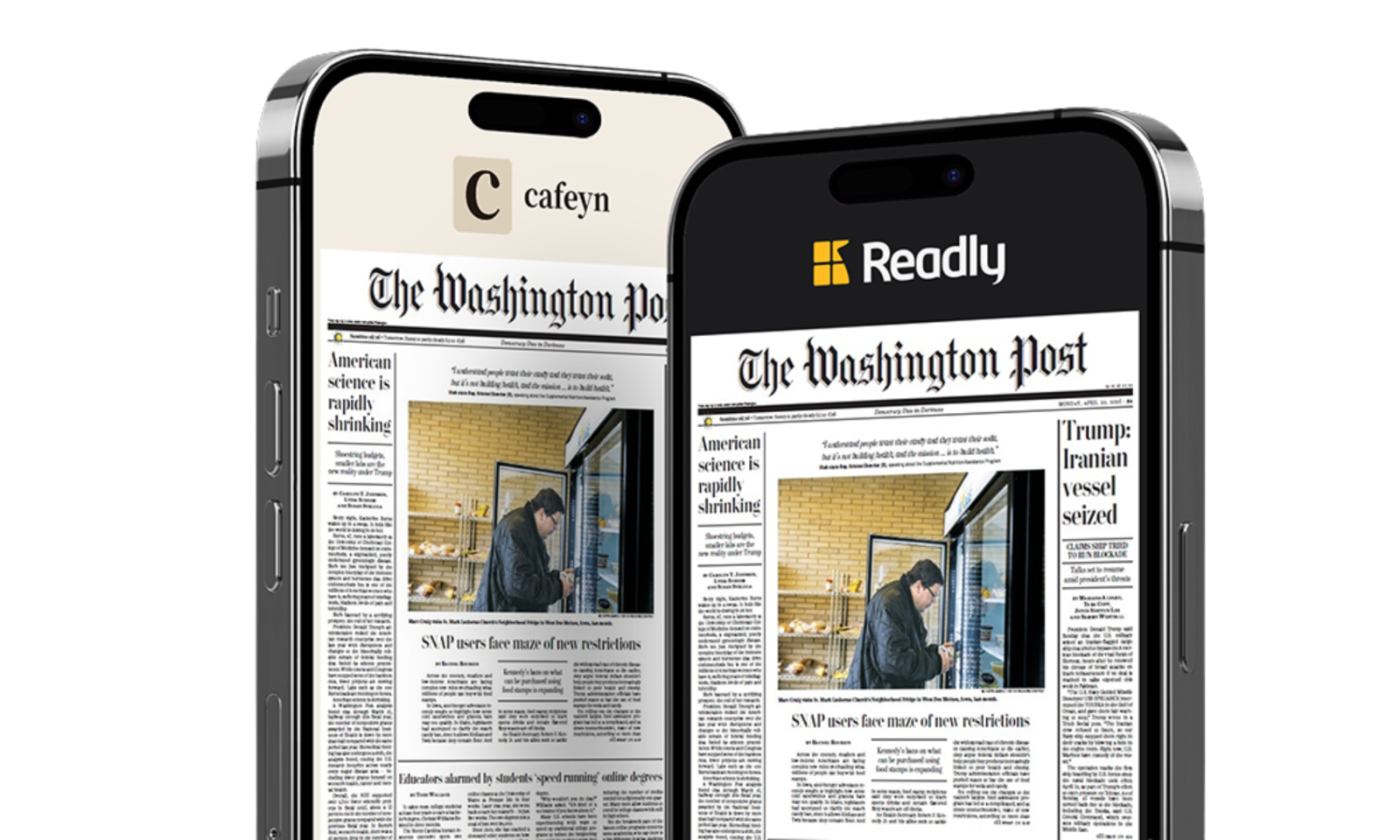
What does the arrival of the Washington Post say about Cafeyn’s commitment to connecting readers with trusted media brands?
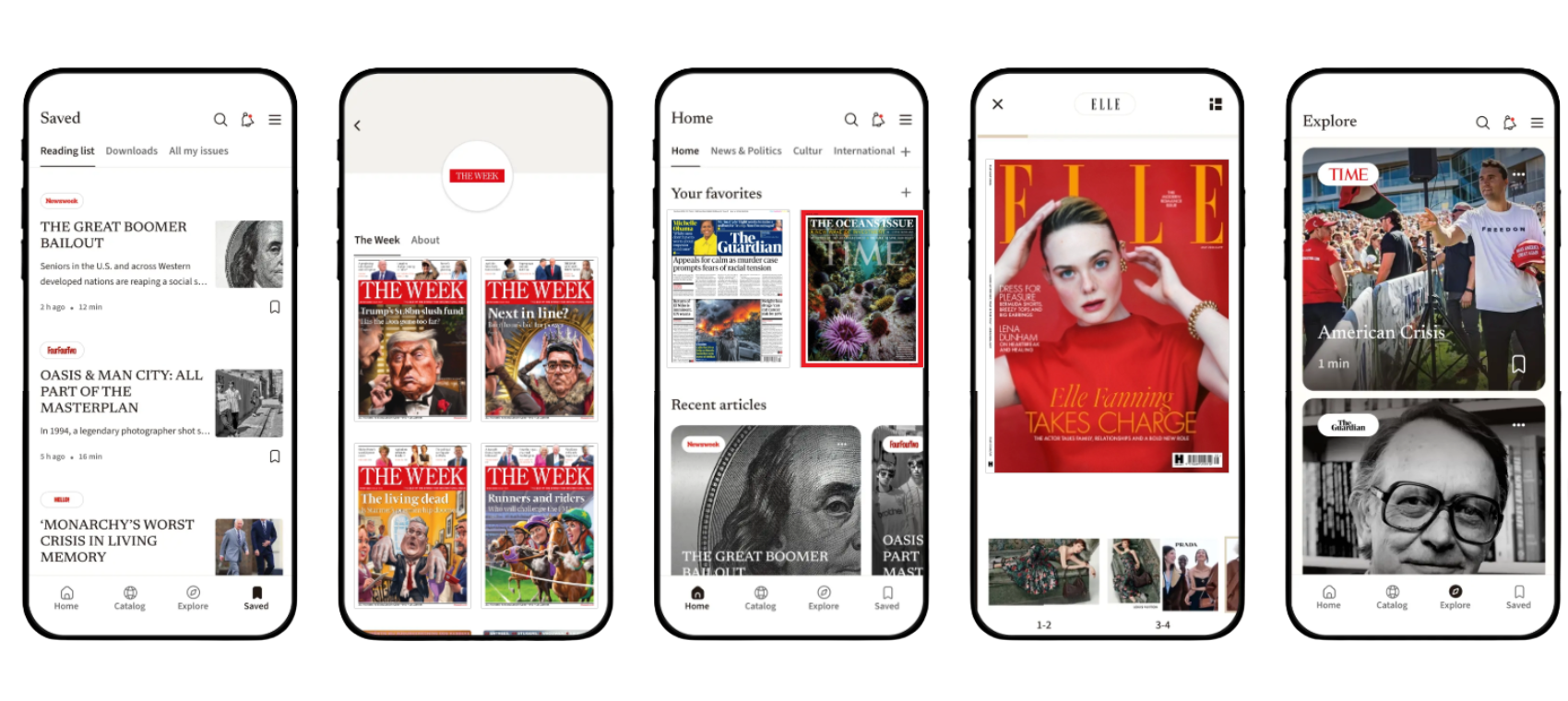
We have 6,000 titles on the platform working with more than 1,000 publishers across the world. We want to get more high-quality journalists on board. Our mission as a company is to be able to, in a single product, get trusted information created by journalists into the hands of readers. You can agree or disagree with the opinion of the journalist – that’s always been the case and that’s part of democracy. But eventually what you want is that, with the content being produced, there’s a journalist’s eyes on it and the work has been done to a certain standard. We partner with trusted publishers, some who have been doing this for a hundred years. So, to put that into a single platform where readers know they are getting access to trusted content is what we’re here for.
To help your subscribers stay abreast of current events you have developed an AI-powered ‘daily digest’ tool. Could you tell me a bit more about that?
That’s one of the innovative features that we have created using our algorithm.
Every morning this functionality gets the headlines out from the different magazines and newspapers within Cafeyn. This is soon to be launched on Readly. There’s a very short summary to trigger the interest of the reader to go deeper into the topic. Then at the end of this summary, there are the articles from all the sources we have linked to this topic that a user can rate. One of the strengths of Cafeyn as a platform is access to so many different publications and point of views. By bringing this into this functionality, we help readers to form their own opinion on a certain topic by leveraging the diversity and quality of journalism across different options.
What is Cafeyn’s approach to integrating AI into your operations?
The way we see AI is two-fold. Number one is that AI is able to bring efficiency internally.
AI can help you to be more efficient when it comes to a certain number of repetitive tasks that used to be done manually. So, we’re looking at how in tech and development we can use AI to be more efficient in the way we produce code. We’re also looking at other departments like HR, Finance, and so on. It’s something we’re excited about, because it creates more capacity for people to actually add value in their day-to-day job. The second thing when it comes to AI is how much financing those very large AI companies have been raising. They’re changing how people access content in general, not only information, but content in general. They have been developing this way of interacting with content that is changing user habits: Facebook, Instagram and TikTok have been changing the way people consume certain type of content. So, this is something we need to look at and understand how user habits will evolve. And we need to incorporate some of those innovations within the product to make sure that we can maintain an innovative product and are able to make sure all users find the type of experience they expect.
What about the content on the Cafeyn platform. Does AI play a role there?
There are certain red lines we cannot cross. For all the content we have on the platform there is an agreement between Cafeyn, Readly and the publisher. We ensure that AI crawlers are unable to scrape or steal content from them plus we’re not scraping and trying to steal content from them. That’s a red line we will not cross. That’s very important to us.
The average age of Cafeyn users is 42, which is younger than direct subscribers to the publishers. What’s behind this?
While it differs from country to country, the average age of traditional media is usually around 60 years old. So, we’ve been able to convince a generation younger than traditional media they should subscribe and pay to get access to this content. It’s something we’re very proud of. I think the product and the experience we’re offering answers the need of an entire category of the population that wants to get access to trusted information but wants to have it in a format they are used to in other content industries, like music or video. That’s what we’re creating with Cafeyn. We also spend a lot of time with different distribution channels, which we will bring into the geography where we’re really strong. In those distribution channels, we’re working with high schools, universities and public libraries to try to get the product into the hands of a younger generation. You create habits among these younger generations of getting access to a product with a code – something that’s familiar to them from a user point of view. Once they’re used to it and understand why it’s important for them, they subscribe to Cafeyn.
Cafeyn launched a tiered subscription late last year which also helps you connect with younger readers, right?
Yes, we launched our tiered offering in December last year and have been slowly launching into different geographies outside France. We have Single, Duo and Family.
Family is important for us because you can have a subscription for the family and, under that, have a profile dedicated for your kids or for your teenager. So, as a parent you can give your kids access to the platform in a single subscription and allow them to consume trusted information.
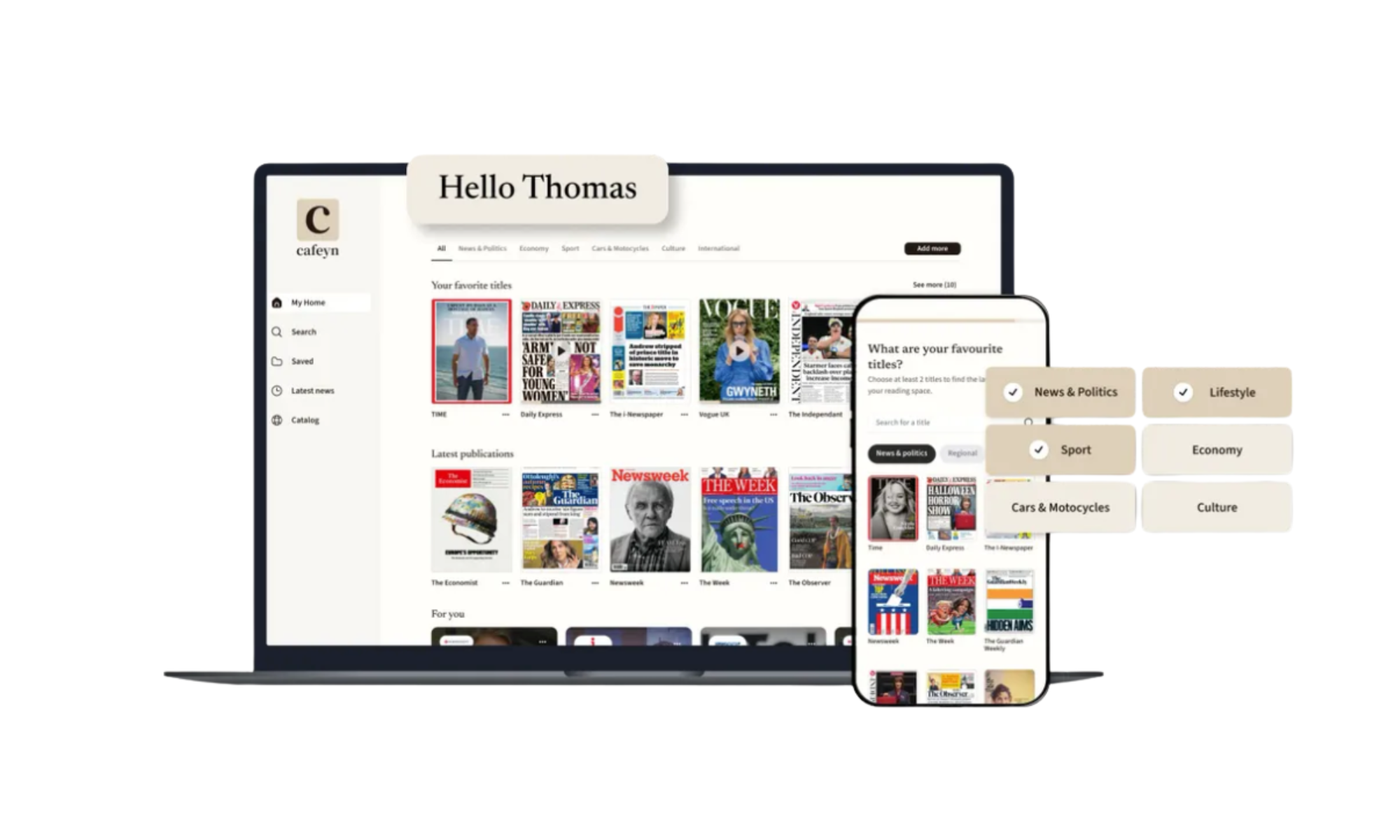
Looking towards the future, in which areas does Cafeyn want to expand? Maybe striking up more partnerships with big companies like you have with mobile networks like Virgin Mobile and O2?
Yes, we are. Historically, when you look at Cafeyn, we’ve been very strong at launching those partnerships with telecom operators, but also with banks and insurance companies that enables access to a large volume of users. It’s an interesting way to get your brand known with a trusted partner who is also very happy in doing so because they can add additional services and benefit to its users as part of the package. We’ve been doing this successfully with a dozen of partners across Europe. What we’re excited about is that with Readly, with the strength of the catalogue and the strength of the brand in the UK, Germany, Austria and Switzerland, we’ll be able to convince more and more partners that it’s not only about partnering with the video or music industries. You can also have this category of trusted information, which can touch millions of people in every geography. If you get the right product, it is very attractive to millions of subscribers. So, we’ll be looking at launching some of those partnerships across Europe.
What about selling your own platform technology as a white label solution?
Yes, we’re doing that as well. We’re selling and we’re offering services to publishers. We’re offering part of our technology as white label solutions to about 100 publishers.
It could be your recommended algorithm, your audio experience or your multi-title experience. We have a division dedicated to offering technology services to publishers. The focus has been France, Spain and Canada – historically where we had a presence – but we have now signed a partnership in Switzerland. With Readly, we’re actually looking at driving this as well and help publishers to digitalise their offering, managing the technology and services of the company. So that’s all part of the growth plan.
Since Ari Assuied’s sad passing, how important has it been for you to continue his mission with the same sort of passion that he showed?
You know, when I joined the company, which was called LeKiosk back then, there were around 30 people led by a founder with a big ambition and passion for the media industry. And I joined because Ari had this passion for this industry. Over time he transmitted it to me and helped me grow. After what sadly happened to us, it’s very important I continue to build on this and strive forward because I think that’s the reason why Cafeyn exists. That was the original vision of Ari and I’m carrying on his ambition and his passion.