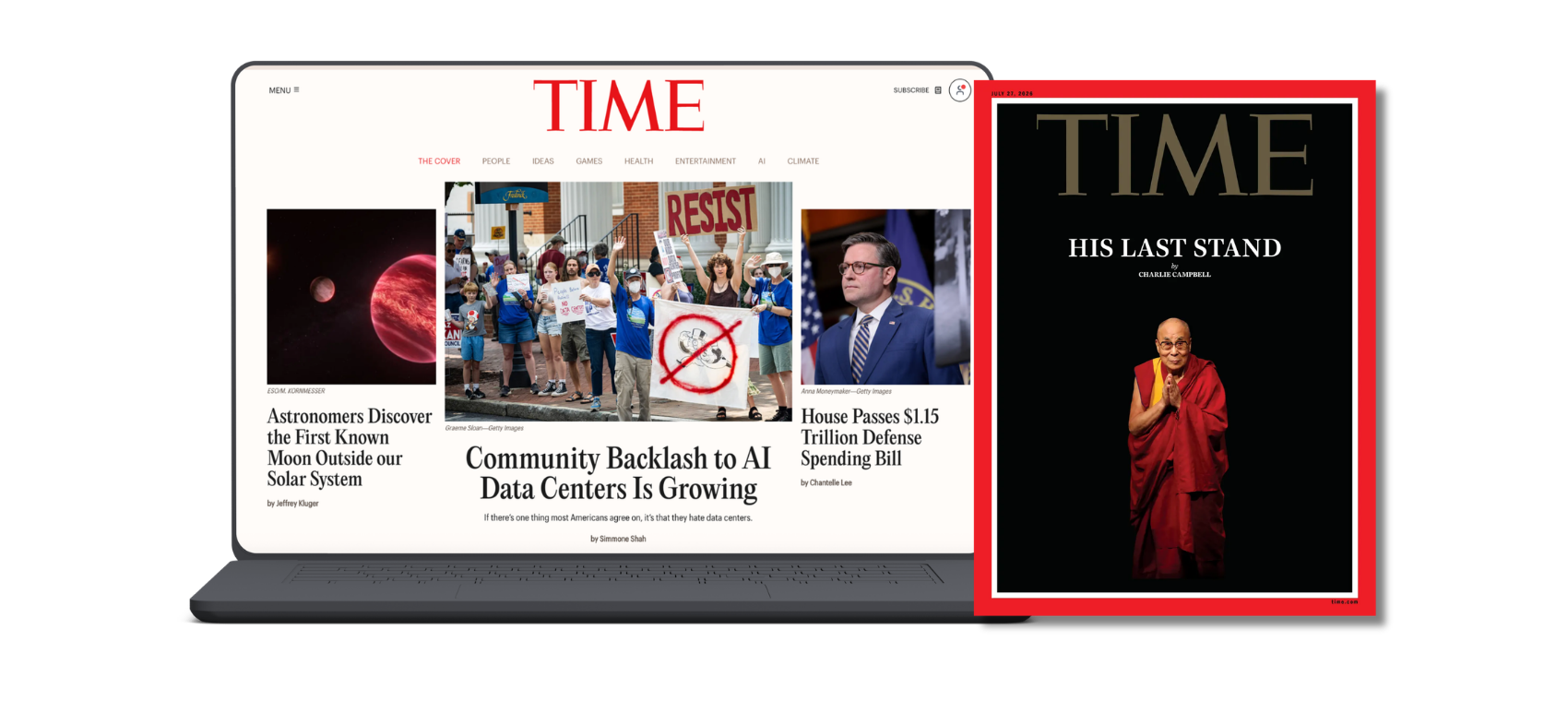
Beyond borders: Time’s SVP of Business Development & Strategic Partnerships Bridget Wilson on expanding the brand through global partnerships
“There’s never been a more exciting time to be at Time,” says Bridget Wilson as she contemplates being back at the famously red-bordered magazine as its SVP of Business Development & Strategic Partnerships after a year away.
These truly are extraordinary times at the 103-year-old legacy brand. Wilson has stepped back into the fold at a time when the magazine’s bold Time 3.0 strategy is in full swing.
Spearheaded by Jessica Sibley, who took over as CEO in 2022, the new business model has taken the magazine from print-reliant organisation to a diversified, B2B revenue-focused media company built on integrated partnerships and powered by a global, modern newsroom.
Time 3.0 has seen the brand massively increase events, expand its editorial tentpoles from eight to 18 (to include Longevity, Philanthropy, Sports and Creators) and grow its local-language journalism and partnerships with the new editions in Canada, France, Korea and Africa, as well as the launch of Time100 Next India – spotlighting 100 emerging Indian leaders across sectors – later this year.
Embracing new tech, Time last year launched Time AI Agent with Scale AI, giving readers personalised access to its archives and deepening engagement with its journalism. It follows more than a dozen AI partnerships Time has built since 2022 – including with OpenAI, Perplexity, Amazon Alexa, Mobian, ProRata AI and Tollbit – expanding discovery, audience reach, monetisation and internal tools.
The changes at Time have had an eye-catching impact. In 2025, the magazine saw its advertising revenue grow 22% year-over-year – its strongest result to date. Revenues generated from events are on course to represent 50% of Time’s total revenue in 2026, up 28% from 2023.
Figures released late last year show that Time’s audience is now the largest and youngest in its history, with more than 100 million people globally. Newsletter subscribers reached 1.9 million; and the magazine’s social footprint grew to 58 million in 2025 with 17% higher engagement year-over-year.

We sat down with Wilson to talk about international partnerships, AI strategy, tapping into younger audiences and the importance of inspirational leadership in Time’s transformation.
What’s it been like being back at Time?
I’ve been at the magazine for 10 years in total and I’m actually a boomerang, leaving in July of 2024 and coming back last September. Being at Time makes you realise just how much you value the hard work of journalists.
You’ve made a return to the magazine at a time when the Time 3.0 strategy is transforming the brand.
Yes, Jess Sibley has led Time through a company-wide transformation with the Time 3.0 strategy, which refers to our focus on driving B2B revenue through an integrated sales and marketing approach and the expansion of our tentpoles. We’ve established new partnerships with blue chip companies and launched new advertising offerings across our platforms. We grew our editorial tentpoles from eight in 2022 to 18 last year, and we are on track to produce 24 this year, including the inaugural Time100 Sports list which launched this month with a cover featuring LeBron James. With the Time 3.0 strategy, we have also convened a record number of events and are excited to continue expanding globally, including with the launch of Time100 Next in India for the first time later this year.
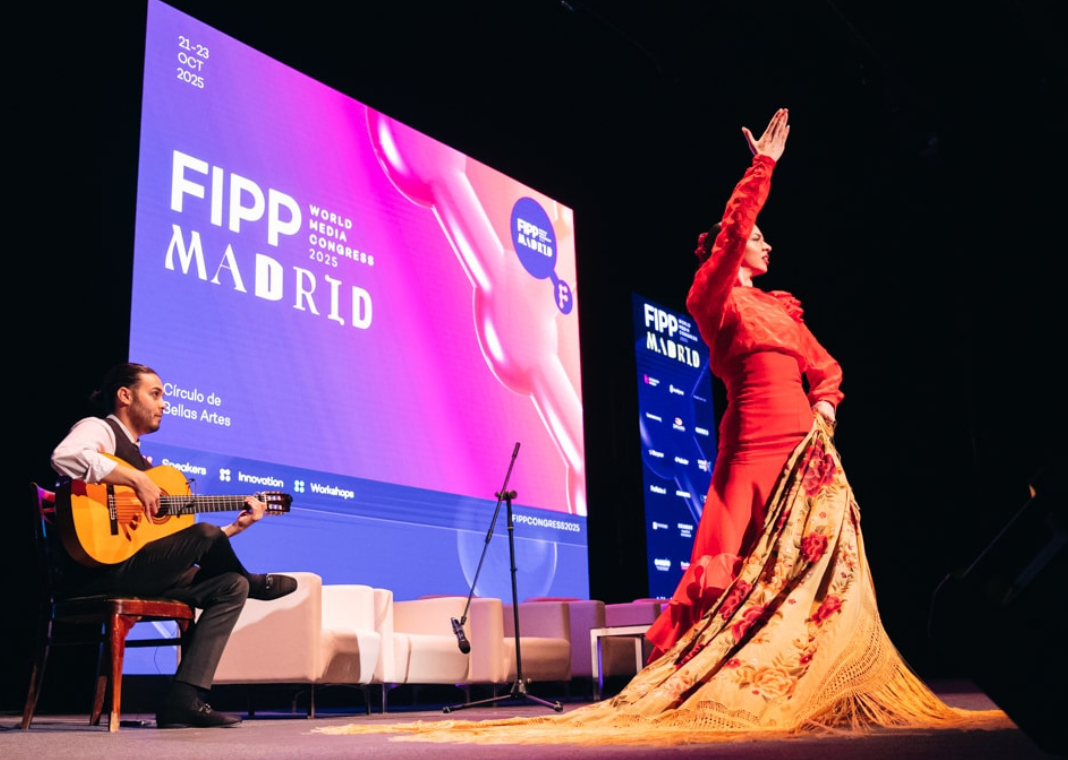
48th FIPP WORLD MEDIA CONGRESS
13-15 October 2026, Madrid, Spain
Last few tickets remaining!
Join the global media community in Madrid before the final places disappear.
Want to stay where the action is?
Contact us to find out about accommodation at the Congress venue, Hotel RIU Plaza España.
How important have integrated partnerships been in securing record-breaking advertising revenue figures at Time?
It speaks to the trust of the Time brand at this moment. In 2025 alone, we had 33 brand new partners, including IBM, Chase, Reliance (headquartered in India) and The Allstate Foundation, with whom we’ve partnered for Time for Kids. We’ve been able to diversify B2B revenue and our portfolio of offerings for advertisers with meaningful and innovative partnerships that bring both brands to life across events, digital, social including LinkedIn, and branded content such as our Executive Spotlight series, produced by Time Studios.
How has the increase in Time events helped to transform the business?
At Time, our events business has become a powerful convening platform, growing from 11 events in 2022 to 37 in 2025, with plans to reach 40 this year. We’ve welcomed more than 30,000 total attendees globally – from New York and Los Angeles to Cannes, Dubai, and Rio – and drawn some of the world’s most influential voices to our stages across industries. While the annual Time100 gala, now in its 20th year, remains a cornerstone, we’ve significantly expanded our event portfolio alongside the launch of new editorial tentpoles. We recently hosted our inaugural Time100 AI Leadership Forum and Time100 Philanthropy, with upcoming expansions including Time100 Sports and Time100 Creators. We are also diversifying the content produced in connection with these events, such as our first red carpet live stream for Time100, which we’ll do again for Time100 Sports this month. Events have also become the leading entry point for new brand partners. In 2025, 33 new brands came to Time through event partnerships, and 91% of those partners then invested across other Time platforms, making events a multiplier for the broader business.
You mentioned AI. Time’s partnership with OpenAI in 2024 made headlines while you have also struck many other deals with tech companies. Could you talk me through the brand’s approach to AI integration?

Time has been at the forefront of conversations around AI and how publishers can best catalyse it for the benefit of our industry. We’re not looking from the outside in, we’re striking up strategic partnerships and licensing deals and developing our own innovative offerings from a product perspective. In 2025, we launched an AI agent on Time.com, where we’ve vectorised and made our entire 103-year history available for readers. So, if you have a question about a headline or a story, you can look through the archive. It’s a wonderful, innovative asset where people can interact specifically through an AI agent that is only grounded exclusively in Time’s archive.
Time’s readership has never been younger than it is now. How have you managed to successfully tap into younger generations?
We have not only the largest, but the youngest audience in Time’s history. Nearly half of our audience is under 35 years old. This speaks to how important trusted journalism is for young people. Time is a brand that’s been trusted through history, but one that is also bringing in innovative editorial products and formats to meet those readers and consumers where they are today. Our vertical video storytelling is one example of successfully bringing that journalism to a younger audience.
Your Time for Kids platform has played a big role in that.
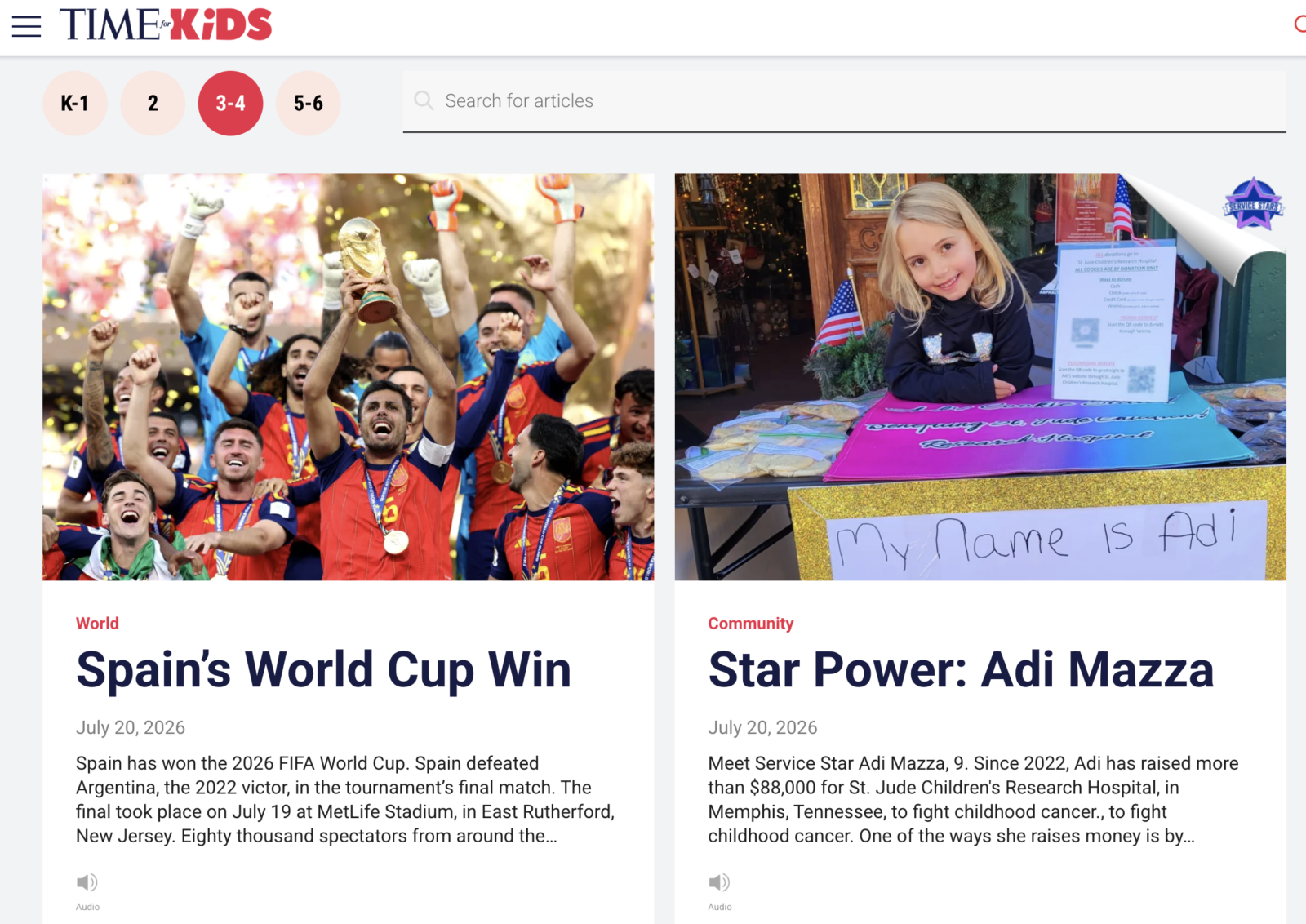
Yes, Time for Kids has been around for 30 years, reaching kids and educators in classrooms across the country. It gives kids access to trusted, age-appropriate journalism and programs like Kid of the Year, Girls of the Year, and Service Stars that show children that they, too, can be changemakers. As a mom of a three-year-old and a six-year-old, I know how much this matters. Time for Kids gives them a foundation of media literacy and access to credible, age-appropriate journalism at exactly the right moment.
The Time brand has travelled extremely well across borders. Could you tell me a bit more about your international expansion plans?
Time is focused on bringing our trusted journalism to new audiences through locally driven language editions with trusted partners worldwide. We view this as a way to broaden our journalism and reach and deepen our engagement in countries across the globe. We’ve just announced Time Canada and Time Korea in addition to launching Time France and Time Africa last year. These partnerships allow us to bring the brand to life in new and innovative ways as well as reach audiences we normally wouldn’t have the opportunity to reach with in-depth storytelling about their region. As we look ahead, Time is open to new partners across the globe, and we’d love to hear from them. We’re thrilled about those partnerships.
Looking towards the future, how important is it that Time continues to live up to its reputation as a source for trusted journalism in this age of misinformation?
Throughout our 103-year history, we’ve always been dedicated to trusted journalism, guided by our mission to tell the stories that matter most. In a media landscape increasingly shaped by AI-generated content and misinformation, that trust is more relevant and more valuable than ever. Audiences are actively looking for a credible source they can rely on, and trusted, original journalism remains our greatest competitive advantage.
And lastly, what is the best business advice you have ever received?
I’ve had the privilege of having a lot of great mentors around me and to have learned from the best of the best. And through the nearly 10 years that I’ve been at Time, it’s learning from the people who are at the forefront of their businesses, who have a long trajectory and history of excellence. I look to our CEO Jess Sibley, COO Mark Howard, Editor in Chief Sam Jacobs and Chief Brand Officer Maya Draisin. At Time, I’m surrounded by incredible talent and being able to learn from their leadership has been a truly enriching opportunity.