
Scotch, scarecrows and scrutinising Big Tech – meet the man behind FIPP’s new AI reports
Ricky Sutton has always been ahead of the curve when it comes to using new technology. “I was the first guy at News Corp with a laptop and a mobile. I’ve just always been someone who wants to try the new toy. It’s an instinct,” he explains.
“Accepted wisdom is that journalists do words, and others do numbers, but I love both. “For me there is a fascination that I can do so much more with this laptop. I can be a fully-fledged journalist anywhere. Once you understand my obsession with words, numbers and emerging tech, my career begins to make sense.”
Sutton’s passion for new tech, and an in-depth knowledge of how it’s transforming media, has been a key driving force during remarkable 40-year career.
Born in Kenya, he fled with his family as an infant during the Idi Amin coup, sparking a childhood ambition to be a war correspondent.
Sutton left home at 16, self-funded through journalism college and rose through local and regional papers in the UK before covering his first war, in Bosnia, in his early 20s.
He joined The Sunday Mirror as an investigative reporter before switching to News UK in the late 1990s as a reporter at the News of the World. He was made the paper’s first head of digital during the Dot Com Boom, which led to promotion to run the newsdesk of the UK’s largest paper.
A decade later, he was posted to News Corp Australia to support the company’s digital change management of more than 2,000 journalists and production staff. While at News Corp he had an epiphany.
“I realised that digital was going to be as much of a risk as a benefit for publishing if we got it wrong,” he recalls. “And I feared that we were falling behind.”
Sutton quit his job and took up a maternity cover role running video and entertainment at Microsoft’s MSN in 2007, giving him insight into how a tech giant with unlimited audience and resources saw content. He also had a front row seat to some very early AI.
“My takeaway from the six-month stint was that news had to change and AI was coming,” he says. “And I believed the first wave of disruption would come in video.”
Next, he joined The Sydney Morning Herald and The Age in Sydney as head of video and ran strategy in the brand-new connected TV space. Sutton hatched a partnership with the BBC and Bloomberg to stream full-length documentaries on the papers’ homepages in the evening and at weekends – and on Samsung’s new smart TVs.
After “a light went on” that the future of digital news-telling was going to be audio and visual”, he quit his job and raised millions in investment to create a video start-up called Oovvuu to partner publishers with broadcasters to embed a relevant video in every article.
The scale of billions of page views and millions of videos needed matching novel new tech, so Sutton Ieant into what I learned at MSN. The start-up used Natural Language Processing (NLP), which was just emerging then, to enable Oovvuu to read articles and watch videos and match them together in a fraction of a second.
After his Oovvuu dream died during Covid, Sutton started Future Media in 2023. It has grown into a newsletter (initially called Scotch and Watch), podcasting and intelligence network with 38,000 paid and free subscribers across 102 countries.
It publishes weekly on the collision of media and tech sharing insights, interviews and deep analysis of emerging tech and policy from copyright to social media bans and of course, AI.
Now, those insights are being shared in FIPP’s new AI report series on search, distribution and monetisation. (The first report was launched this June, exclusive to FIPP and WAN-IFRA members.)
Ahead of their release, we caught up with Sutton who, evening scotch in hand, talked about everything from the changing face of media, to The Wizard of Oz and hanging out with Tony Blair.
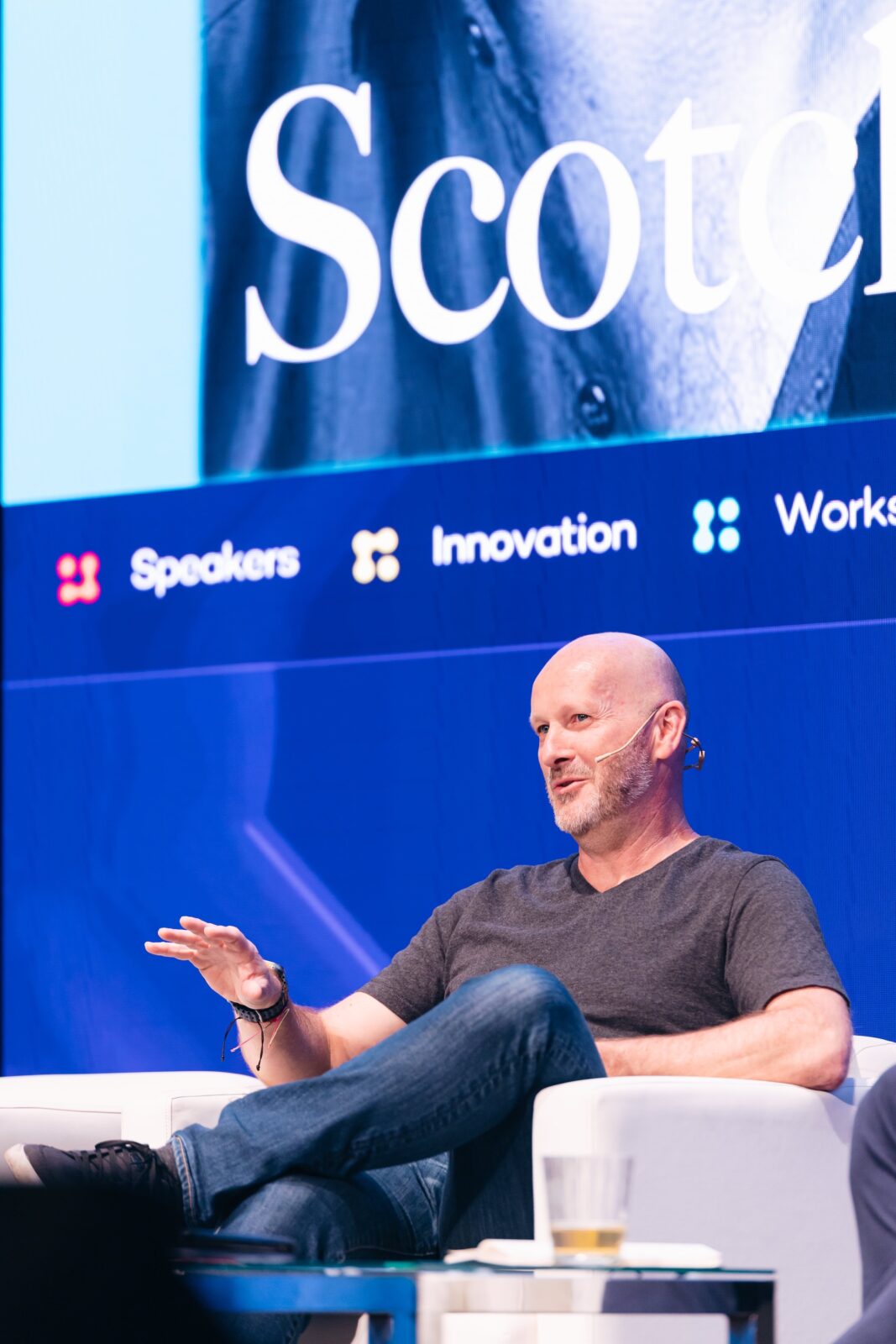
For those who don’t know, could you explain why your newsletter was initially called Scotch and Watch?
I had been the first introduction to AI for many media leaders through my work at Oovvuu, and when it ended five of them asked me to keep advising them. I initially created the newsletter for them. It was called Scotch & Watch because they would call me when it was late in Sydney and I was having a whisky, and my wife was trying to watch TV. It was a joke. I wanted them to stop calling so late.
How did the newsletter grow from five people to the thousands that now make up the Future Media community?
That was an accident. Six months in, I chanced across Substack’s analytics and found hundreds of people were reading and sharing. I had no idea. The newsletter was free and my friends were sharing it around the office. It had then spread far and wide. Publishers and tech folk all over the world were reading. Then, some of them began voluntarily paying, even though it was free. The first paid me $475 and left a note saying: “Ricky, I can see you’re putting a lot of time into this, and I can’t in good conscience keep reading it without paying you something.” After that I felt I had permission to turn on paid subs, obviously (laughs) and it’s grown from there. I write a couple of times a week about regulation, AI and new monetisation models. I’ve been at it for nearly three years. There are 500 posts, hundreds of charts, and almost three million of unique reporting. Through it all, I’ve learned publishing needs to take back control of discovery, distribution and monetisation from the platforms. Without it, we can’t control our future.
Was it always your plan to strike out on your own?
No, but I began to feel unable to innovate from within a newsroom. I kept being knocked back. I pitched microblogging before Twitter while in London but was ignored. My social media idea for News Australia but we bought Myspace. A podcasting model I shared in 2005 was never actioned. I knew we had the audience, so we should have tried, but the innovation ambition was lacking. I was also seeing my colleagues fall hook, line and sinker for Google, Facebook, and others. I didn’t think we needed them. And I didn’t think we should trust them. That was my journalism side colliding with my tech side. I felt we were beholden to platforms and had no Plan B. We were obsessed with Google search, page views and SEO. Then Meta for getting cheap page views and likes. Then we were all in on Google’s programmatic advertising. It was hard to explain my worries to colleagues who believed these all were solutions to their biggest problems. I had a rising dread. It kept me up all night. We were not in charge of our destiny. I had to go.
48th FIPP WORLD MEDIA CONGRESS
13-15 October 2026, Madrid, Spain
Last few tickets remaining!
Join the global media community in Madrid before the final places disappear.
Want to stay where the action is?
Contact us to find out about accommodation at the Congress venue, Hotel RIU Plaza España.
Could you tell me a bit more about Oovvuu and the lessons you learnt from the start-up?
Hundreds of publishers and broadcasters across the world used it so a reporter in Sydney could use a rights-cleared BBC video moments after it was published in London, and everyone would get paid. It also revealed the challenges of AI. We quickly experienced the hallucination problem that the big AIs are tackling now. It was wrong two times out of five, and that’s a crisis in news! The solution was found within the newsroom. We changed the AI to recommend video matches to journalists and let them choose. Their decisions taught the AI, and when we blended how people watched the videos, it learned fast.
What have you learnt about the complex relationship between Big Tech and media over the years?
I’ve spent decades diving into that conundrum and I’ve boiled it down to three things: Discovery, distribution and monetisation. The publishing industry surrendered discovery to Google search, distribution to Google and Meta, and monetisation to Google’s programmatic advertising. When we didn’t control those things, publishing became a widget in their assembly line. That made us a cost to them, not the product – and that’s why they behave like they do now. About six years ago, I began deconstructing the platforms’ finances and strategies. I began investigating regulations, attending antitrust trials, and dissecting news media bargaining codes.
Most colleagues said I was wasting my time. The platforms were our friends. They said Google needed publishers to make search work, and Facebook’s engagement would collapse with our content. I knew that wasn’t true because I was inside the platforms and I could see their incentives and goals were scale and advertising – which meant we were on a collision course.
You’ve spoken before about how being a war correspondent has helped you analyse Big Tech. Could you elaborate?
I was in my early 20s when I covered the Bosnia war. I met people on all sides fighting for their lives. I learned they were similar people, but each had a dramatically different world view. It’s the same with tech. They are incentivised by money to deliver unrelenting growth, typified by the move fast and break things ethos. It’s those incentives that drive the behaviour. There’s little time for humanity or fairness in that competitive environment, so if bad behaviour delivers growth, that’s what happens.
Two decades of lax regulation to protect competition has not helped either. That void enabled the flywheel that led to today’s monopolies. But this is not new. It happened in America 135 years ago. It was called The Gilded Age. The Google and Facebook then were in steel, railroads, banking and sugar. They became known as the Robber Barons. Their wealth soared, prices went up and everyday people became poorer. Eventually people became angry and pressured politicians to act. The first antitrust laws were passed to break the monopolies’ grip. It’s the same Sherman Act that was just used to rule Google a 2x monopolist.
Viewed through a long lens, it’s not hard to see how bad this gets and how to fix it. I use Future Media to share the incentives and this long view. Not just what’s happening, but why, and what to do about it. Hundreds of my subscribers today are regulators on the frontline in these monopoly cases. They are lawyers running publisher class actions. And dozens of governments working on restoring competition. Many fear unchecked growth will accelerate with AI and hate speech and misinformation will threaten the open web and democracy. I worry about that too.
You’ve also pointed out that there are parallels between monopolies and The Wizard of Oz.
Ha, yes! And this is why. What’s going on is multi-faceted and complicated. I find people understand better when it’s made relatable. That’s why I presented the Wizard at South by South West Sydney. The book was written by an American newspaper editor called L Frank Baum at the end of the last Gilded Age. It is presented as a fairytale but it’s actually a dark fable about monopoly. He used Scarecrow to depict the early 20th century farming industry. He has straw in his head because the industry wasn’t using its brain. It didn’t want to think about the potential of new technologies. Tin Man was US manufacturing, which had become rusted by inaction and unions and couldn’t move. Lion was US politics. He had a loud road but was too cowardly to do anything about it. He was used to mock regulators and lawmakers who had teeth but wouldn’t use them. The Wicked Witch was Wall Street, and her flying monkeys were insurance salesmen preying on people. The yellow brick road was the gold standard – the way the currency was valued – and Oz was ounces, the way gold is weighed. And the tech genius wizard lived in an Emerald Kingdom, which was green because of the all-powerful US dollar. I brought the story to life with a friend dressing up as the characters and walked through then and now. Many now believe that Baum wrote it as a children’s book as a warning for future generations.
Where does journalism fit into the narrative?
We look worryingly like Tin Man right now. We have forgotten our strengths and are rusted in place. We are not adapting fast enough to the environment we’re in.
But that’s a choice. We can change. We just need to get the rust off. We need our Dorothy and Toto. Do you remember how the story ends? Tin Man’s joints are oiled, the scarecrow discovers he’s smart and the lion discovers his roar. In the end, Dorothy and Toto march up to the wizard’s kingdom where he tries to terrify and distract them with a light show. But Toto braves it all and tugs back the curtain revealing him as a failed hot air balloonist pulling levers. That’s not a million miles away from what Big Tech does today.
Dorothy depicts the everyday person, and she wakes to realise it was all a nightmarish dream and the world’s wonderful again. I believe the publishing industry needs that awakening. It has enough creativity to thrive, and it creates products that people love. Where it’s losing is on monetisation. Today’s wizard are hoarding it. Publishing is not innovating. It’s not showing enough courage. It’s not thinking hard enough. Where are the media’s home-grown AI tools? I’m bullish this is starting to happen. My first FIPP report uses 100 interviews I’ve done with leaders setting that standard, and one thing is very clear. Everybody has figured out the platform era is sunsetting, and we must regain control of discovery, distribution and monetisation. But it’s not because we’ve stepped off it, but because platforms have stepped away from us – Google with AI overviews, Meta’s blocking news. X is blocking links. They’re not coming back anytime soon. We are going to need to rebuild the three legs for our own stool now to remain relevant and sustainable.
Tell us a bit more about the FIPP AI reports.
There are two this year. The first is on discovery and distribution and the next focuses on monetisation. Leaders across the industry have been open and honest about the way they are cutting the apron strings with platforms and building new connections with their consumers. The report explores the results of their experiments in newsletters and events, and how it is changing the way they write and think about their brands. The platform era is ending, the people era is reviving. The old goals of mass reach are being replaced by personal 1:1 connections with our readership. When we achieve it, we will regain discovery and distribution, and that will make the industry more sustainable. Monetisation will follow that.
Lastly, what’s the best business advice you’ve ever received?
A very famous media figure who had just promoted me took me to one side and told me the story was never about the politics, it was about the people. Everybody gets drawn to power, he said. It’s like a magnet, but at the end of the day, they’re just people working for the people. The people are also our readers, so focus on them always. In my final days as a reporter, I wrote a letter to then Prime Minister Tony Blair. It said: I reckon being Prime Minister is a really hard job. I’m a reporter at the News of the World and we have millions of readers. ‘I’d like to come and live with you for a week to see just how hard your job is. His office rang and said yes – though it turned out he actually lived at 11 Downing Street because it had more bedrooms for his children. I spent an entire week with Blair and saw first-hand as an ordinary guy some of the pressures he was under. I learned that politics is about people. And so is journalism. At the end of the day, we’re all trying to get to the best thing, which is a better outcome for everyone in our country. That’s stood me in good stead for a long career – but I don’t think it’s occurred to tech at all.
The first report, focused on Discoverability and Distribution, is available through the WAN-IFRA Knowledge Hub, exclusive to FIPP and WAN-IFRA members.
Check out Ricky’s newsletter: