FIPP launches new report exploring discovery and distribution for the monopoly AI age
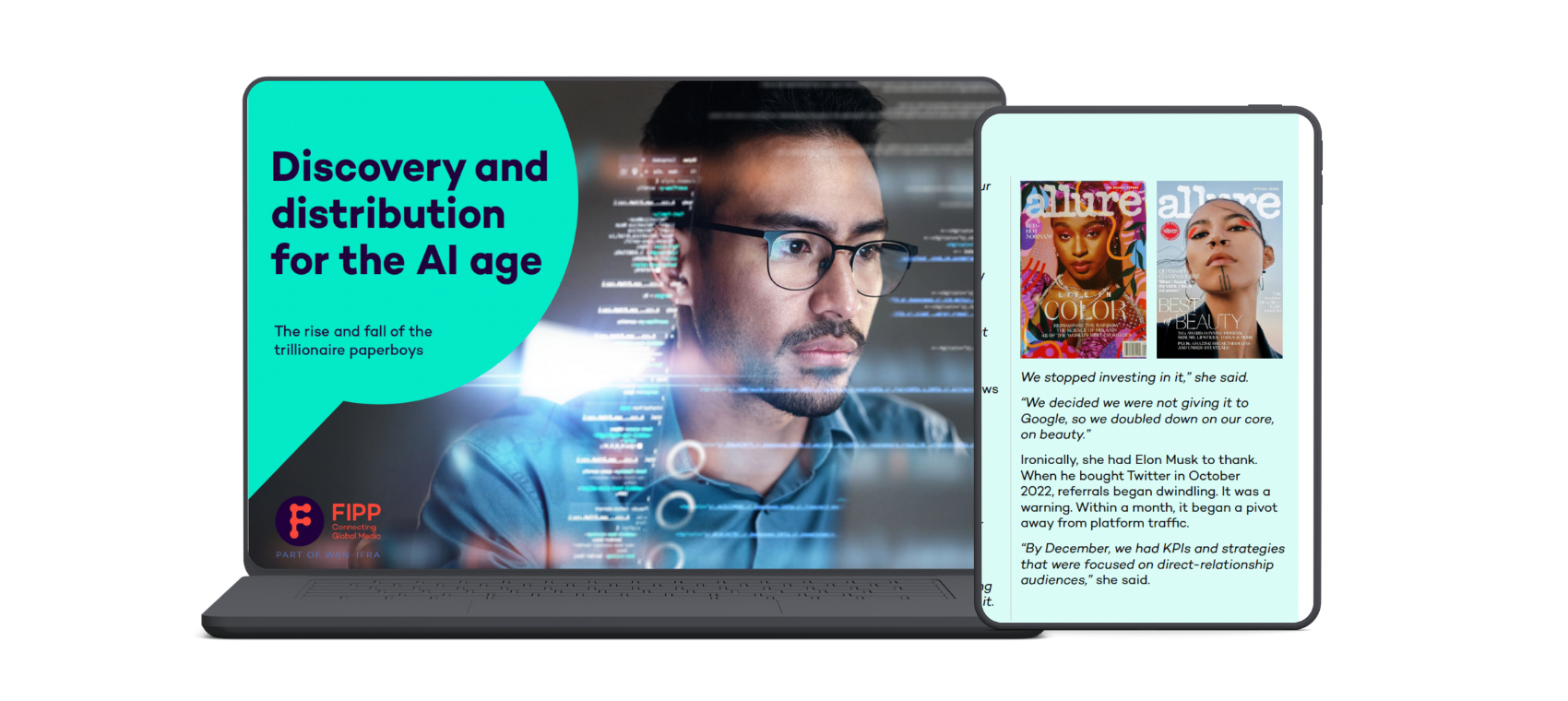
With the sun setting on the platform era, FIPP’s latest AI report, launched this June, aims to act as a guiding light for publishers to help negotiate the path ahead.
Built on three years of data, direct reporting and interviews with global leaders in publishing, platforms and regulation, the report is an indispensable roadmap to navigating discovery and distribution in the AI monopoly age.
With platforms that organise discovery and distribution becoming advertising monopolies, the landmark report features case studies of publishers that are cutting the Big Tech apron strings, building their own direct consumer products and fostering closer one-to-one relationship with their readers.
Download Discovery and Distribution for the AI Age – exclusive to FIPP and WAN-IFRA members.
With FIPP now part of WAN-IFRA membership, all FIPP resources are moving to the Knowledge Hub. This central platform also hosts a wealth of media industry presentations, recordings, expert insights, and more.
FIPP members now gain access to the full library of WAN-IFRA content across its communities, including Distripress, Women in News, AI in Media, and others. Register in the Knowledge Hub to start exploring. Scroll down for details on how to get started.
The study also explores whether AI tools will emerge as effective replacements for referrals, or as new funding sources that can replace the lost advertising billions.
It features insights from industry leaders including Vineet Khosla, CTO at The Washington Post and who helped build Siri; Robert Thomson, CEO of News Corp; Substack co-founder Hamish McKenzie; and Condé Nast’s VP of Audience Strategy, Sarah Marshall.
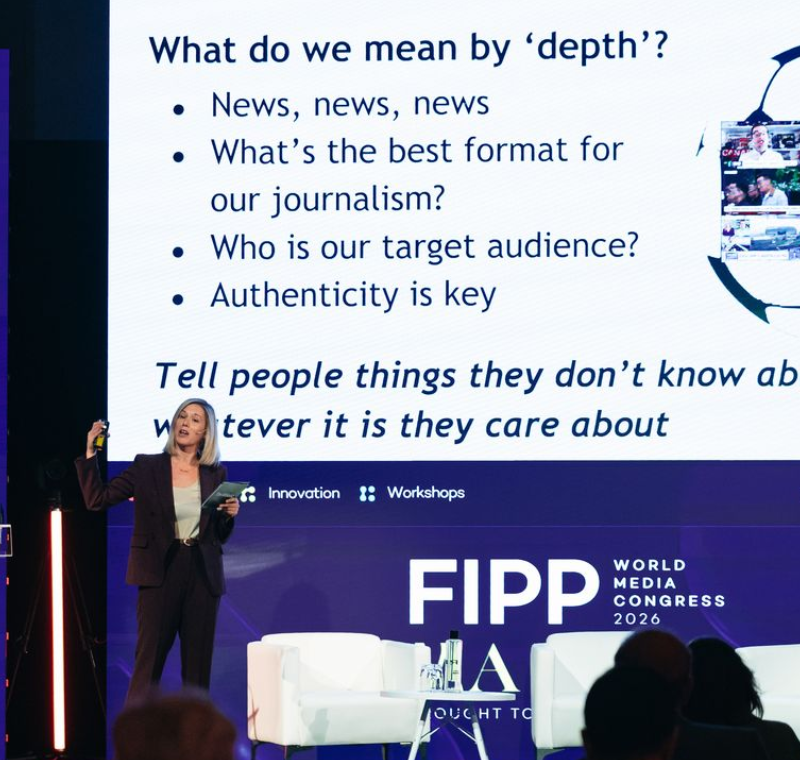
“There’s over 100 interviews in the report from people in the industry that I’ve spoken to over the last three years and what’s incredibly clear is that everybody has figured out that the platform era is sunsetting,” says Ricky Sutton, author of The Future Media Substack, who wrote the report. “That’s not because we’ve stepped off it, but because it’s stepped away from us.
“The people that deliver the news that we create are the ones that make trillions and the people that created it and read it got nothing. That’s a market failure. Publishers have to take back control of discovery, distribution and monetisation because without it, we’re nothing.”
Related: Scotch, scarecrows and scrutinising Big Tech – meet the man behind FIPP’s new AI reports
The crumbling three-legged stool
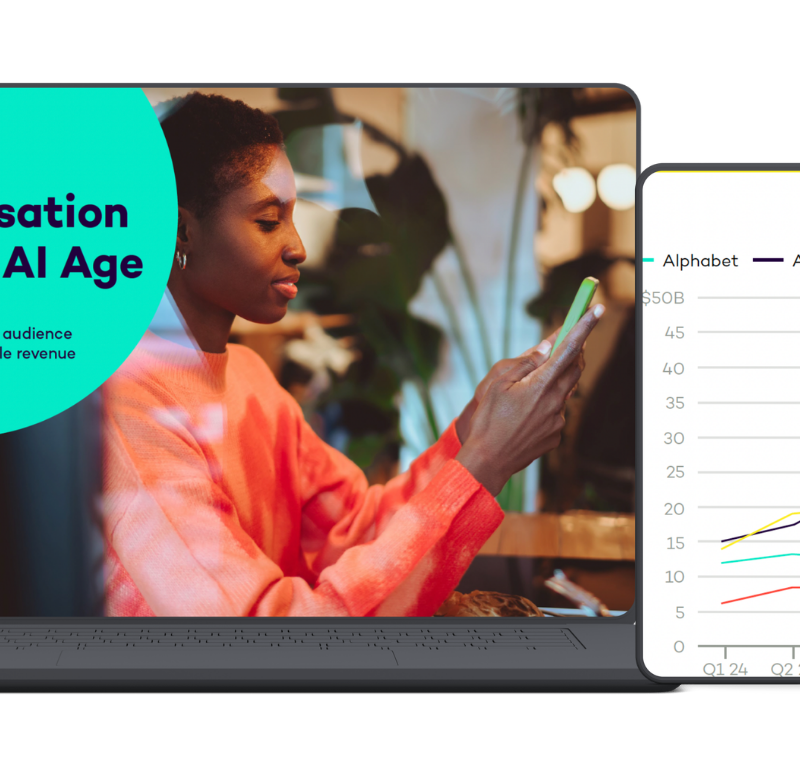
Laying out the scale of the problem facing publishers, the report reveals how, in the year to April 2026, Google search referrals to more than 2,500 publisher websites tracked by Chartbeat fell 38% globally. Since the COVID peak, referrals to publishers have fallen by 4.6 billion page views a month.
Google Discover is down 19%, while smaller publishers (1,000 to 10,000 daily page views) lost 60% of their search referral traffic over two years. Mid-sized publishers were down 47%, while even the largest sites, with more than 100,000 daily page views, have lost 22%.
The report not only looks at the catastrophic lost referrals but delves into the lesser told and largely misunderstood stories about why it’s happening. This includes Google’s purchase of DoubleClick, the display-advertising company – a landmark acquisition that solidified Tech giant’s dominance across the digital advertising ecosystem.
Google – and, in time, Meta – became reliant on advertising to deliver the double-digit quarterly growth Wall Street demanded of their soaring valuations.
“Google with AI overviews is off doing its own thing and doesn’t care about publishing anymore. It’s just interested in making as much advertising money as it can,” Sutton points out. “And Meta’s not coming back anytime soon.
“So, we now can’t rely on Google for discovery or Google and Meta for distribution or Google for monetisation. Those are the three legs of the stool our entire industry sat on for the last 15 years. It’s either die or get off the stool. And if you get off the stool, then you have to build your own.”
Searching for answers
Discovery and Distribution for the AI Age features a number of case studies that shows how some media companies have adapted to referrals dropping off a cliff by forging closer relationships with readers.
It includes Allure, Condé Nast’s beauty brand, which has moved fast to adapt to the changing discovery landscape. When Meta changed the Facebook algorithm in June 2023, a fifth of Condé Nast’s social traffic vaporised overnight.
In response, Condé began refocusing its SEO team towards driving traffic to its owned titles, while editorial resources were increased for long-form expert pieces, product testing and beauty interviews. It forged a turnaround in product quality and customer loyalty.
The report also goes behind the scenes of the launch of Ask the Post, a conversational AI product built on The Washington Post’s own journalism – a bet that the relationship between reader and news brand can be rebuilt around something other than the page view.
Already, 30% of all Ask the Post usage comes directly from readers within articles.
“What we’re seeing is the reach era is ending and now it’s becoming personal,” says Sutton. “We’re remembering from our muscle memory what it used to be like when we were a newspaper and having a one-to-one relationship with our readers.
“And, so the platform era is over, the people era is starting and we’re needing to regain
that personal relationship with our audience. And that, I think, is sustainable because we control that. No intermediary.”
Is AI really our saviour?
The report also crunches the numbers and speaks to tech experts to ascertain whether AI tools are really what the media industry needs to replace referrals and lost advertising billions.
Chartbeat data – combined with Sutton’s interviews – does not support a thesis that AI will be a significant new surface for publisher content in the short term. ChatGPT referrals to publishers rose 200% year-on-year between December 2024 and December 2025, but it masks the real numbers.
According to publishers, ChatGPT drives 0.02% of their traffic. Perplexity was 0.002%. All AIs combined were less than 1% of publisher pageviews, Chartbeat found.
A second hope is that AI licensing deals will evolve into a stable revenue line.
The Reuters Institute asked publishers how significant AI licensing revenue would be in three years. Just 20% expected substantial income, and 49% a minor contribution. Smaller publishers notably expected nothing at all.
Deal terms remain secretive and opaque, with rumoured terms ranging from straight licensing to revenue share, prominence agreements, training-data access and innovation funds.
However the relationship between AI and publishers evolve, Sutton cautions that the industry should repeat the mistakes of the past.
“We went into the search era, and we all jumped on board with Google. And then we went into the social era, and we all jumped in bed with Meta. And then we entered the programmatic advertising era, and we all jumped into bed again with Google. We are doing the same with AI.
“We should know now by the 4th generation that every time we do that, we are setting ourselves up for another failure, because all of these companies are listed, in incredible competition with everybody else and they will eat everyone in sight to get to where they need to get to because they have no choice,” he says.
“We as an industry are more than capable of building a publisher first AI without jumping into bed with OpenAI. We don’t need to do that. Asking OpenAI to make the tools for our industry is setting ourselves up to fail, just like we did with programmatic advertising. We don’t need to be a follower. For 100 years, we were a leader. We’ve forgotten that. And I think we need to remember who we are.”
A second report by Future Media in September will focus on monetisation, with a state-of-the-industry report following for the World Congress in Madrid in October.
WAN-IFRA’s Knowledge Hub
As part of our WAN-IFRA membership, FIPP members have access to the WAN-IFRA Knowledge Hub, featuring practical insights, reports, tools, and resources for the media industry.
What you will find in the Knowledge Hub
- The latest Industry research, reports, event recordings and webinars
- On-demand access to insights shared across the WAN-IFRA network
- Service requests: a central entry point to direct any enquiries for WAN-IFRA Services.
How to register
Registration is quick and self-service:
- Go to the Knowledge Hub home page, and select the “sign-up to unlock” button in the middle of the page
- Complete the registration form using your work email address
- Confirm your email to complete the sign-up
Once registered, access is automatically granted and you will be able to explore all the latest insights and information in the world of news and media.
Need help?
If you experience any issues with registration or access, support details are available on the sign-up page, or you can contact WAN-IFRA on knowledgehub@wan-ifra.org directly for assistance.