
A decisive blow: How Netflix won the streaming wars
The streaming wars are over. The undisputed winner is Netflix and for those who still have any doubts, former Hollywood Reporter editor and influential media analyst Matthew Belloni recently laid it out like this on his X account: “ALL of the Netflix Top 10 movies right now are licensed from legacy studios, and 9 are from studios with their own streaming services (including four recent hits from Warner Bros.). The streaming wars are officially over.”
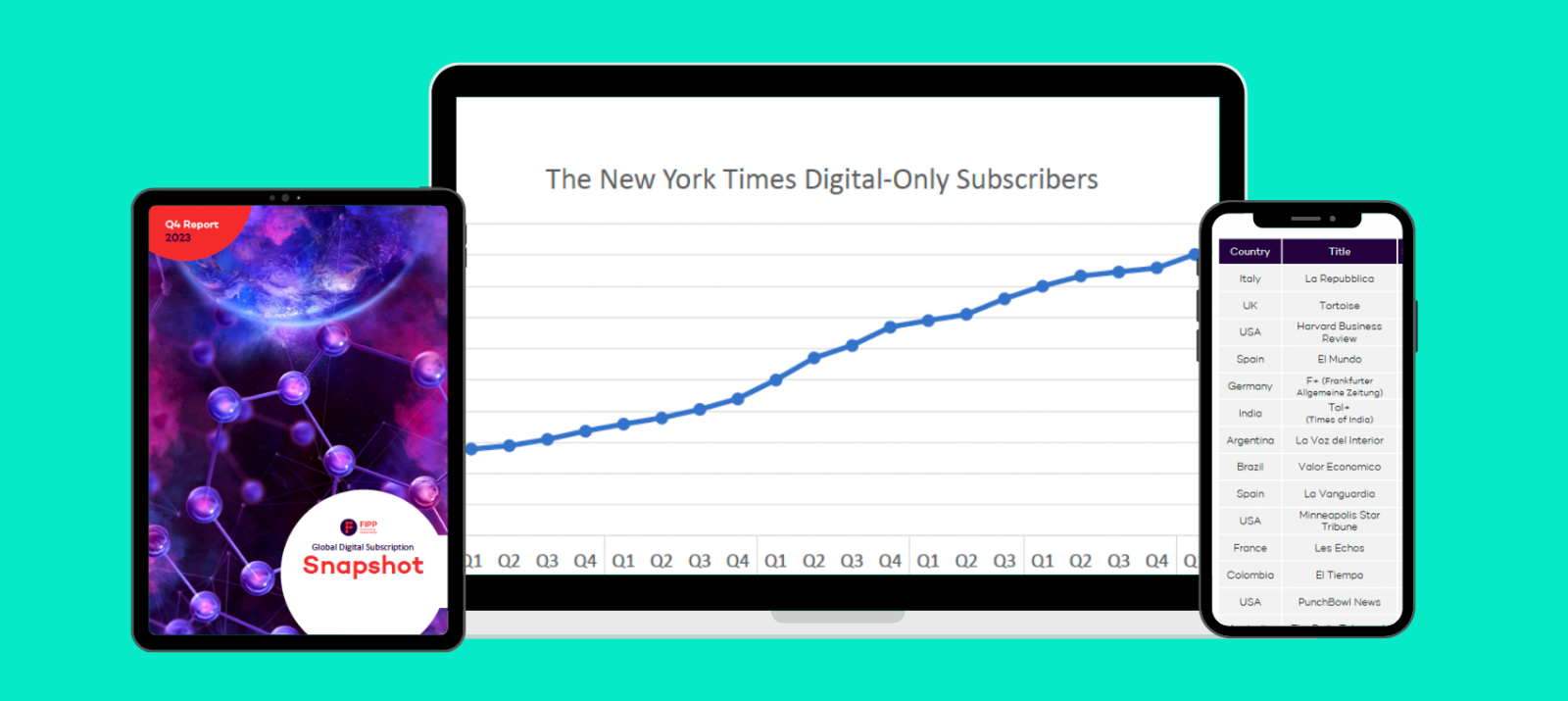
Simply put – when major studios allow Netflix to show their biggest releases instead of keeping them exclusively for their own channels it very much feels like white flags are being raised. And Netflix’s dominance over its streaming competitors is underlined in FIPP’s latest Global Digital Subscription Snapshot.
The 2023 Q4 Snapshot, exclusive to FIPP members, shows the streaming giant racing towards 250 million subscribers – more than Max (formerly HBO Max) and Disney+ put together. Even its closest competitor, Amazon Prime, is around 50 million subscriptions behind.
At the end of January, once the holiday season dust had settled, Netflix announced it had actually shattered the most optimistic expectations, raking in 13.1 million worldwide subscribers during the October-December period — the biggest gains it has ever posted in the fourth quarter.
That left Netflix with more than 260 million global subscribers as 2023 drew to a close — an astonishing annual increase of nearly 30 million that dwarfs the 2022 increases of 8.9 million subscribers. According to Forbes, revenue rose to $8.83 billion, up from $8.54 billion in the third quarter – leading Netflix to forecast revenue of $9.2 billion in the first quarter.
“Netflix has already won the streaming wars and this type of strong result/guidance, especially relative to its streaming peers, is what winning looks like,” Pivotal Research Group analyst Jeffrey Wlodarczak told Reuters.
The Financial Times recently noted that Disney’s decision to license more TV shows to Netflix in 2024 marked a turning point in the streaming wars: “Under pressure to stem losses, entertainment companies are opting to sell more of their content to Netflix. By waiting out its rivals, Netflix has eclipsed them.”
FIPP member download:
Global Digital Subscription Snapshot 2023 Q4
Negotiating choppy waters
To turn the ship around and surge ahead, Netflix had to seriously cut costs following the huge debt-fuelled expansion that marked the early days of the streaming wars. The fact that entertainment companies were hoarding their most popular content – including iconic TV shows like Friends, and films that make up the Marvel and Star Wars universes – put pressure on Netflix to create its own compelling productions.
By the time its new reality TV shows, romcoms and star-studded movies rolled off the production line its annual content spend in cash terms exceeded $17bn in 2021, with Netflix paying the price for its glittering new content with falling margins and a debt load that exceeds $14bn.
In addition to competition from cash-rich rivals – Amazon’s Prime Video broke records spending £336m on Lord of the Rings spin-off The Rings of Power to help grow its UK base in 2022 – Netflix also had to deal with subscriber fatigue. A surge in new subscriptions from house-bound viewers during the height of the Covid pandemic was followed by a major dip with Netflix losing almost 1.2 million subscribers in 2022.
Netflix’s operating margin dropped from 21% to 18%. As headlines like, “Is this the beginning of the end for the world’s most popular streaming service?” started circulating, the streaming giant zeroed in on one of the main reasons for the decline: Password-sharing.
Sharing the burden
Netflix launched its password-sharing crackdown in May 2023. Under its updated password-sharing rules, people who are part of the same household can share one account. However, those who don’t live under the same roof and want to watch Netflix are blocked and given three choices: Leave the streaming service, pay for your own account, or pay a fee to become an ‘extra member’.
How does Netflix enforce this? According to TechRadar, the streaming giant uses IP addresses, device IDs, and account activity from devices signed into the Netflix account to determine if a user is part of an account’s household.
If Netflix determines they are not, the person is asked to verify their device. A one-time code is sent to the account’s registered phone number or email address, and the user will have 15 minutes to input the code or be locked out from Netflix.
Many predicted Netflix’s tougher stance would cause a backlash, with customers leaving the streaming giant in a huff. In the long run, the strategy has worked a treat, though, with new memberships outnumbering cancellations.
“The cancel reaction continues to be low, exceeding our expectations, and borrower households converting into full paying memberships are demonstrating healthy retention,” said Netflix.
“Going forward, we’ll continue to refine and optimise our approach to convert additional borrower households into either full paying members or extra members over the next several quarters.”
For consumers there has been a slight sting in the tail. As FIPP’s latest Global Digital Subscription Snapshot shows – while Netflix paused price increases as it focussed on reducing password sharing, it announced in a letter to shareholders that it would increase prices in core markets such as the US, UK and France.

Adding something different
Netflix’s growth has also been boosted by a healthy uptake of its newly introduced ad-funded membership tier, which now accounts for 30% of sign-ups in countries where it is available.
Launched in November 2022, the ad-supported tier provides a cheaper option for customers to enjoy the same Netflix platform as traditional subscribers, but with ads dispersed into the videos.
Assessing the success of the new ad-funded membership tier about a year after its launch, Click Consult pointed out that Netflix reached 5 million global users and that it showed no signs of slowing down.
Netflix is projected to generate $561 million in advertising revenue in 2024 and nearly $4 billion by 2030. The company has said their new ad-funded entry tier will keep access competitive with other streaming services.
Tightening the belt
Key to the turnaround at Netflix has been effective cost cutting – something aided by the recent writers’ strike in Hollywood which meant many a production had to be mothballed.
The Wall Street Journal reported in May 2023 that Netflix was planning to cut their spending by $300 million in 2023 to ensure more profitability. While there was no freeze on hiring nor any layoffs, staffers were expected to spend money wisely as the cost-cutting commenced.
The cutbacks have been all too apparent as Netflix axed a number of shows in 2023 that weren’t performing to expectation including Agent Elvis, Glamorous and Farzar. While it left some binge-watchers feeling cheated, cutting costs at Netflix has done the trick.
Revenue rose 6.6% in 2023 and net income rose 20%. According to the FT, not only has the operating margin recovered but chief financial officer Spencer Neumann is predicting a margin of up to 24% this year – a new high for the company.
Meanwhile, rival Disney’s direct-to-consumer unit, which includes streaming service Disney+, is still reporting large operating losses and also saw a steep decline in subscriber numbers at Disney+ Hotstar in India after losing cricket broadcasting rights.
In its earning call for fiscal 2023, Disney did announce its streaming platforms have added 7 million new subscribers while Disney CEO Bob Iger believes its streaming business will achieve profitability in the fourth quarter of 2024 on the back of further subscriber growth and price increases the company introduced in 2023.
According to activist investor Nelson Peltz, Disney’s streaming service should target “Netflix-like margins” of 15 to 20%, perhaps by cutting back on content spend and licensing more content. Of course, these measures would only further serve Netflix.
Among all the praise for Netflix, the FT does strike a note of caution. “For Netflix, this may still be a partial victory. Streaming remains an expensive business with low revenue per subscriber,” the publication says.
“YouTube is more popular than any streaming service and much of its content is created for free by users. Its revenue is mainly advertising, with subscriptions a bonus. The business is part of Google’s Services business, which boasts an operating margin of 35% Compare Netflix with YouTube instead of Disney and the model looks altogether less appealing.”