
“The problem was never print”: Enric Pastor on why independent publishing is having its moment
The Manera founder and former AD España editor-in-chief on precision over scale, international expansion, and what independent publishing can teach the rest of the industry.
Enric Pastor started out as a journalist at El Mundo, where he learned “the discipline, the speed, and the pressure to be clear.” A decade at Condé Nast followed, launching and eventually editing AD España, before he left in 2021 to build something of his own.
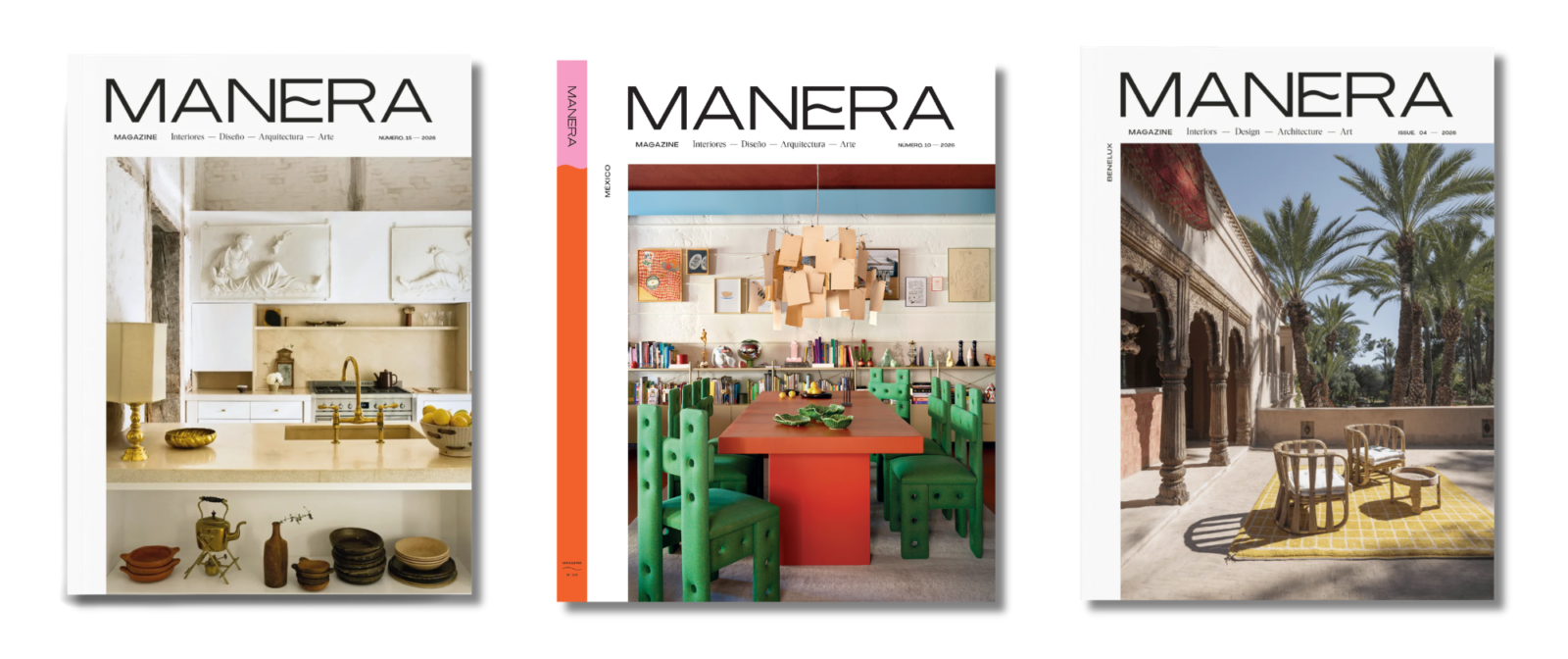
Manera, the independent design title he launched in 2022, now publishes four issues a year across editions in Spain, Mexico and the Benelux. It is, by design, a different kind of magazine business: slower, more selective, built around precision rather than scale.
You spent years at Condé Nast before founding Manera in 2022. What drew you to building something independent?
I didn’t want to build another media brand. I wanted to build a point of view. Manera starts from a very simple idea: interior design is not decoration, it’s culture. It tells you how people live, what they value, how they understand time. We publish four issues a year. That rhythm is important: it allows for more reflection, more editorial work, and more physical presence. It also makes the magazine something closer to a collectible object – more timeless, less tied to a specific month.
2022 was a bold moment to launch a print title…
It might have looked like a strange moment, but in reality it was the right one. The digital space was already saturated, and becoming increasingly generic. Print, on the other hand, was becoming something else: slower, more intentional, more meaningful – if you treat it that way.
Manera has expanded to Spain, Mexico and the Netherlands in just a few years. What made that possible?
The fundamental is very simple: don’t expand a product, expand a way of looking. Each edition is local. Different editors, different scenes, different professionals. But the editorial attitude is the same: clarity, selection, and a certain distance from trends. We never tried to replicate content across markets. That usually fails. What we built instead is a shared framework – and then let each place speak in its own voice.
What almost derailed it was probably the obvious things: underestimating how complex distribution is, how slow it is to build an audience that actually reads, and how disciplined you have to be to say no. Saying no is still the hardest part. But it’s also what makes everything else work.
Many publishers have been pulling back from print, whereas you’ve leant further in.
Because the problem was never print. The problem was what people were doing with it. For years, magazines tried to compete with digital: faster cycles, more content, more noise. That’s a losing game. You can’t win on speed against a system that produces infinite content.
So the only viable move is the opposite: less, but better. We treat print as something you keep, not something you consume and forget. Fewer issues, more editorial work, stronger objects. That changes the relationship with the reader completely. In that sense, print today is closer to a book than to a traditional magazine. And that’s precisely why it still has value.
Brand collaborations are central to your commercial model. How do you keep editorial integrity intact?
By being very clear about what we do – and what we don’t do. We don’t sell space. We build context. Brands work with Manera because they want to be part of a certain conversation. If that conversation loses credibility, the value disappears for everyone – including them. So the line is simple: we only do projects that we would publish anyway. In practice, this means we say no quite often. And that’s fine. It’s part of the model.
What does a sustainable independent media business look like in 2026?
Sustainability comes from structure, not from visibility. There’s a tendency to think that if something looks relevant, it is viable. That’s not true. Many projects today are editorially interesting but economically fragile.
A viable independent magazine needs three things: a clear editorial identity, a defined audience, and a business model that doesn’t depend on scale. Scale is expensive. Precision is sustainable.
For someone starting now: don’t try to build a media company. Build a position. Know exactly what you want to say, who it is for, and why it matters. And then be very disciplined about it. The temptation to adapt, to grow too fast, to dilute the idea – that’s where most projects lose themselves. In the end, the challenge is not to launch. It’s to remain coherent over time.
48th FIPP WORLD MEDIA CONGRESS
13-15 October 2026, Madrid, Spain
Last few tickets remaining!
Join the global media community in Madrid before the final places disappear.
Want to stay where the action is?
Contact us to find out about accommodation at the Congress venue, Hotel RIU Plaza España.
FIPP Congress 2026 sponsors