
Growth plan: The Top 5 trends boosting publishing in 2024
Whether it’s the rise of AI in the workplace, a fall in digital advertising revenues or the continued decline in newsstand sales, the media industry has faced huge challenges and uncertainty in 2024. There are plenty of reasons to feel positive about the future, however, as publishers find ways to adapt to the changing landscape.
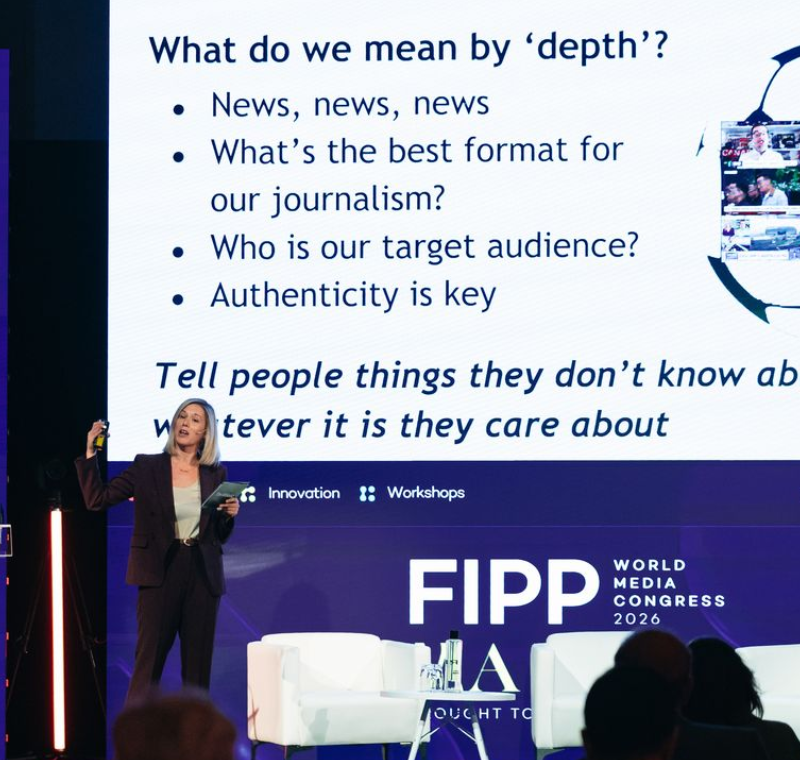
“There’s a lot of optimism and confidence returning to our business,” FIPP CEO Alastair Lewis pointed out at the recent FIPP World Media Congress in Cascais, Portugal.
“There’s a greater strategic clarity among many of our publisher media owners, which is giving them greater purpose and greater understanding of the business models and the avenues they are looking to take.
“We’re seeing that B2B, and niche special interest, are leading the way in some of those innovative markets and business models as publishers find ways to engage their audience. And we are seeing publishers looking for ways to be far less reliant on cookies and other third-party support and platforms.”
Delivering his first presentation after being appointed as FIPP’s new CEO at Congress, Lewis identified five trends that’s inspiring publisher growth in 2024 – with examples of media companies that have adopted these effective business strategies.
See What’s On to join your media colleagues – and the FIPP Team! – around the world:
FIPP Insider Helsinki, 12 September 2024; Strategic and Practical Subscriptions Growth Course, from 18 September 2024 (apply by 5 September); Collective Licensing webinar, 19 September 2024
Always be audience first
Putting audiences or users first in everything publishers do has never been more crucial.
“Gone are the days we can rely upon brands, upon reputation or even just mass audience to guarantee success,” Lewis said. “We need to know our users and be able to deliver a value proposition that matches their needs, and we need to have a direct relationship.
“That might be through registration. It might be through a paywall, a subscription, it might be through ecommerce or affiliate revenues. The more we know about our users, the better.”
An example of excellent audience engagement is the Brazilian newspaper group Estadão which, thanks to a thorough knowledge of its readers, realised it was not serving a certain sector. And not just any sector – one making up 30% of Brazil’s GDP: agriculture.

By better understanding and surveying its users, the group was able to respond and launch Agro Estadão, which within two years has become the largest agri business website in Brazil.
And in China, Sanlian Lifeweek Magazine has leveraged its core content by creating and managing online products and courses. The media company recently launched a new innovative approach to print with its Youth magazine. Sanlian is able to take the content they produce online and in magazines and turn that into a series of training courses and products that engage younger audiences.

Diversify revenue streams
It’s a prerequisite for publisher growth that any successful product has a variety of revenue streams that help deliver overall profit, Lewis pointed out.
“We’re beyond just experimenting with new revenue streams now. Publishers have to have diverse revenue streams, whether that’s print, digital, a combination of both, or events,” he said.
“We’re seeing plenty of examples of publishers who are now growing revenues in subscriptions, for example, alongside advertising, ecommerce, affiliate revenue and circulation – and many others who are finding ways to license their brands, their content, their recommendations, whatever that is, in new and novel ways.”
Showing what is possible, Shueisha in Japan is able to diversify its revenue offerings – creating events, retail opportunities, brand opportunities, consulting overseas and copyright syndication, all from a single content idea at the start.

In South Africa, the recently launched Your Luxury magazine is tapping into the country’s luxury market that’s dominated by print by diversifying into a series of events for their advertisers, readers and users, creating new revenue streams.
The strategy has seen Your Luxury delivering far higher advertising revenues, with the brand engaging advertising clients and getting them coming back to run further events in the future.

Lean into AI
There is no hotter topic in the media industry at the moment than the benefits and pitfalls of artificial intelligence. “There are threats, there are issues, there are problems,” said Lewis turning his attention to AI.
“But there are also huge benefits and opportunities for us as publishers, and our advice is that whatever we’re looking at, whatever we’re doing, we need to lean into this conversation.
“It is simply not an option to ignore it, hope that it’s going to go away, or hope that somebody else is going to come up with a solution that you’re going be able to tap into. We all need to lean into this conversation.”
Lewis encouraged publishers to really explore the ways AI could benefit their businesses, whether that is finding tools that help newsrooms to better identify audience types or the kinds of articles that are most likely to convert subscribers, or using machine learning tools to dive into first-party data to better target advertisers and better understand users.
An example of a publisher effectively leaning into AI is Commonwealth Magazine in Taiwan where they use a text-to-audio conversion tool to create essentially podcasts and audio output from their text.
While the content is produced by journalists, the magazine uses the AI tool to quickly and easily turn that into a new product, again diversifying their revenue and building an opportunity in the new market by understanding their users and having a core focus on that audience. Commonwealth Magazine also uses an AI tool to create daily summaries of global news.

In Germany, Axel Springer, which has struck up an agreement with OpenAI, has launched Welt Go! – a digital assistant exclusively for subscribers that is deepening engagement, providing reasons to return to the Welt site, reducing churn and increasing retention.
“It’s enabling their content and marketing teams to focus on more specific areas,” said Lewis. “Axel Springer has a really smart way of using that AI tool to engage their audiences and hopefully build their revenues going forward.”

Look for global growth opportunities
Another key trend identified by Lewis is media companies looking for global growth. “In the last 12 months especially, we have seen a real return to cross-border partnerships and cross-border licensing,” he revealed.
“Having had a bit of a hiatus post Covid, many bigger brands are now looking to extend again, looking for partners in new territories, looking at innovative ways to launch their products into new markets.”
Lewis highlighted Time Out as an example of how to embrace cross-border partnerships.
“Time Out has developed a really innovative way to find a digital proposition to launch Time Out into a local territory and they have a groundbreaking approach to that new model of international licensing and partnerships in new territories,” he said.

Ensure ESG is central to your business
Lewis concluded with what he described as “potentially the most important part to driving publisher growth in 2024” – ensuring that ESG (environmental, social, and governance) is central to your business.
“No longer is this just about making sure we’ve got the appropriate sustainable paper label at the front of our magazine or making sure that we’re tracking the carbon footprint,” he pointed out.
“This Is actually about building ESG centrally into everything that we do as a business and leading media owners are now building that throughout the organisation. It’s about being a modern, relevant, responsible business and that’s something that readers subscribers, advertisers, partners, and probably most of all, staff are going to demand of us and hold us to account over.”
A company that is dedicated to becoming a sustainable media business is Immediate Media in the UK.
“They’ve got clear targets to reduce their carbon emissions, but they also have commitments that extend beyond that into procurement and finance. And they’re finding ways, not just internally through their business, but also in the content they’re producing to underline and to build on those commitments,” said Lewis.
“They have four key pillars around those and they’re managing the impact by reducing carbon emissions, championing sustainable sourcing and waste reduction and driving change beyond operational boundaries through partnerships and industry initiatives. They are using their platforms for change by promoting sustainability through storytelling and the company implements equitable processes and policies, ensuring a supportive and inclusive workplace for all employees.
“The more you look at the work that Immediate do, the more you see that shine through not just in their staff but in the products that they’re producing. And, of course, that has a positive impact on their bottom line and on their relationship with their staff and their readers.”