
Immediate’s Head of Sustainability Michelle Whitehead on reducing the company’s environmental footprint
As world leaders gather in Baku, Azerbaijan, for the COP29 climate summit, now is the perfect time to assess how media organisations are coping with their own sustainability challenges –not just in terms of day-to-day operations, but the content they are putting out. A group taking the lead on both those fronts is Immediate.
The impressive progress the company has made reducing its environmental footprint and promoting sustainable practices within the media industry is laid out in its recently released third annual climate impact report.
Highlighting the company’s commitment to net zero by 2045, the report shows that Immediate has reduced emissions across its operations by 6% over the last 12 months and is well on course for a 30% reduction by 2030. It’s an accomplishment the company was keen to share.
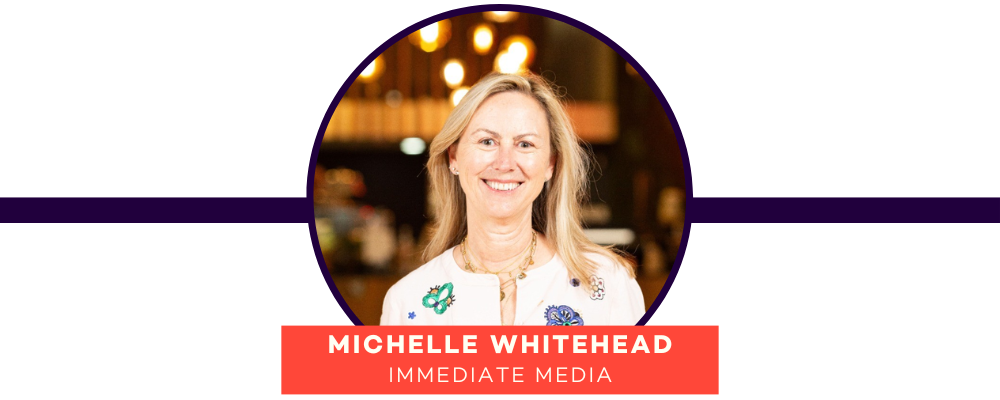
“We want to be as transparent as possible and also acknowledge that it’s not easy and some years are going to be harder than others because of things that happen out of our control,” says Michelle Whitehead, Immediate’s Head of Sustainability.
“The report is also a way of holding ourselves to account because we don’t want to be greenwashing what we do. Sharing best practices and our learnings with others is important and we welcome an open dialogue.”
Going green
Immediate’s mission to embed a culture of sustainability across the business starts at the very top. “Top-down leadership is really helpful – when you’ve got leadership saying this is important to us and we want this,” Whitehead points out.
“But you also have to help people identify what their role is within their job. So, rather than sustainability being something that’s done by a separate department, what is the opportunity within your role?
“There are going to be people who will step forward in your company to work on sustainability. You have to identify who those people are as quickly as possible, bring them in, and then they will help to drive the work in their particular department. We gathered all these people into a formal group called The Changemakers that help define, champion and accelerate change.”
Also crucial is connecting with organisations and trade bodies that are focused on sustainability, like Ad Net Zero and isla for events.
“We’re a member of lots of different sustainability trade organisations that can speak the language of the person who does a particular job, and has done a lot of groundwork for us,” adds Whitehead.
“We can emulate what they’re doing. They’ve all got frameworks for how to operate in a sustainable way so it’s really useful to capitalise on that.”
To guide its sustainability efforts, Immediate has developed robust governance structures and policies. The company recently strengthened and widened its carbon data collection to include more of its Scope 3 emissions, working with suppliers to gather more accurate data.
The company has also been hard at work developing collaborations across the industry. Immediate is, for instance, an active member of the PPA Sustainability Action Group, coming up with guidelines of how to measure the supply chain of a media company, and the Children’s Magazine Forum, which does in-depth analysis of covermounts to phase out plastics that can’t be recycled.
Not going the extra mile
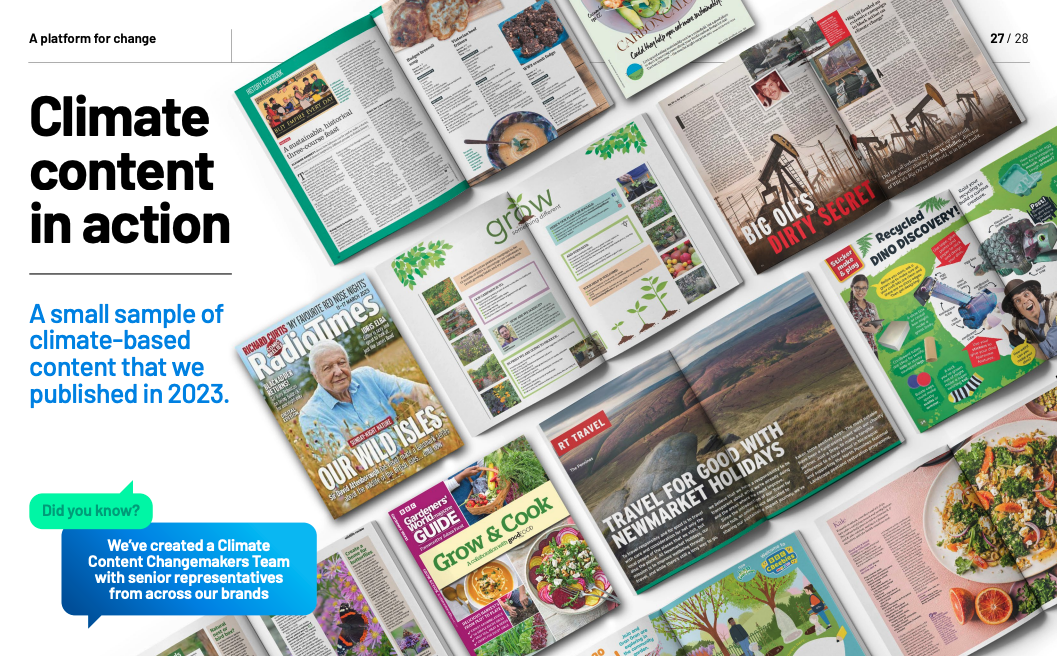
Some of the biggest emission cutbacks Immediate has achieved, is in print. According to the impact report the company recorded a 9% reduction in print intensity emissions, driven by a 12% reduction in magazines printed, alongside a reduction in paper tonnage and increased energy efficiencies at printers.
Meanwhile, transport and distribution emissions were reduced by 13% by moving Radio Times to a printer with on-site mailing capabilities.
“Reducing emissions is all about efficiencies in your supply chain,” says Whitehead. “And one of the easiest ways to do that is to look at moving products from one area to another. We used to print Radio Times at a print site that didn’t have the facility to mail out. So once the magazine was printed, we would then have to move it to a mailer for it to go out. So, we moved it.
“It’s still the same printing group, but we just moved it to a different location that had that capability. Whenever we look at our suppliers, we do take into account the distances the materials are going to have to travel and try and reduce that as much as possible.
“Obviously 98% of our footprint sits with our supply chain. So, we spend a lot of time with our suppliers telling them that this is important to us and working with them on ideas and solutions that will benefit us both ultimately.”
Immediate has also optimised energy usage in its offices and production facilities, with all its offices now powered by 100% renewable energy backed by REGO certificates (Renewable Energy Guarantees of Origin).

Save the date
FIPP WORLD MEDIA CONGRESS 2025
23-25 October 2025, Madrid, Spain
LIMITED LAUNCH TICKETS NOW AVAILABLE
>> This way to tickets
Spreading the word
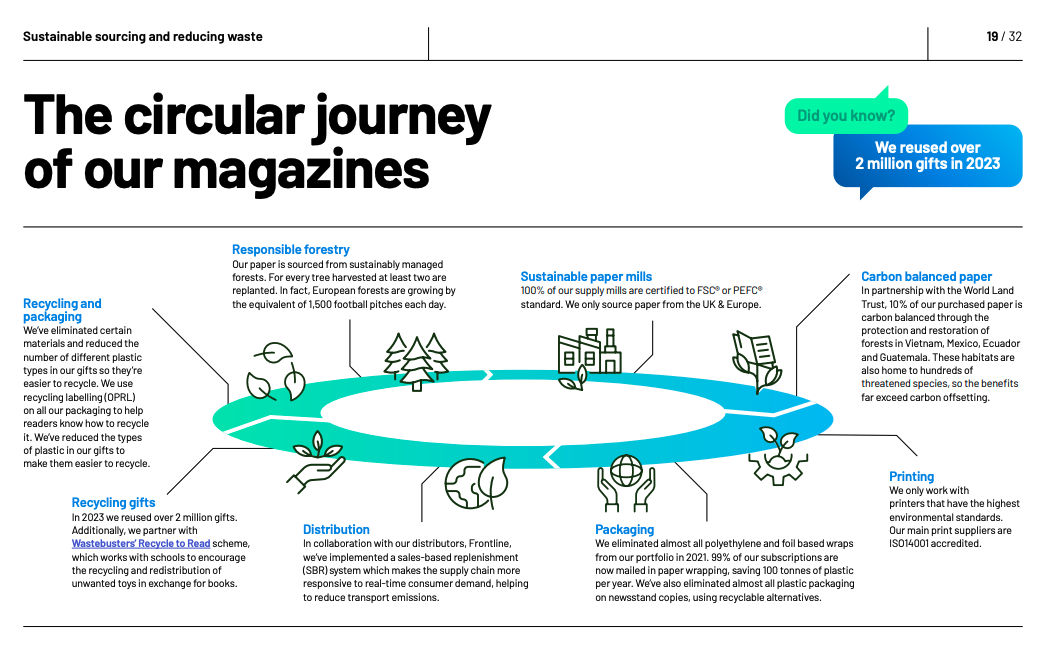
Given its impressive stable of influential publications, Immediate is in a powerful position to promote sustainability to a wide audience. It’s a responsibility the group takes very seriously, making readers more eco-aware through content across its platforms and training staff in climate literacy.
In addition to a regular programme of workshops throughout year, Immediate also hosts an annual all-company Climate Action Day that brings staff together from across the business to learn, reflect, and take action on sustainability.
“It’s a way of bringing the whole company together to focus our attention and to bring in inspirational speakers to motivate our people,” says Whitehead.
“It’s a mix of sharing the climate science and why we’re doing it, and then inviting people who are experts, perhaps in climate comms, to talk about the power of the media to help shift behaviours. This year Chris Packham came in, who was amazing. He basically said: ‘You have a huge audience. If I had the opportunity to talk to 20 million people, I think I could change the world. That’s the power you have. You must do everything you can to exercise that power as rapidly as possible. Look for every possible angle to empower people to make a difference.’
“It’s about making our people aware that they’ve got a massive opportunity to help shift and normalise climate action.”
One of the biggest obstacles Immediate and other publishers face is a sense of helplessness among audiences when it comes to climate change.
“About 98% of the stories that we see in the press around climate are negative,” says Whitehead. “A study recently looked into people’s attitudes towards climate and, while everybody cares about it, nobody thinks that anybody else is doing anything. So, what’s the point of you as an individual doing something because it’s not going make any difference?
“But actually, if we can show our audiences examples of individuals and communities taking action it normalises that behaviour and makes them feel they’re not alone and their actions will add up to make a difference.”
In early 2024, Immediate stepped up sustainability efforts by launching the Good Food Planet Friendlier brand to signpost sustainable content. In May, Good Food became the first food publication to list carbon calories alongside more common nutritional data.
“For a very long time, especially in the food and gardening brands, we were being implicit rather than explicit,” says Whitehead. “We were saying things like, don’t preheat your oven or don’t use plastic wrap, but we were never saying why.
“So, this was just a way of celebrating what we’re already doing and really focusing people’s minds that if I do this, it’s going to be good for the planet.”