ITP Media Group’s Charlotte Cijffers on trust, taste and the differentiation economy
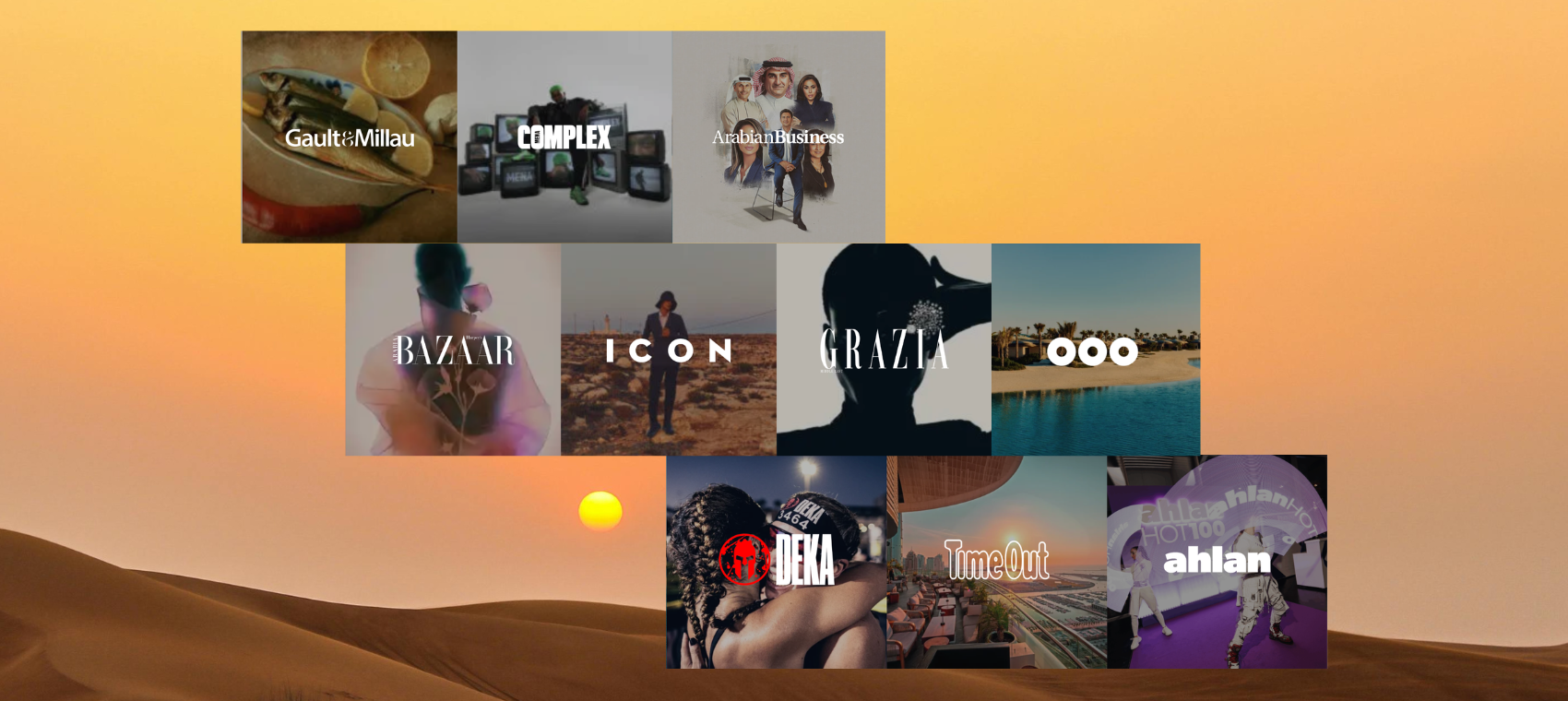
As Chief Digital Officer of ITP Media Group and Executive Director of Complex MENA, Charlotte Cijffers sits across two very different media businesses in one of the world’s fastest-moving markets. Here, she makes the case that the industry’s next competitive edge isn’t reach… but editorial authority.
Charlotte Cijffers has spent her career moving between media businesses with very different identities – Dazed Media, Harper’s Bazaar, ITV – and has drawn something distinct from each.
“Every type of media business comes with its own challenges,” she says. “I’ve had to redefine what success looks like each time, and adapt how I work operationally depending on the audience, platform, and business model.” Now, holding two roles that might seem at odds – Chief Digital Officer at a major regional publisher and Executive Director of a global youth culture brand – she uses the tension between them to read the industry more clearly.
What actually makes the difference, she says, is less visible and harder to sustain.

MENA: cultural market, not distribution market
The mistake many international publishers make when entering MENA is, Charlotte says, a fundamental one. “The publishers succeeding here are the ones that understand regionalisation cannot be surface-level localisation. You can’t simply copy and paste a Western media product into MENA and expect it to resonate. The mistake many international publishers still make is treating MENA as a distribution market rather than a cultural market.”
For Complex MENA, the evidence shows up directly in performance data. “The content that performs best is the content that feels genuinely rooted in the region, rather than imported and repackaged. We see the highest follower conversion rates on social coming from our Arabic-language content.”
A dual-language approach across Arabic and English has been central to the brand’s growth, and is increasingly important as platforms move away from follower-based models toward engagement-led distribution. The threshold for authenticity, she adds, is high.
“Audiences in MENA are incredibly quick to spot when something feels performative or disconnected from the realities of the region, and they disengage accordingly.”
The differentiation economy
The biggest shift Charlotte has observed across the media businesses she’s worked in isn’t about content, but about distribution. “Social media has eroded much of the individual identity of media brands, as most audiences now discover content in-feed rather than directly on owned platforms. AI is only going to accelerate that further.”
The response, she argues, can’t be more content. “Media brands need to work much harder at differentiation. Not just through content volume, but through perspective, authority, taste and identity. We’re moving from an information economy to a differentiation economy, where audiences are overwhelmed with content and attention is increasingly won through trust, distinctiveness and editorial identity.”
When asked how publishers build trust in an AI-saturated environment, she says: “The same way you build trust with anyone in real life: be honest, be reliable and be entertaining to hang out with.”
Publishers using AI to produce generic content at scale are, she says, eroding the thing that makes them valuable. “The value media brands still hold lies in context, opinion, curation, and argument. Audiences can already get information from an LLM – but what they still want from publishers is interpretation, judgment, intrigue, and entertainment.”
The false editorial/commercial dichotomy
The framing of editorial and commercial as opposing forces is a false one, Charlotte argues. “Commercial teams cannot monetise content environments that audiences don’t trust or invest time in, and editorial teams cannot continue producing quality content without viable revenue models to support them. This needs to be collaborative rather than adversarial – and the media businesses that can nail this balance are often the most successful.”
Her editorial background has also shaped how she approaches AI adoption internally. “I have a strong instinct for what will excite or empower content teams versus what simply sounds impressive but won’t have any real uptake.”
Real adoption, she says, requires more than good tools. “It stems from staff feeling safe and heard about their concerns around AI, and from leadership taking responsibility for bringing people on that journey at a pace that feels manageable and sustainable.”
Beyond the page-view model
She is pragmatic about whether storytelling remains a distinctly human frontier: “I think it’s broadly accurate. As AI commoditises information and content production, originality and storytelling become more valuable.”
The more pressing question, she says, is what publishers do with that advantage. “The publishers that survive this era will be the ones that stop defining themselves purely as content businesses. The real opportunity lies in turning editorial authority into products, communities, experiences and proprietary tools.”
The relationship with big tech, she adds, is more reciprocal than it might appear. “Big tech needs publishers for content and context, and we need them too, whether we like it or not.” Silicon Valley’s growing investment in storytelling and communications is evidence of this: “technology alone doesn’t create emotional connection or trust.”
Her fundamentals are personal rather than prescriptive. “The two things that have served me best are curiosity and adaptability. It’s so important to never stop experimenting, even if that’s in your own time, or become too proud to say, ‘I don’t get it.’ Surround yourself with people who are smarter than you, or who carry strengths and skillsets you personally lack.”
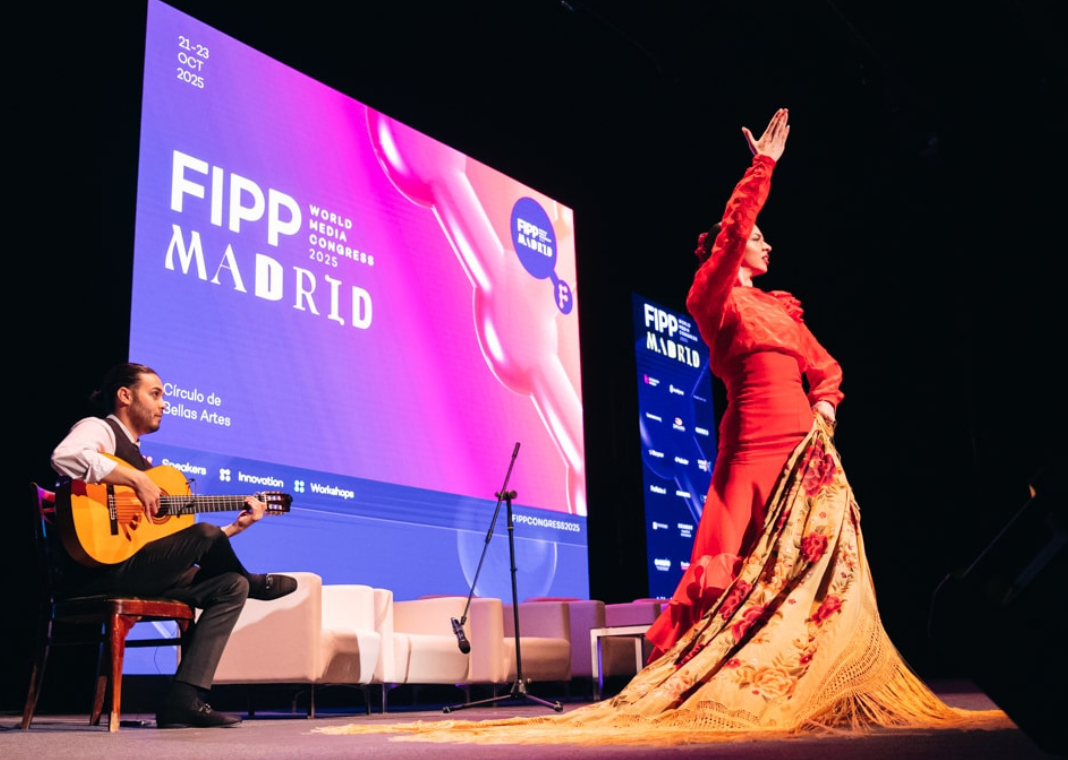
48th FIPP WORLD MEDIA CONGRESS
13-15 October 2026, Madrid, Spain
Last few tickets remaining!
Join the global media community in Madrid before the final places disappear.
Want to stay where the action is?
Contact us to find out about accommodation at the Congress venue, Hotel RIU Plaza España.
FIPP Congress 2026 sponsors