
Preserving the past: How MediaLab Glagol turned a notorious POW camp into an award-winning virtual museum
A couple of years ago MediaLab Glagol – an association in Belarus tackling social, environmental, historical and culturally significant projects – was faced with a conundrum. One of the most important WWII sites in Minsk, the notorious Stalag 352 Nazi prisoner-of-war (POW) camp, was being destroyed by vandals and all efforts to turn it into a memorial complex had failed. Changing tact, MediaLab Glagol came up with an inspired new idea – one that underlines just how effective digital storytelling can be.
Combining animation, narration and archival photos and footage, The Future is Uncertain, Memory is Real, is a ‘virtual museum’ that preserves Stalag 352 and the memories of the soldiers who lost their lives there for future generations. It’s a sterling piece of work that scooped this year’s FIPP Digital Journalism Prize at the New Media Writing Prize (NMWP) awards.
“The best way to work with memory and tragedy is through visual forms,” says Maria Ivanova of MediaLab Glagol. “Feelings are hard to put into words. That’s why we focus on visuals and sound.
“MediaLab Glagol is an association of professionals who are in love with their work. Our laboratory is not a business, but rather a common cause. For various projects, we form a team of interested people. These are people of different professions, from different countries who mainly work in the field of media and storytelling.
“A wonderful team of animation and sound artists worked on The Future is Uncertain, Memory is Real. Each member of the team saw the memories and stories of the prisoners through themselves, which is probably why the project turned out to be so poignant.”
A harrowing subject matter
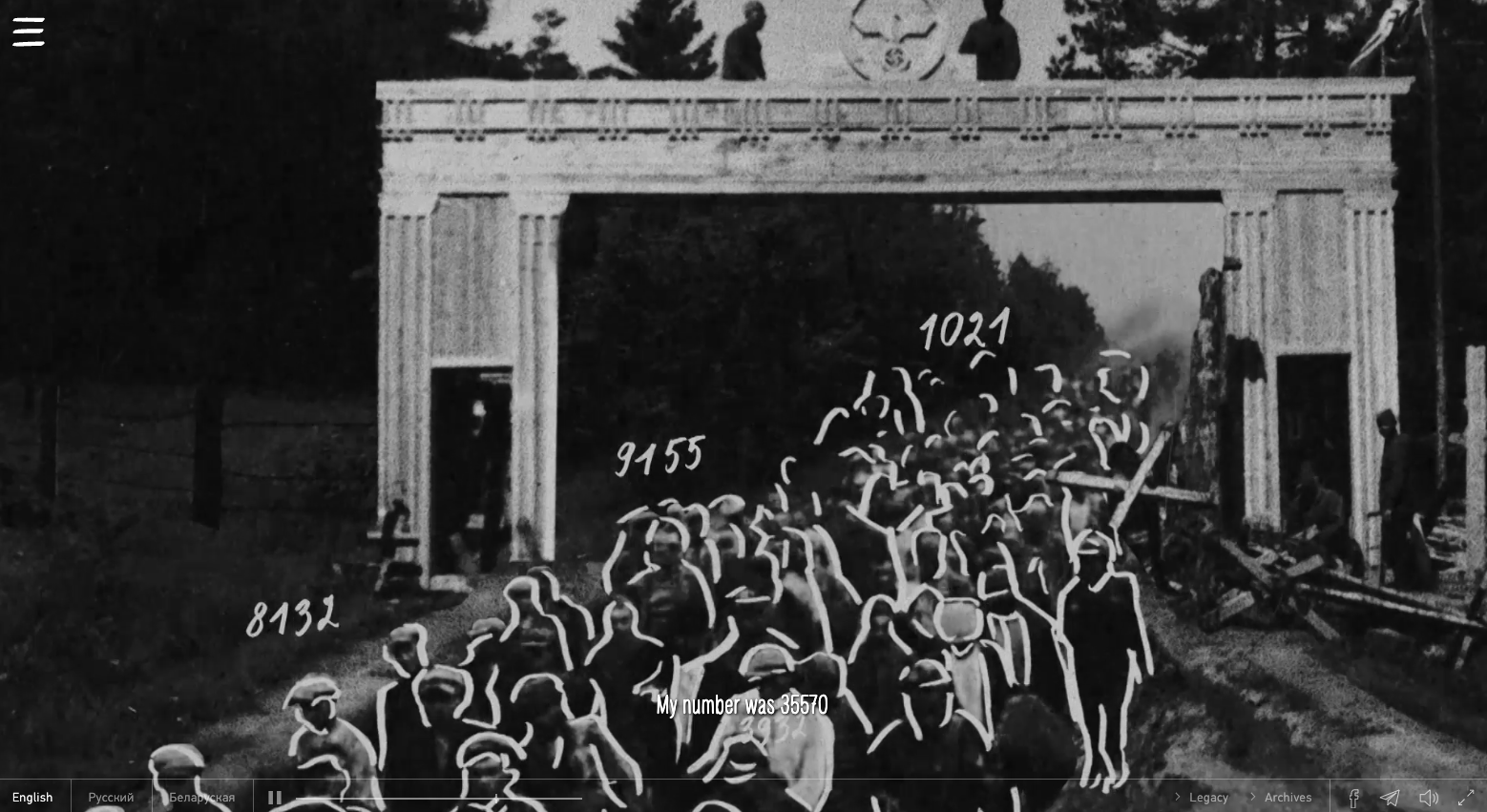
The POW camp at the centre of the project, Stalag 352, existed from July 1941 to July 1944. According to the Extraordinary State Commission – set up to investigate the atrocities by the German invaders and their accomplices – about 80,000 Russian soldiers died in the prison from hunger, cold and exhaustion. Of these, more than 14,000 have been identified by name.
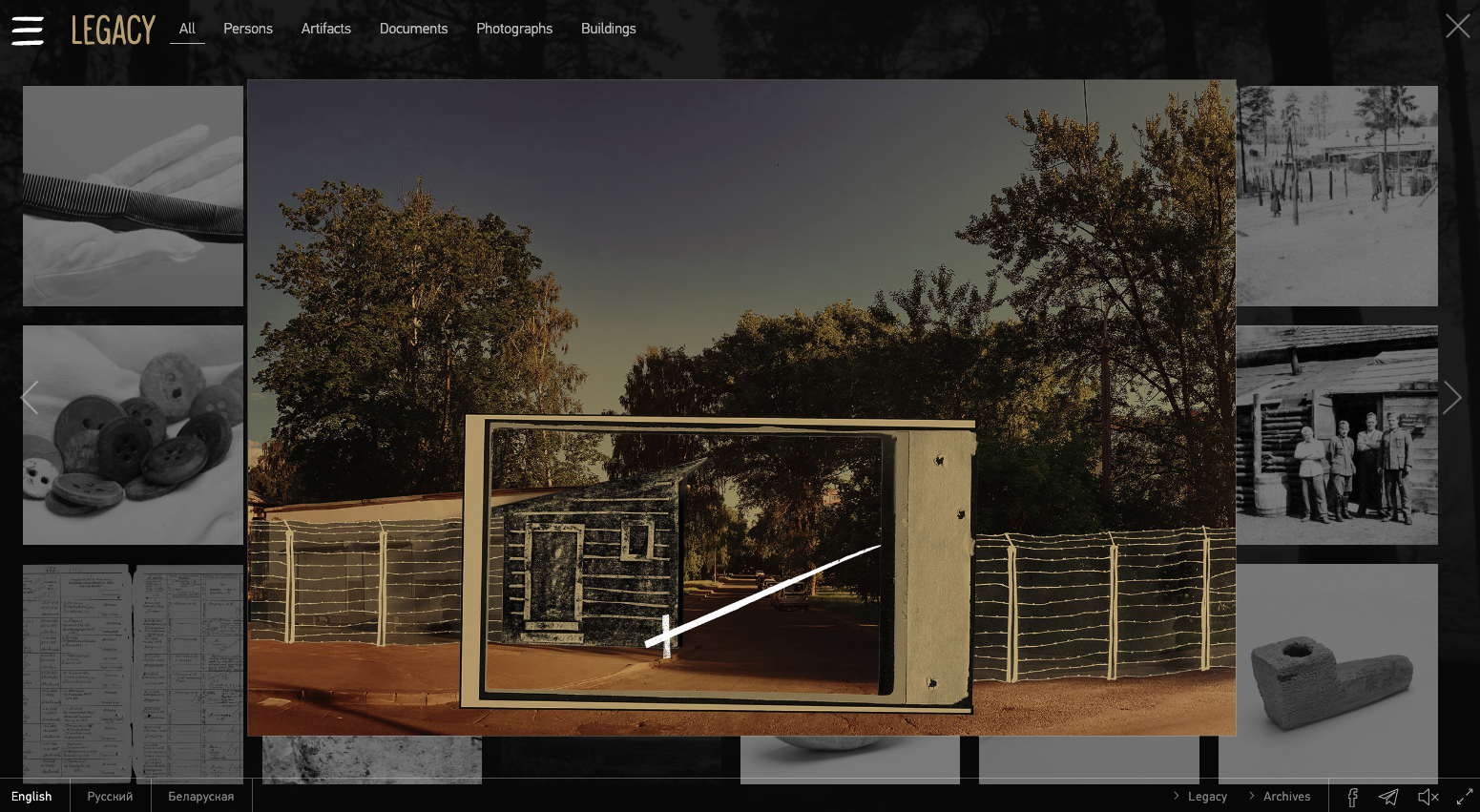
These days Stalag 352 has been reduced to a number of preserved buildings, stone-paved roads and centuries-old pine trees. While activists have tried to turn it into a memorial complex, nothing has happened thus far with the site continually vandalised. Media-lab Glagol decided it was time to extend a digital lifeline and contacted the Republican Union of Tourism Industry in Belarus.
“We came to the conclusion that it’s necessary to create something in the media environment that could somehow replace the museum, something like a virtual museum, but with stories,” says Ivanova.
“Since we ourselves initiated the creation of a digital project, we did not have a specific requirement for what it should be. There were some conditions and approaches, for example mandatory work with the local community or mandatory promotion of the project in social media, but basically we had complete freedom in creativity.”
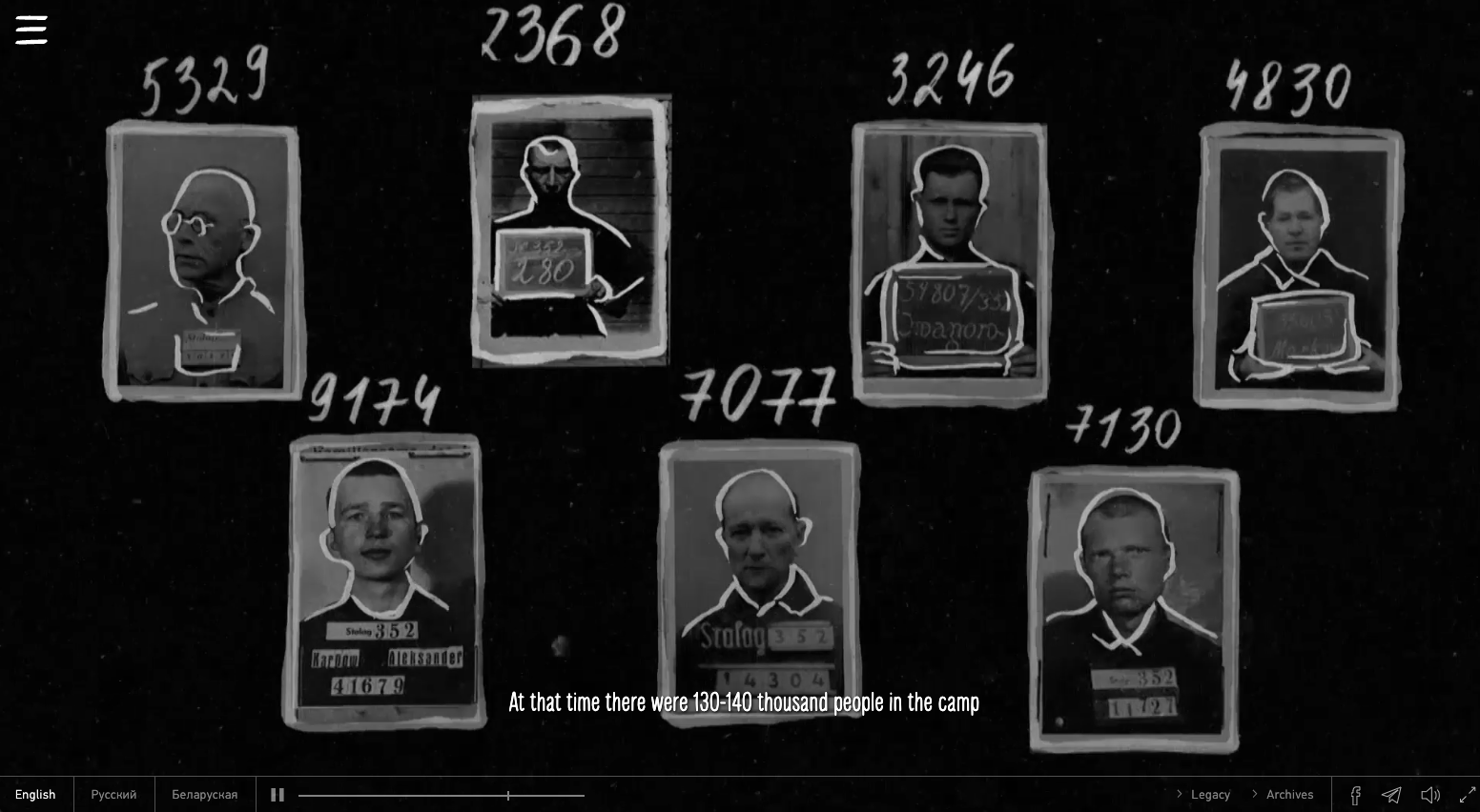
MediaLab Glagol were given a mountain of archival material, including photos, videos and recollection of survivors and their relatives, which kickstarted an almighty sifting process.
“The most difficult thing was to sort out personal stories and memories and choose what would suit us to fill the site,” says Ivanova. “We first digitally archived the memoirs and documents at omeka.com, which helped us to quickly access the information that we needed at the moment and put everything in order.
“All entries were divided into folders and category hashtags, for example: ‘relations between guards and prisoners’, ‘typhus’, hunger’ etc. We also conducted a survey among team members and our volunteers about which stories they remember best, which caused a response. All this helped us to decide on the main themes of each year of the camp and those stories that best reflect them.
“Probably the most important thing is that we didn’t have a goal to make the user feel pity, or pain. I know that such topics are often treated in the educational environment in this way: they try to stun with the number of victims, shocking photos and scary stories. But I wanted, first of all, the acquaintances of the prisoners of the Stalag camp to be with us. We tried to make individual stories more important than numbers.”
The final ‘virtual museum’, which took about two years to complete, sees the Stalag’s history divided up in the four years that it existed, using survivor’s recollections as a script. The Media-lab Glagol team chose an animation technique that allowed them to draw over photos and videos.
“It allowed us to create enough of animated content to present the story of Stalag from different angles,” explains Ivanova. “Most of the videos used for the animation background were filmed directly on the modern territory of the former camp by the videographer. We seem to manifest what is invisible and what has been invisible for many years… A thin line of animation is the connection between the past and the present.”
The future of digital journalism
Visually arresting, moving and educational, The Future is Uncertain, Memory is Real shows how powerful digital journalism can be, especially when you need to ease your reader into a difficult topic. It’s what sets MediaLab Glagol’s project apart from documentaries and articles, says Ivanova.
“As I see it, the main difference is the possibility of gradual immersion into the topic. In such traumatic topics, this is extremely important if you work with a varied audience.
“A documentary and an article can be different and use the same artistic techniques as we did. But if it’s a linear film or article, it’s very difficult to take the viewer from the ‘soft entry into the subject’ to the detailed and shocking details.”
While MediaLab Glagol are yet to confirm their next project, Ivanova is interested in investigating the lives of those with special needs who are in closed medical institutions in Belarus. Whatever the next chapter for the association, Ivanova is excited that their type of digital journalism can make people look at history in a new way.
“I think the use of such projects in an educational environment, such as institutions, or museums, is becoming more and more popular,” she says. “It has to do with the advantage of such media in teaching history to the younger generation.
“More and more people are coming to the conclusion that absolute knowledge of dates or events is not the most important thing for school children. It’s much more important to develop a young person’s empathy for such serious topics. New media and storytelling are very good tools in this regard.”