
Redefining Local: Community, creativity and the Vogue & GQ effect
As a Spanish edition of an iconic magazine, how do you cater to a local readership while staying true to the gargantuan global media group you are part of?
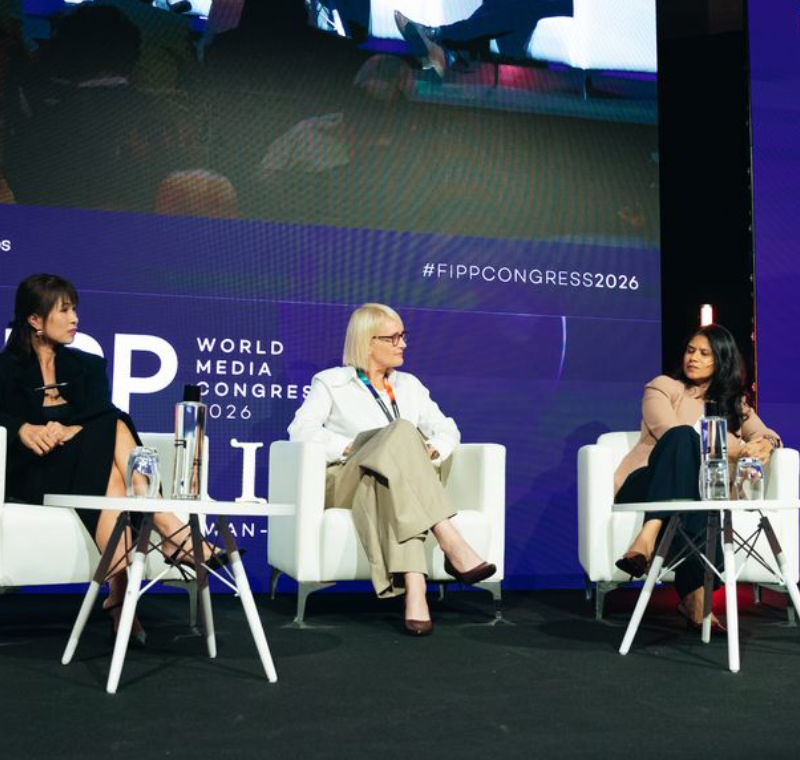
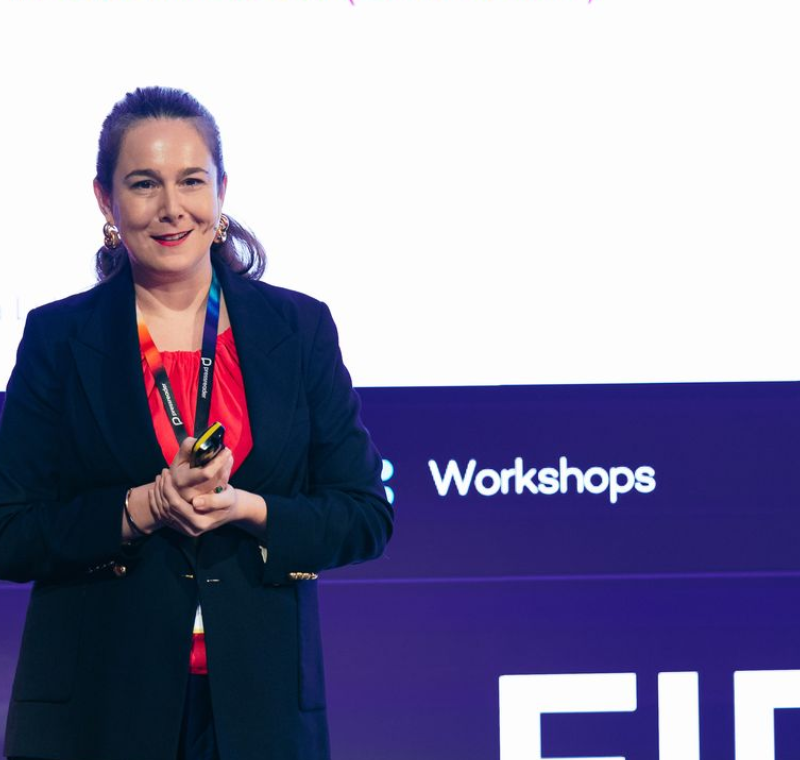
“Everything we do has a local heart that then fits into a global conversation,” explained Inés Lorenzo, Head of Content, Vogue España as she joined Daniel Borrás, Head of Editorial Content, GQ Spain, on the stage at this year’s FIPP World Media Congress.
Both Lorenzo and Borrás are on a mission to make the Spanish editions of Vogue and GQ as “hyper local” as possible while operating within one of the world’s most influential media companies, Condé Nast.
“We want to bring a little bit of magic to our readers every day – the kind of magic that GQ and Vogue and every other title within Condé Nast is known for,” said Lorenzo. “It’s a magic I would say is formed by enthusiasm, emotions, creativity, culture, and a word which is very important for us – community.”
Kicking the AI habit
It’s a magic, the duo were quick to point out, that can’t be replaced by AI. “No algorithm can replicate the judgment, the curiosity, and the passion of our work,” said Borrás, putting forward the example of an interview with Spanish football sensation Lamine Yamal that GQ ran on the cover.
“The story and the narrative of that guy is crazy and it’s almost impossible to replicate by AI. It’s a huge story that we wanted to tell to everyone. In fact, Yamal was in GQ in his first cover ever. The story, everything that he represents, is impossible to replicate. It’s a real story and we are here to tell that kind of real stories.”
According to Lorenzo, the challenges to creative content brought on by AI, should be something that brings editors together.
“We’re hearing a lot about the industry’s biggest challenges – AI, misinformation, polarisation, trust, freedom of expression. But no matter how much we read or talk about it – and it’s a regular conversation between journalists – I think there are some common ideas that we could agree on, like quality journalism is here to stay. Let’s hope for that.
“Responsible media companies are here to stay, too, and have a lot of things to say in this landscape. They have to lead this change. Human creativity and the human touch will be more relevant than ever.”
Community spirit
As the media landscape changes with dizzying speed, community and trust have become more important than ever before, added Lorenzo, with lifestyle magazines gaining more traction.
“Lifestyle journalism, which has sometimes been considered maybe not the core of pure journalism, has a lot of things to say now. We talk a lot about core values and diversity and freedom and creativity – things that can be the solutions to many of the problems that we face now.”
For Borrás, joining GQ was helped by the fact that he worked for 10 years at a newspaper in Spain.
“When I arrived at Condé Nast, other people asked: What is different now? And I always want to say, There’s no difference. I do my work with the same quality, with the same rigour, and we are doing exactly the same.
“Of course, the context is different, but we believe in our way to do journalism. And especially, we understand that work from a local point of view, because everything begins locally.
“We are part of a global project, but the context is super important for us, to be in the local conversation, and to create community close to our readers and to the talents that we want to build. We are global, of course, but the local work is our most important work.”

Embracing culture
Lorenzo said it was all the more impressive that the two magazines survived, given the huge transformation at Condé Nast over the last four years.
“Four years ago, we were tons of different companies all over the world. We didn’t talk to each other. We didn’t have any strong connection. We didn’t share almost anything, providers, systems, whatever.
“So, the [real achievement] is that we survived. We were transforming into a global company, but at the same time, we were putting the focus on a local scale.”
The way the magazines have been able to strike that right balance was through cultural celebrations.
“Many things were happening in Spain in terms of a cultural perspective, and we have been celebrating them. Things that were hyper local and hyper global at the same time.
“And I think we got a great example in companies like Netflix, which had this local approach. They were hyper global, but at the same time, local content was flying from Spain to all over the world. And I think this was very inspiring for us when we had to embrace that transformation and imagine how could our local content coexist with the global strategy we had.”
According to Borrás, GQ is driven every day by the motto: “culture is our most important KPI”.
“That’s super important for us because we are doing quality journalism and we want to be part of our community – and culture is all about community,” he said. “It’s all about context and it’s all about what is the conversation in the streets right now.
“I think something very special from the team that is leading Condé Nast Spain from an editorial perspective is that we all share a strong digital background. And this digital background gave us the key that this culture impact was so important, but also that the local approach, local personalities, and local stories had the wider engagement rate.”
Viva España!
Both magazines have been inspired by the fact that today’s audience are not passive.
“They are explorers, they are curators, they know everything,” said Borrás. “They receive a lot of impacts every day. And you can’t cheat with your audience. They expect brands to reflect their close values.
“The local thing is more than just geographic, and that’s super important for us. I always have a very simple example. It’s like, we can do a super global talent that we publish in 32 countries or 20 countries.
“But the reality is that our audience wants something super specific for that talent. It’s like, okay, I know that talent in Spain for that reason, and I want you explore that context with that talent. Supporting local talent is building community. And this is what we want to do right now.”
The magazines’ local/global approach has been boosted by popularity of Spanish culture beyond the country’s borders, according to Lorenzo.
“I think in Spain everything was helping – Spanish music was becoming such a global phenomenon. You’re really featuring every one of them in your magazine.
“I feel every brand, especially, fashion brands, are talking about building these communities now. We all need more reasons to go shopping. We all need more reasons to go reading. There was a cultural revolution that helped a lot.”
The magazines have used TikTok in a clever way to connect to its audience. “We created a platform to do local content, to give a space to local creators, and to give a space to local talents,” said Borrás.
“And we build a huge ecosystem and a huge audience with that kind of work. It’s not about publishing any video that we found on the internet. It’s about creating content as we are creating content for print and digital.”