
Video: Exploring the world of collective licensing
When it comes to licensing publisher content, is it better to use a collective management organisation (CMO) or tackle the task yourself? It’s a question that’s become increasingly complicated as media organisations deal with content challenges like web scraping, text and data mining and AI.
To help publishers have a greater understanding of the world of collective licensing, FIPP recently joined forces with the Press Database and Licensing Network (PDLN) for a webinar featuring leaders in the field.
“We want to help publishers think about the various decisions involved in whether or not it’s the right idea for you as a business to engage a collective licensing agency or a third party, or whether you should be making those decisions and agreements directly yourself,” Alastair Lewis, CEO of FIPP, told attendees.
“For many years, publishers have enjoyed receiving royalties from these third-party organisations, but in the last year or so, with the rise of Gen AI and LLMs particularly, many of our members are being asked to look very closely at all agreements they’ve got in place with third parties who are licensing content, distributing content in one way or the other.
“I know publishers particularly are looking closely at the agreements that we’ve got, at what permissions are being given outside of the business and where, and also what remuneration is being paid for levels of content because that obviously impacts on the decisions you’re then making around other licensing deals.”
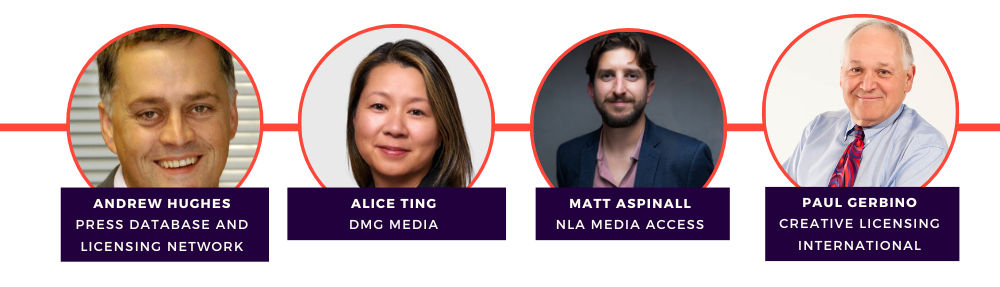
“The role of licensing bodies, and where licensing through collective organisations starts and licensing directly stops is a very hot topic,” added Andrew Hughes, Secretary General, PDLN. “And AI makes it an even hotter topic.
“AI companies clearly want very large content sets, licensed to them on a commercially acceptable basis while publishers see an existential threat. It is very much whether and how CMOs can play a productive and effective role in building bridges. The starting point is bridges in understanding between the publishing community and the CMOs.
“Creating that confidence and trust between publishers, CMOs and then between CMOs and some of the intermediaries who take content out to the end users is crucial if we’re going to avoid artificial intelligence being a repeat of the rise of Google 12 years ago, which was good for Google shareholders, but maybe not for the publishing community.”
Embracing the collective
Created in 1996, NLA Media Access is recognised by the UK government as the CMO for more than 14,000 UK and international newspaper, magazine, newswire and digital-only news brands – earning and distributing copyright royalties to ensure rights holders are fairly remunerated when their works are used.
“We believe collective licensing benefits everyone involved,” said Matt Aspinall, Head of Commercial Services at NLA Media Access. “Publishers, pre-1996, may have been fielding calls and requests for companies that wanted to reuse material. There was no structure in place.
“We now have the ability for publishers to outsource the entire operation to us to save on their time. So many efficiencies are built within that. This is our focus, so publishers have that comfort that we are protecting their content.”
NLA represents over 70 news brands around the world and uses software that tracks where their content has been lifted from their websites and reused. “It all ties into trust, and this track record and comfort that a body like NLA can protect their content.”
Turning to AI, Aspinall said that while LLMs might see the NLA as “a jewel in the crown” to get access to a lot of content under one roof, the body will always prioritise what’s best for publishers.
“There is no mandate from publishers. We’re seeking proposals, and are happy to hear proposals, but everything will go back to that mandate with the publishers and whether it’s something they would like us to deliver on. Our track record is there in terms of trust and protection.”
Battling pirates
Focusing on the growing dangers of online piracy, Paul Gerbino, President and Founder of Creative Licensing International (CLI), bemoaned the fact that publishers are not presenting a united front against the threat.
“AI didn’t start piracy – piracy started the day the web launched with people creating scrapers and bots to collect whatever was being published. The difference today is that AI has put it on steroids.
“And AI powered theft is creating new challenges for publishers. When publishers look at it, they see financial costs around any anti-piracy measures and enforcing copyright; legal complexities when you’re talking about cross-border, especially; and technological difficulties and this pace of change.
“There is also a natural distrust amongst publishers to work together. All this stuff creates barriers in the minds of publishers that prevent them from unifying.”
Gerbino said collective approach to licensing is absolutely essential.
“The reality is most publishers are not the size of The New York Times or News Corp. They’re not going to get the attention of AI, and they’re not going to be able to do their own direct deals. So, small to medium-sized publishers, which makes up a big number, need to start thinking differently about what’s going on and how they can work together as a community in this new age of content theft.
“It does require some cooperation, innovation, technology and some costs. But again, those costs need to be weighed against the long-term implication of content being stolen and where is it going to take my business in the future.”
Gerbino encouraged publishers to take action against scraping like assessing whether content should be behind a paywall, registering their content with local CMOs, and lobbying their publishing associations to get digital platforms to the table to address piracy.
“Publishers need to protect themselves, no doubt about it,” Gerbino added, calling for the creation of a global anti-piracy alliance. “And one of the ways that we can protect each other or ourselves is by uniting, or risk becoming extinct.”

Horses for courses
Alice Ting, VP Content Partnerships, Licensing and Distribution at DMG Media, stressed just how challenging the road has been for news organisations over the last few years.
“Tech disruption and shifting consumer reading habits have not only forced us to think about our business differently, but to use staff differently and partner with third parties differently,” she said.
“We’ve seen younger audiences getting their news from social media such as TikTok. And if you have a large following like DMG does you are finding a path to, hopefully, your future readership.
“But the rise of social media also means that, because of the shifting audience engagement, fewer people may be coming to your site and there may also be a shift in ad dollars – just another way where you know your ad dollars are flowing out of your door and into another platform.”
Ting highlighted a number of other challenges for news organisations, including the potential impact of AI technology on content generation, the fact that mis- and disinformation continues to erode trust and credibility and how privacy regulations and cookie restrictions place limits on advertising revenue.
“There’s just a lot of pressure being placed in the industry and we’re tired,” she added. “But we’re very wide awake in many ways because I think we have seen some of the missteps in the past and you’re seeing publishers become more vocal and more vigilant in terms of partnering with third parties.”
Ting said it was important that collective management organisations understood how publishers think about content licensing and distribution.
“It’s not a one-size-fits-all by any means. Each type of publisher has different levels of resources, and it is handled in different ways.
“For instance, for a small publisher, the challenge is that they don’t have a dedicated person handling any licensing requirements. It is usually done by someone who has another role.
“For the most part when that happens, they can’t be proactive. They can’t be strategic. They’re very reactive in the way they respond, and they would benefit tremendously from being part of a collective.”
See the webinar here: