Staying power: Lessons in brand endurance from pioneering wellness magazine Longevity
It all started when a publisher met a go-go dancer in London. In the 1960s, Bob Guccione, founder of Penthouse, approached former ballerina Kathy Keeton in a club – a fateful meeting that would ultimately lead to the creation of Longevity, a pioneering wellness magazine exploring ways to delay the ageing process through science and nutrition.
The publication, which was launched in 1989, is still going strong in 2026 and is now based in Keeton’s place of birth, South Africa.
“How Longevity came to be is astounding if you think about it,” says Gisèle Wertheim Aymes, the now-owner and publishing editor of Longevity, who has transformed the title into a multi-platform brand with events, retreats, a podcast and a strong digital presence in addition to the popular print publication.
“Bob Guccione [who married Keeton in 1988] initially gave Kathy the science magazine Omni and, while she was obviously intelligent, she had no prior media training. This did not stop her from creating innovative publishing products.
“Guccione and Keeton were a power couple, high-flyers who were very networked into the New York culture, socialising with clever health specialists, scientists, doctors and personalities, who were looking at the aging process. That’s when Kathy came up with the idea for Longevity.”
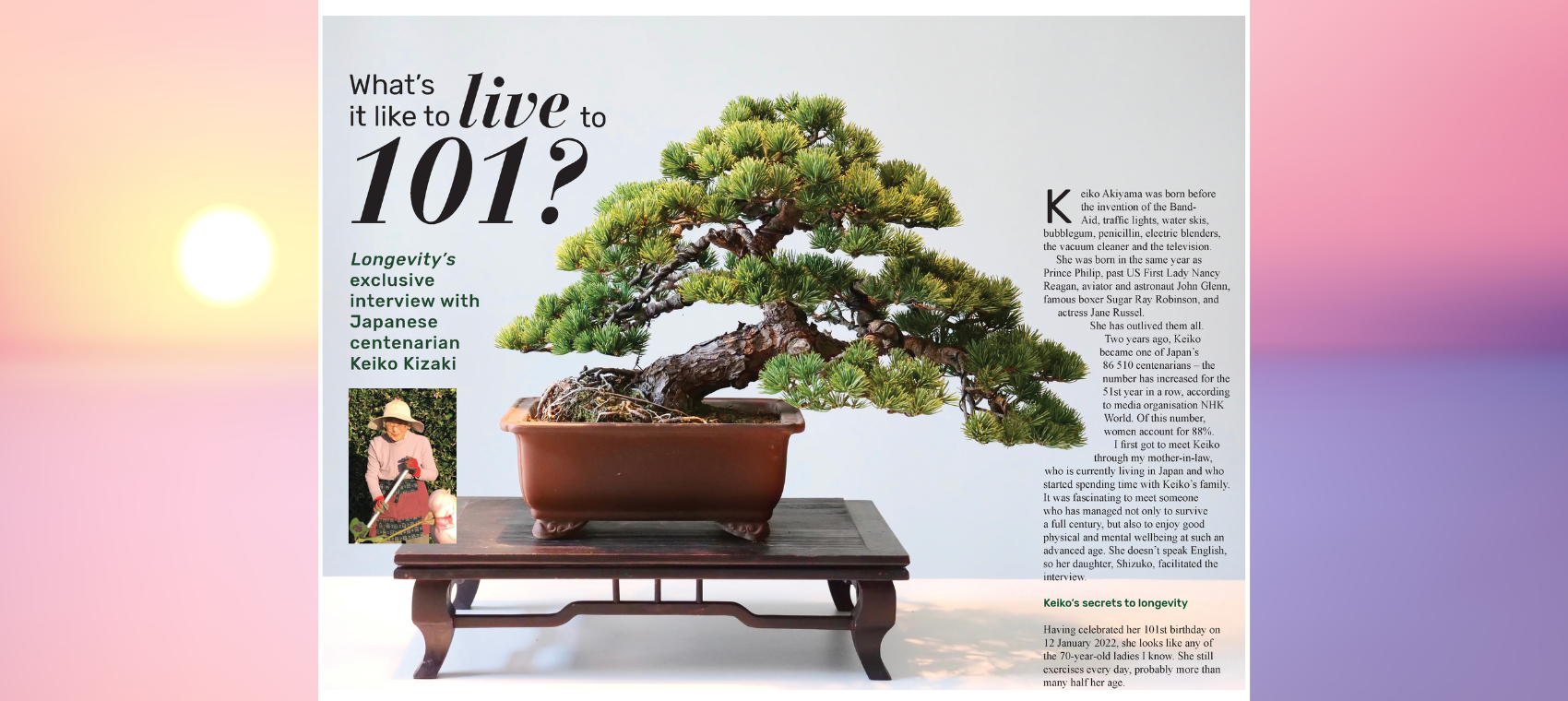
Early iterations of Longevity focused on celebrity stories and articles about the art and science of staying young. A good deal of the content covered the latest advances in plastic surgery and aesthetics, before eventually moving to a more holistic approach with functional medicine, exercise, diet and nutrition.
With no real competition in the market, the magazine was an instant hit, raking in up to one million readers in quick time. Keeton’s approach to wellness continues to resonate four decades later.
“People now understand the concept of what Kathy was talking about then, that longevity was about how to stay young,” says Wertheim Aymes.
“People want to believe that they can live forever, but her concept was about how you feel, look and stay younger. It wasn’t about trans-humanism or some radical idea of forever-ever. Kathy said very clearly that longevity starts at any age, because when you become conscious of your health, you can then improve your outcome.
“It’s what people are now calling ‘healthspan’. It’s about how you will age and what will your health be as you get older? And that’s really what has happened with Longevity as it’s developed. The brand has gone on different diversions along the way because the market has had quite a bit of influence over it.”
Heading down south
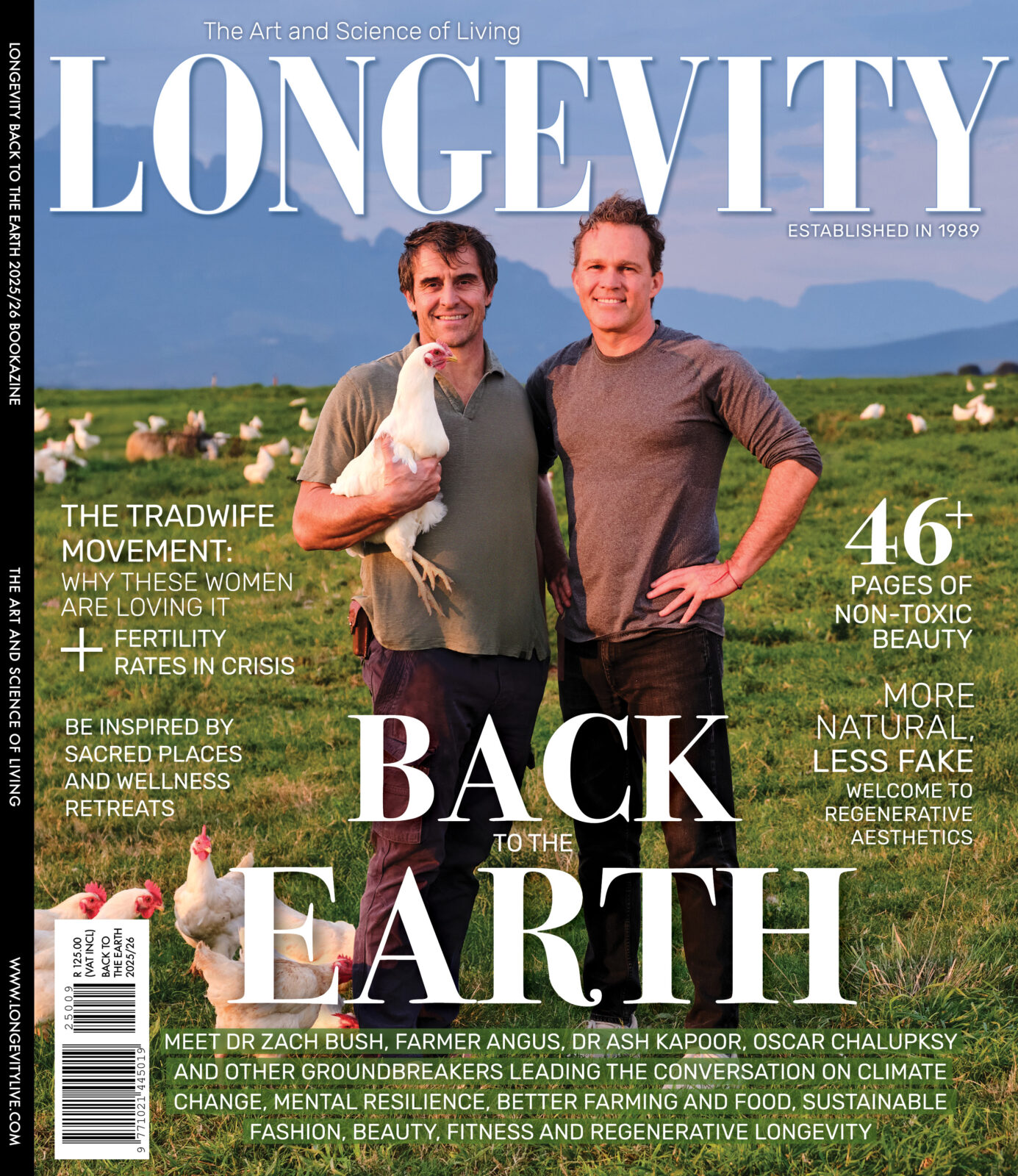
Longevity’s history in South Africa stretches back to the early 1990s when the country was emerging from apartheid. Keeton decided to hand licensing for the magazine in the new Rainbow Nation to Ralph Boffard, an associate of her husband who had decided to move to the country of her birth.
As the only wellness magazine in the local market at the time, Longevity, which came out monthly, hoovered up advertisers and established a strong foothold in its first two years. However, its progress was halted by an unsound business decision.
“Ralph Boffard took the erroneous decision to start publishing Penthouse in South Africa,” says Wertheim Aymes. “He took Penthouse in with Longevity and basically lost his entire business. The whole girlie magazine market in South Africa imploded, because it got wrapped up in the local Censorship Act and changes to the Constitution.
“These magazines were under attack the whole time because South Africa was too conservative a society for them to be successful. You also had the rise of the internet which gave people free access to porn. So, it was an unfortunate decision to go into the male market and Penthouse was closed down.”
Another local publisher, Times Media, made the same mistake as Boffard, entering the male market and bringing out Playboy in South Africa. When the publisher of Playboy decided to step down, the job went to a young Wertheim Aymes who was cutting her teeth at Times Media’s Financial Mail and Business Day at the time.
Wertheim Aymes knew Boffard through her father-in-law, who ran a vitamin company and was a regular advertiser in Longevity. When Boffard’s business really started to hit the skids, he suggested to Wertheim Aymes, who was by then in the process of launching Elle after Playboy was closed, that Times Media acquire Longevity. The Times Media board agreed and bought Longevity in 1996, with Wertheim Aymes running the magazine.
Six months later Kathy Keeton passed away, and Longevity stopped publishing in the US. “We didn’t know how ill Kathy was and she passed away before I could meet her,” says Wertheim Aymes.
“Kathy was the magazine’s figure head and didn’t have a succession plan, but we carried on because we had to. We paid for it. There was a group of license lawyers sitting in New York still working for Guccione and we worked with them to ensure we could continue with the brand.”
Longevity’s closure in the US accelerated a change in focus at the South African edition from plastic surgery and aesthetics to a more rounded approach to wellness.
“We were getting most of our content from the American issue and that completely dried up about 18 months after Kathy’s death,” explains Wertheim Aymes. “We were developing maybe 30% local content because in South Africa it was a small industry. In those days, there were only a handful of plastic surgeons, specialist aesthetic doctors and anti-aging medical specialists who wanted to talk to us. The rules are very strict in South Africa – doctors and the medical industry are closely regulated.
“At Times Media, we had to start re-developing Longevity straight away. We couldn’t only follow the American way of things, because we also had two more wellness magazines, Shape and Women’s Health, entering into the market.
“We realised very quickly that Kathy’s heart was in the right place and that she had started moving towards a more integrated wellness approach. Obviously, people had gotten to know Longevity as more of a celebrity-led aesthetic type of magazine, but we knew we had to keep moving towards that different approach.”
A fresh new look
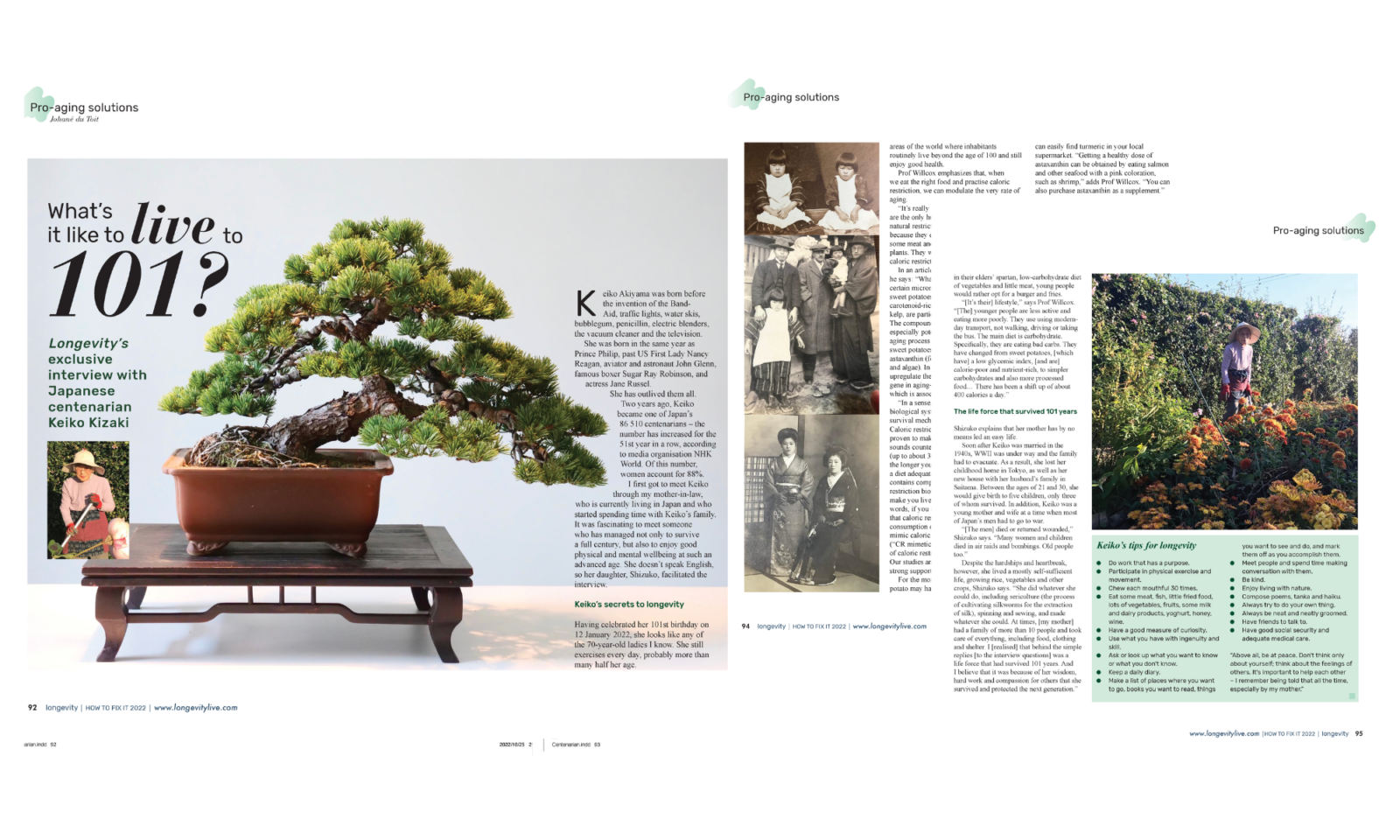
Changing the focus of Longevity meant approaching different types of medical professionals to talk about the ageing process, with Wertheim Aymes reaching out to lesser-known functional, anti-aging medicine doctors.
“Longevity in South Africa was really always about the science behind what you eat and what you put on your skin,” she says. “Was it or wasn’t it real? We never published stories that didn’t have some scientific backup to them.
“And even to this day, if someone talks about an aesthetic procedure like Botox, or the benefits of Peptides for ageing, we look at what the science behind it is – we don’t just say people should do it. And that really was the foundation stone for Longevity.”
In terms of revenue streams, the brand leant on the traditional pillars of copy sales, advertising and subscriptions aimed at high-income individuals.
“It is easier to be healthier and to access specific longevity treatments if you have financial means,” says Wertheim Aymes. “Hence the brand has always attracted people with the highest income, the highest education. Our readers all had jobs, even though they were mostly female, but also some men.
“We had a very different profile to Shape, to Women’s Health, and to any other female magazine. We were niche. Some people thought we were more like a trade magazine, but we weren’t. We did not survive without copy sales.”
“Our cover price was always the highest and still is today. So that was our model. Then the internet came.”
Adding new layers
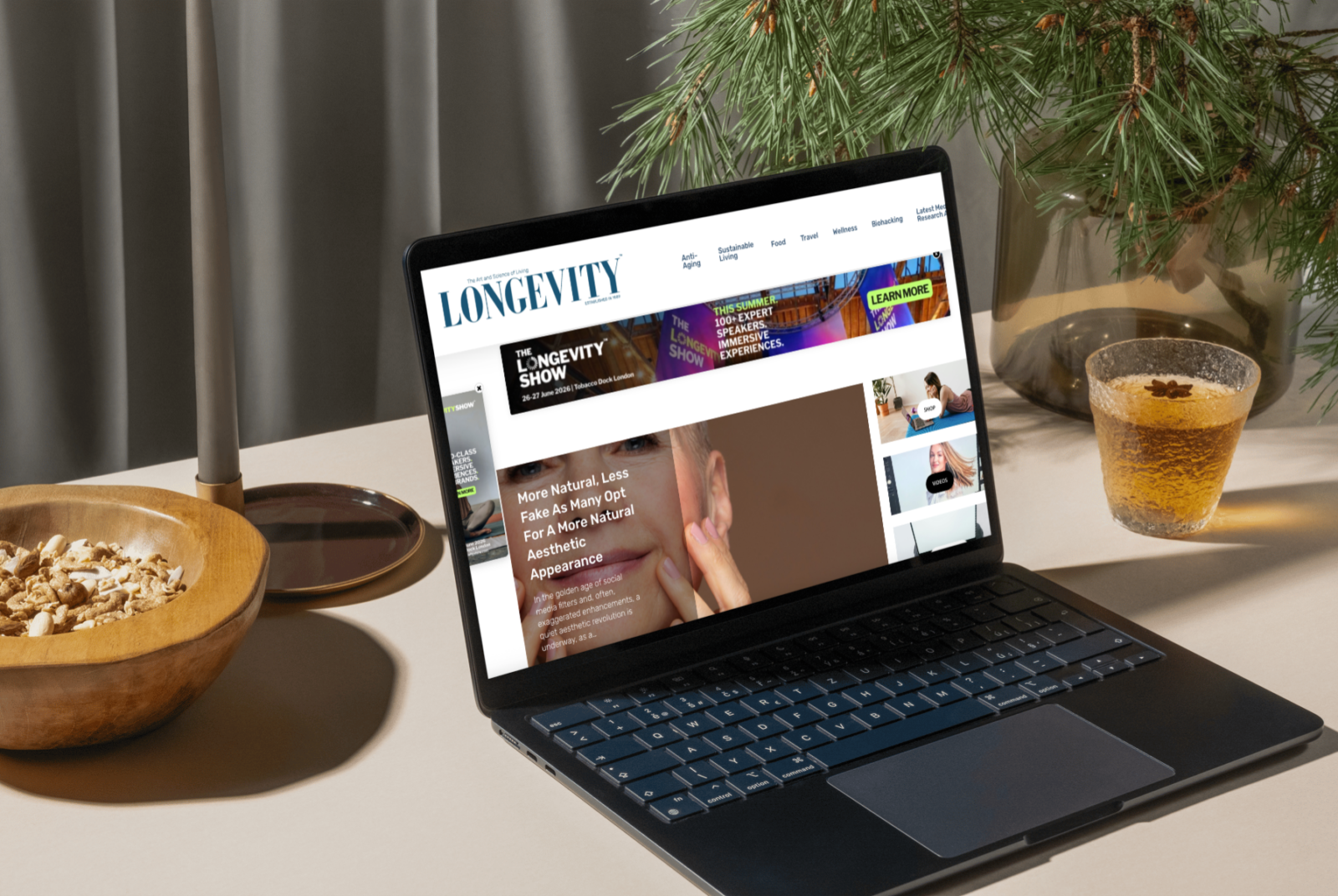
Wertheim Aymes eventually acquired Longevity from Times Media (then called Avusa) in 2012 and has continued to evolve the title in exciting new ways. The brand recently started testing the Longevity app that uses facial recognition technology to scan your features and give daily health updates.
Meanwhile, the Longevity website is stacked with content ranging from stories on the latest superfood and tackling plastic waste in the beauty industry to celebrity interviews exploring how they stay young. There’s not a paywall in sight.
“While I personally believe in the democratisation of longevity, the website has always been free for all,” says Wertheim Aymes. “We don’t want to get into that discussion.”
“However, I would admit, publishers like me were misguided in the early days of the internet. We should have put up paywalls from the get-go. We didn’t and I feel we’ve lost that battle. Others were much smarter and stuck to their guns and created paywalls so today their publishing income streams are much healthier.”
Longevity also runs events and wellness retreats to generate more revenue, while Wertheim Aymes is launching a podcast where she discusses “lessons in longevity” with South Africa’s leading anti-aging functional integrative specialist Dr. Craige Golding.
“We’re really going to talk about how we live longer – what are the basic tenets? Our approach is case studies, real stories, real people, because we are about that. We are not about scientists sitting in laboratories going, okay, take that drug and you’ll live forever.
“We want to deal with everyday stories of – I’m struggling, I’ve got an autoimmune disease, I’ve got diabetes, how am I going to live long?”
In terms of content, the podcast dovetails with the website as well as the glossy print magazine that now comes out once a year. While the print magazine, sold on newsstands, has a top-end South African readership, the website casts the net wider and has mainly American and UK users.
“The traffic on the website has varied according to the algorithm, what’s happening and whether I promote or I don’t promote – and I’m a small publisher,” says Wertheim Aymes. “So, we’ve had an instance where one article hit 1.2 million viewers and then we get on average, around a couple of 100. So, we’re still very niche in the world of things. We have about two million to three million impressions a year.”
The road ahead
Longevity is part of a media landscape in South Africa that has undergone massive change over the last few years, with a number of iconic magazines and newspapers closing down – including Daily Sun, City Press, Bona and Rooi Rose – or, like daily broadsheet Die Burger, stopping its print edition and going online. The media owners left standing have to be flexible and resourceful.
“What we’ve got now is a market of a few large publishers, then the rest are small independent publishers who can basically measure risk and work very nimbly,” Wertheim Aymes points out. “We create a variety of different revenue streams.
“My podcast will be a new revenue stream. I’ll have an e-commerce shop soon, which is another revenue stream. We cannot move forward without those things. The only way publishers will survive is to become brands and do a whole lot of other things – have outlets or sell or do something.”
Whatever challenges Longevity faces, it finds itself riding a wellness wave that continues to grow. The dedicated longevity-focused market is expected to reach approximately $610 billion by 2026. Broader estimates suggest the “longevity economy” – encompassing health, wellness, and financial services for aging populations – represents a $5.3 trillion opportunity today, projected to reach $8 trillion by 2030.
“We’re at our tipping point now globally, where this concept of longevity has just been brought into the stratosphere by billionaires and people like Bryan Johnson and Jeff Bezos who are putting millions of dollars into research to live long, preferably live forever,” says Wertheim Aymes.
“We have the Longevity Escape Velocity (LEV) Foundation, which is heavily funded by a lot of very wealthy people. Experts like Ray Kurzweil and Ageing Scientist Aubrey de Grey suggest LEV could be achieved within the next 5 to 12 years (by the late 2020s to early 2030s), driven by AI and biotechnology.”
“In every country in the world people are understanding now what it takes to have longevity. Do I want to be old and infirm because I’m going to now outlive my body or do I stay abreast? And if I’m young and born today, or I’m in my 20s today, what can I do? Should I be doing something?
“That’s where I think Longevity has its place.”