
Why the print industry is looking towards the future with renewed confidence
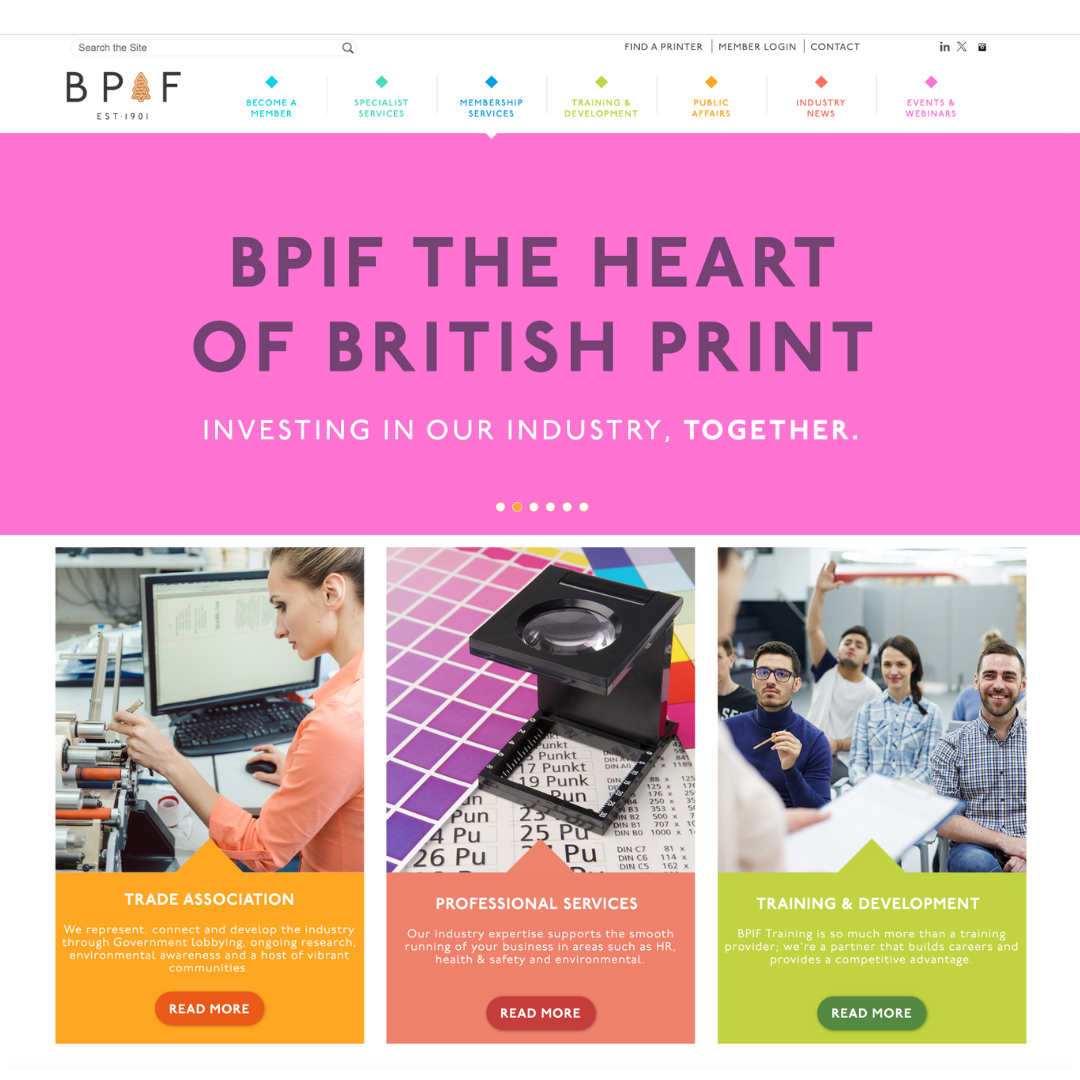
Ask Charles Jarrold about the health of the UK print industry and he reveals a remarkable statistic. “There are more print organisations in the UK than there are McDonald’s across Europe,” says the CEO of the British Printing Industries Federation (BPIF), Britain’s leading trade association for print.
“There are always things for us to think about and be concerned about but what I’m not excessively worried about is the overall vibrancy and position of the UK print industry. While it has changed in size and shape, it remains a massive industry.
“What we have seen over the last 10 years is the nature of print change as digital communications have come in. Where that puts print is being able to do unique things that online and digital can’t do. There are clearly challenges ahead but the sector is still very dynamic.”
As the printing industry has been buffeted by a number of headwinds over the last few years, including the Covid pandemic and the rise in energy prices, Jarrold and the BPIF have worked tirelessly to amplify the voices of print professionals to decision-makers, while helping its members with HR, training, health and safety compliance and a move to greater environmental sustainability.
When FIPP catches up with the CEO he is giving the keynote speech at the Power of Print conference in London, laying out the obstacles print has faced over the last couple of years and looking at the road ahead.

After declining by 16% in 2020, the industry fought back strongly, recovering by 8.7% in 2021 and 8% in 2022, before hitting choppier waters this year. “What we expect now is the industry will probably level out, maybe even reduce by one or two per cent, and then go back into what can be seen as the ‘new normal’,” says Jarrold.
“Two things have played through – firstly, we are pretty much through the longer-term structural change in communication that started with the arrival of the iPhone in 2007 and has had a significant impact on the overall shape of the industry. We are at point where we can say – this is what print now looks like.
“Secondly, we’ve gone through 10-15 years of monetary easing where capital had zero cost, interest rates were virtually zero and inflation was luckily low – that wasn’t really normal. It isn’t usual to have a world where you can go and borrow money at half a percent. So, the new normal is that capital has a cost attached to it, while we have also seen inflation is tracking higher.”
Labour pains
An indication that the print industry has indeed gone back to the future is the fact that the concerns now being expressed by BPIF members are similar to the issues raised five years ago as opposed to the problems that dominated the last two years, like energy and paper cost and supply issues.
According to Jarrold the biggest obstacle now facing the print industry, is finding and retaining staff. “The nature of our relationship with mainland Europe has changed, so there’s the inability to access that pool of labour,” he says.
“Then you have the more perennial issue, which is how do we attract and retain people, particularly young people, into our industry? How do we make sure that the print industry is a really attractive place to come in as a young person and then stay in for your career? It’s a complex problem and there isn’t a simple answer.”
Tackling the problem head on, BPIF has a separate training division – a virtual college that trains up over 400 apprentices for UK print and packaging employers, with training teams supporting trainees on accredited schemes. Of the 400, about half are trade apprentices and half are business skills apprentices, such as customer service.
“It’s about making sure that we can stand up and say – come into our industry and we will give you fantastic training. And actually, there’s also a pathway of accredited programmes that will take you through management training, so there is that progression.
“They are attractive training programmes and it’s helping the industry. We help our industry go out engage with colleges and schools and we’ve clearly got a role to play in battling the perception that print is just about newspapers and magazines. As much as I love those, it’s a much bigger industry and there’s a diversity of career options.”

The uniqueness of print
Looking towards the future, Jarrold sees print magazines and newspapers fitting comfortably into the publishing landscape alongside digital media.
“Print has an ability to engage the senses and communicate information in a very different way to digital media,” he points out. “The two sit together really well. There are a number of attributes about print which make it a really strong medium.
“Firstly, there’s the fact that it’s a persistent medium. If you get sent a magazine or a bit of print, you hang on to it if it’s attractive and interesting. It can end up in your kitchen or by the couch in your sitting room. It persists and it’s there for you to pay attention to when you want to.
“Also, the nature of how we use consumer and special interest magazines has changed. If you buy a product, a lot of the research and doing reviews now takes place online. You may then become an enthusiast and go and subscribe to, say, a quarterly enthusiast magazine. It’s a different type of product that is based around fantastic photography, high-quality print, beautiful paper and great editorial. You engage with it in a completely different way than you do digital media.
“A change in the nature of the use of print in the magazine market has obviously had a significant impact on the overall volumes of print, but it’s redefined its role within that mixture.”
With a misconception still existing that print is not environmentally sustainable it’s crucial, says Jarrold, that the media plays its part in getting a positive eco message out to the public.
“It is absolutely critically important, and we’ve got a very active environmental interest group that focuses both on supporting our industry in continuing its sustainability journey and secondly, getting that message across,” he says.
“The common perception is incorrect, and I think we have to continue to battle to educate people, to understand that we are in a sustainable industry and paper is a very sustainable product.”
While challenges remain, Jarrold is hugely positive about the future of the print industry.
“I look at how uniquely brilliant print is at doing the things it’s good at and they will not be displaced by other channels,” he says. “It’s about using it to its strengths in the right way and, when it’s used that way, I’m 100% confident about the future of the industry.”
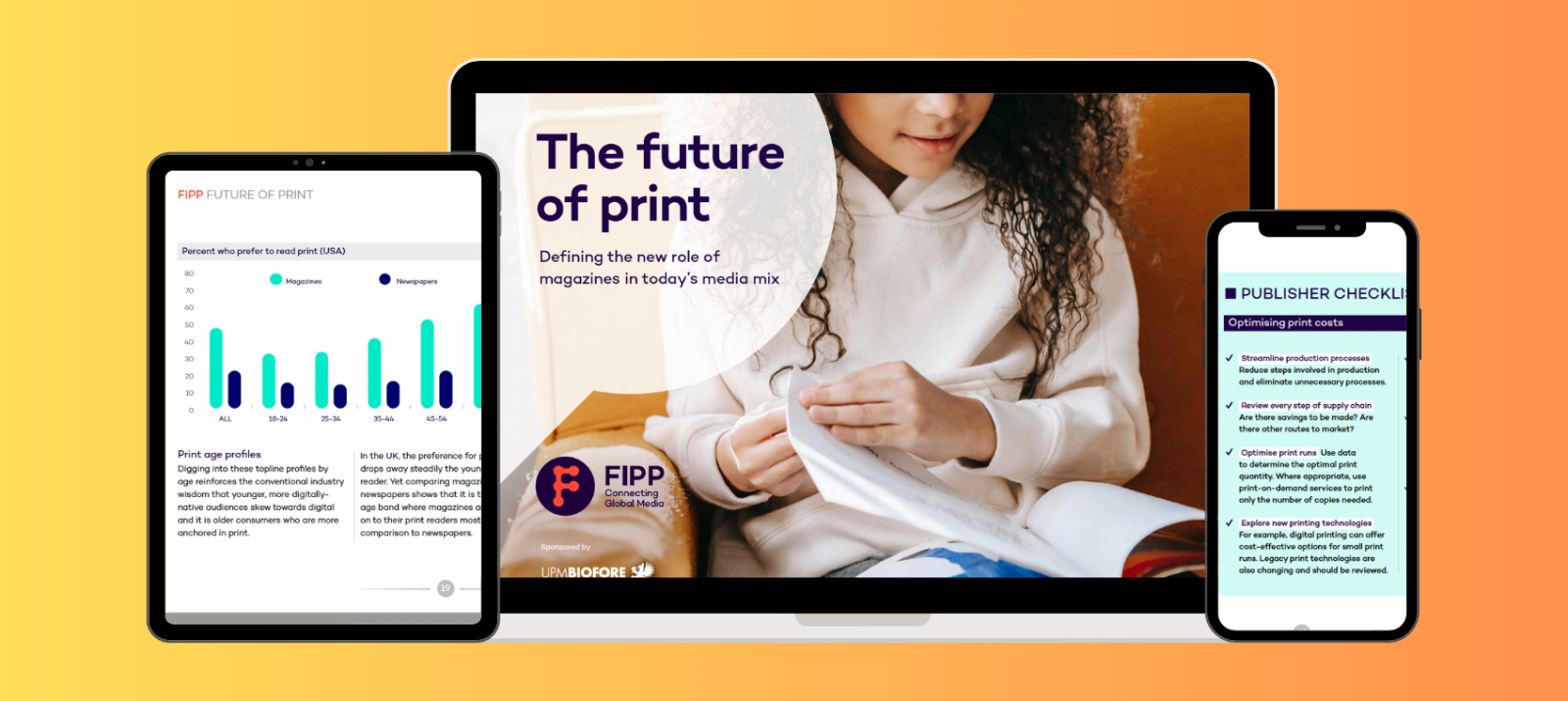
The future of print – defining the role of magazines in today’s media mix
Whether its declining sales or rising paper prices, print publications have encountered severe headwinds over the last few years. This report, exclusive to FIPP members, looks at why, despite all the obstacles, print will remain an important revenue stream for many media companies.
Download now