
XOTV’s Franz Michael Ressel on building a social media platform around creators —and user privacy
In recent years, people have started ringing the alarm on social media in earnest. Fears are rising about platforms selling user data or creating dangerous content echo chambers that, at their worst, can lead to events like January’s insurrection at the US Capitol. XOTV offers an alternative vision for the future of social media: a platform designed around supporting (and selecting) its creators and protecting user data.
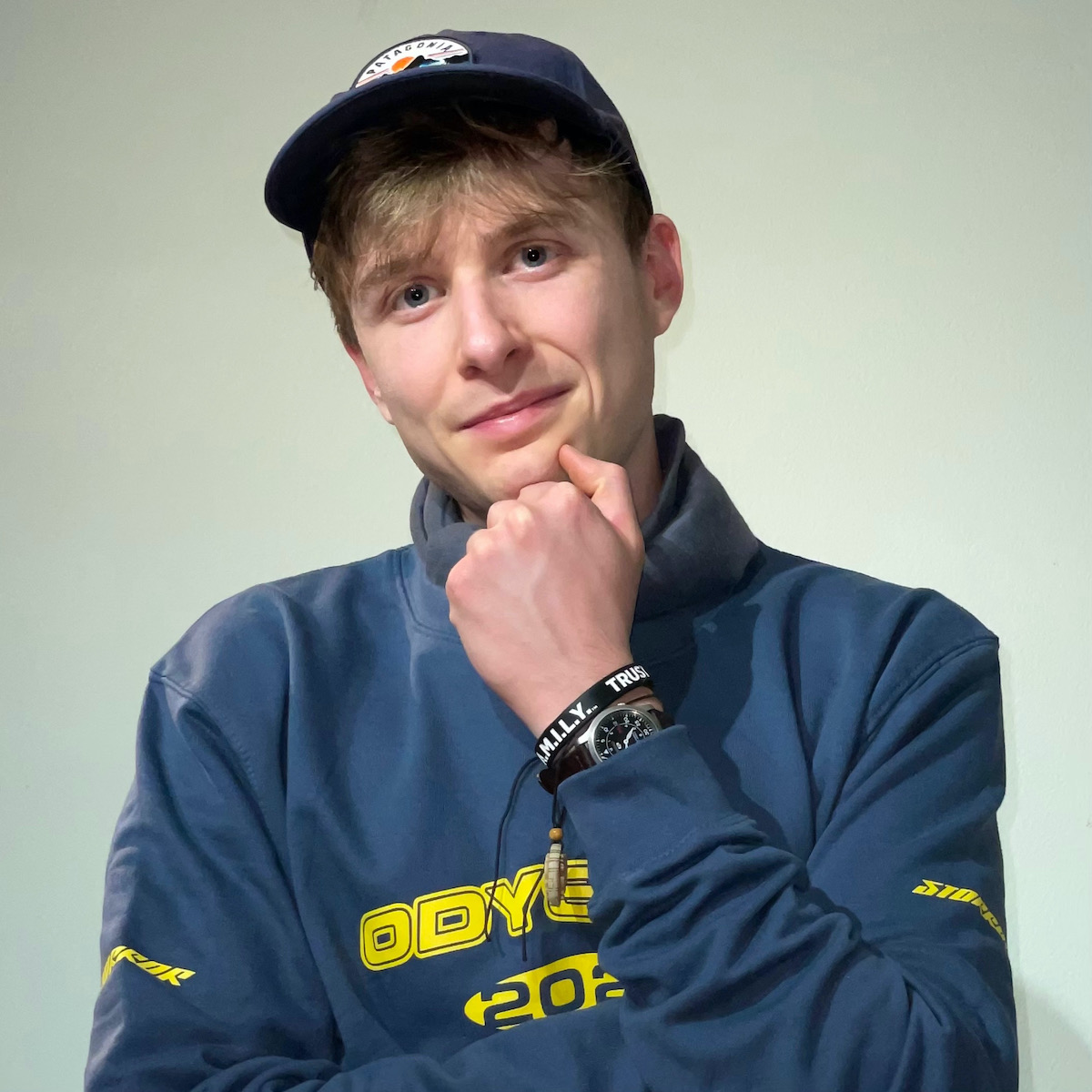
Co-founder and COO Franz Michael Ressel is a content creator himself. Here, he outlines XOTV’s blueprint for creating a profitable social media platform that doesn’t compromise on quality or ethics. It’s a social media platform with an emphasis on the social — a recognition that there are human beings on both sides of the screen.
What’s the elevator pitch for XOTV?
What we like to say is that XOTV is kind of like YouTube but without the bad parts. We are a creator-focused platform that allows creators to share their vision with their communities online and then build a sustainable business around that.
What’s XOTV’s origin story—what made you decide to develop your own platform?
The story started about three years ago. I was on YouTube for that time; I’d built up an audience of about 100,000 subscribers, so I was able to see first-hand what it’s like to be that medium-sized creator on YouTube, and in short it really sucked. One of the problems that I ran into was that the algorithms they were using to present my content to my audience shifted, so I went from having thirty, forty, fifty thousand views a video when I would upload it to 1,000 views and going down from there, which was kind of horrible after building up this whole audience. I realised YouTube and these other huge social media platforms, they really don’t care about the individual creator. Ultimately, their job is to collect data on the users, serve advertisements, and then sell that data. So I started talking to our two other cofounders and said “hey, why don’t we build a platform that really puts the creator first in everything that we do.”
What are the Creator Laws? What was the inspiration for them?
This was a very intentional thing. We knew that building a platform, we can’t just have a platform that’s a free-for-all. Most people want rules, they want some sort of civil aspect to the platforms that they use.
We wanted to make them laws because guidelines can change. But laws, there’s a due process. And everybody is treated equally in that system. Then it was building out that “due process,” so that if you do break a law, or if the community comes out and says “there isn’t a law for this, but it’s horrible that this creator did this,” there’s due process. We have a content advisory board that’s filled up with a really diverse set of people from around the world — different backgrounds, religion, race — that come together and vote on what happens in that specific circumstance and the process that we go through when something like that happens is then publicly available for everybody to look at.
You made a lot of tools available to your creators right off the bat (live streaming, selling merch, etc.). How has that impacted the experience or success of XOTV’s creators—and XOTV itself?
One of the huge, huge things this allows our creators to do is centralise their communities. One of the problems that we saw in the social media market is this idea, we call it “audience fragmentation,” where you’re splitting your audience across all these social media platforms (Instagram, YouTube, Twitter, etc.) to get a complete experience, and having to produce exclusive content for each one of those. So by integrating all those different content types underneath one roof, not only are we seeing from our creators that they are able to be more creative, it also makes it a better experience for users because you get all that in that single place.
There are three main ways to earn revenue on the platform: monthly subscriptions; a system called one time purchase, which is like buying or selling a song on iTunes but the creator sets the price (the minimum is US$1.95); and integrated sponsorships that we organise for our creators, and by having all these pieces in one place it allows creators to bundle these different types of content together.
We’re working with different creators, like we have a celebrity chef based out of South Africa and she’s putting on a show where she’s doing the video aspect of a show and then she’s also doing blog posts with the recipe. And for the end user, it’s all in one place.
Where do you see XOTV fitting into the landscape of social media/video?
Where we see ourselves is really this high-quality social media. Our whole platform is completely curated, so you can’t just come in and start uploading content; you have to apply. In our application process we say we look for intentional content. Through that curation, we are able to support our creators in this way that’s unprecedented by any other platform standard, where you actually have a real creator advisor that talks to you and can help you refine your content, help you make a business plan to earn money off of what you’re doing there.
So we’re not looking to be a replacement to YouTube or Facebook or anything like that. We’re actually in our own separate place for creators that really want to build a business around what they love to do.
We believe that privacy is a right and not a privilege.
How many creator advisors do you have? Do you assign them based on genre?
The creator advisors are separated in those different content areas and then they also have varying levels of expertise. So some of our creator advisors are really good with helping creators that are just starting off, while others are really good with working with creators that have a huge production.
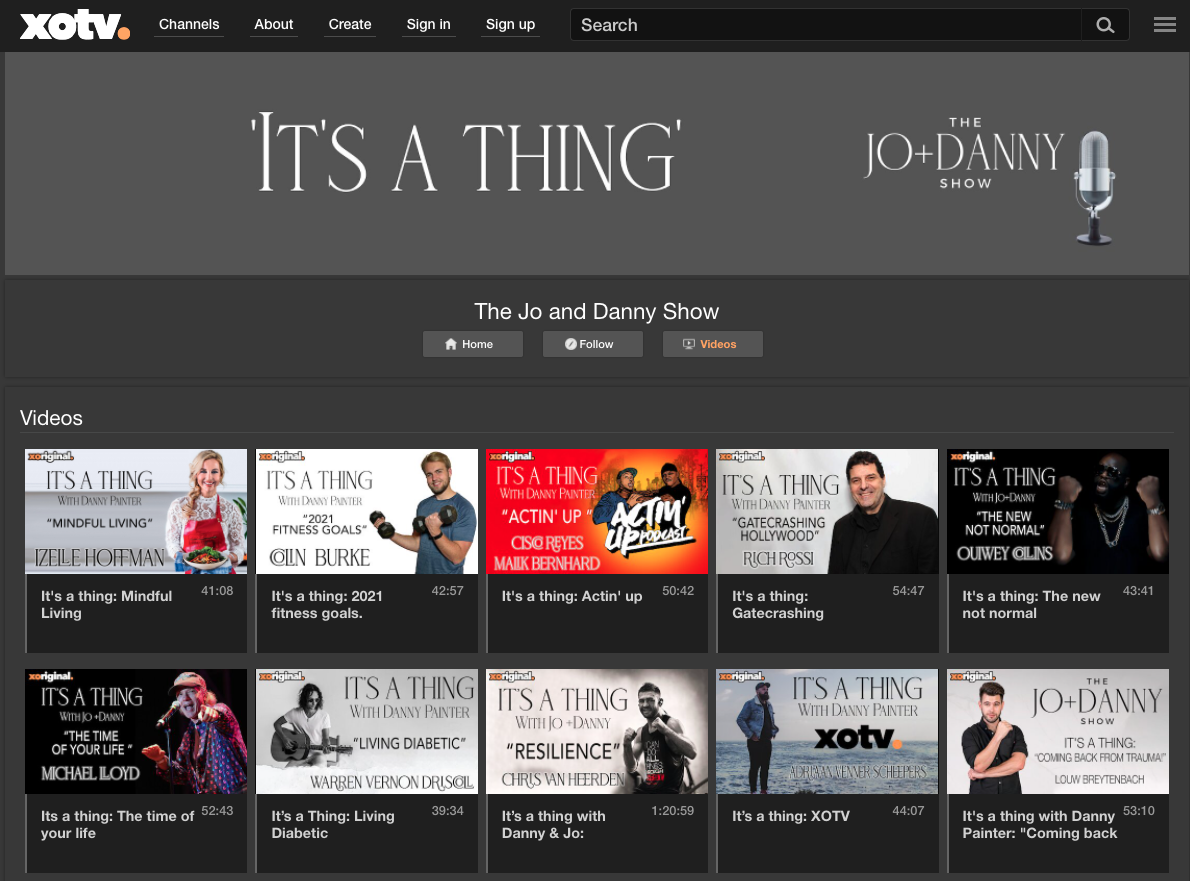
For instance, we have a talk show on XOTV called the Jo and Danny Show and they have this huge production, they work in a studio, and we have a creator advisor who has experience working in those environments, so they can help them refine what they’re doing. Right now in the company we have about five creator advisors, which doesn’t seem like a lot, but the great thing is that the creator advisors don’t take on a huge amount of work when they’re dealing with this stuff, right, so it’s usually little kind of nudges in the right direction, so each creator advisor is able to help hundreds of creators.
Why was protecting user data so important to you?
We believe that privacy is a right and not a privilege, and what we see a lot on other platforms is you have this idea that privacy is kind of a commodity to be bought and sold, which is not at all what it is. We have doors for a reason, we have walls, but then on the internet for some reason it’s come to this place where it’s like everything you do is being tracked and sold to somebody somewhere to be used in some way with you. The direction that it’s going is a dangerous path to go down. So we decided from the very beginning to say we are not going to do that.
How does XOTV stay profitable without compromising audience data?
This is a big thing from our perspective because when we first started off, a lot of people were like “you can’t do that. You can’t be privacy focused and then make money at the same time.” So it was kind of a challenge to say “we are the example of how you can do that.” You can tell a platform is privacy-focused usually pretty easily because if it’s free, then you are the product; if you’re paying for it then it’s the product. So that’s really one of the big things: most of the content on the platform is paid content, you’re paying for it with money.
We didn’t want to do overlay advertisements, so we work with our creators to actually organise sponsorships to integrate those products directly into the content. And then at that point, the products are in the right content, so if we have a car channel — somebody who’s working on cars, repairing cars, maybe they’re focusing specifically on BMW. Well now BMW has a new car, okay, let’s sponsor them there. You don’t have to track the data in order to place that into the content.
The way that we actually make money as a platform is we do a revenue share with our creators. Our creators get 70 per cent, we get 30 per cent, and through that 30 per cent, we’re able to cover all the costs. All the costs of streaming the content out there, all the costs of supporting the creators, even having physical creator spaces.
We control that gate through curation, so we’re able to make sure that we can stay profitable at any level because we scale up based on the revenue that’s coming through from those direct-from-consumer payments and the integrated sponsorships.
Algorithms seem to change on social media all the time. How do you go about adjusting yours?
On the XOTV platform, we’ve actually stayed away from algorithms almost completely. The entire homepage of XOTV is actually curated by hand. And for individual users, when you follow people you get a feed of content that comes in. A huge thing for us is that when you go to the XOTV homepage, you’re able to find content that maybe you wouldn’t normally find. It breaks you out of that filter bubble to allow you to have new conversations. An advantage for us is that, because we have that curation, we’re confident in saying that you can randomly click on any piece of content on the entire XOTV website and you’re going to be guaranteed a base level of quality.
Is there a certain type of content (genre, format, etc.) that is especially well-suited to XOTV’s platform?
What we generally say is that the best-suited content for XOTV that we’ve seen works really well is content that breaks down the barrier between the person who’s watching that content and the person who’s making that content (vlogs, tutorials, etc.). And we have a lot of people that are out there making content for us, like we work with Mopreme Shakur, Tupac Shakur’s brother, and right now we’re working with him on a show that is taking us into his life and the people around him and the entertainment industry.
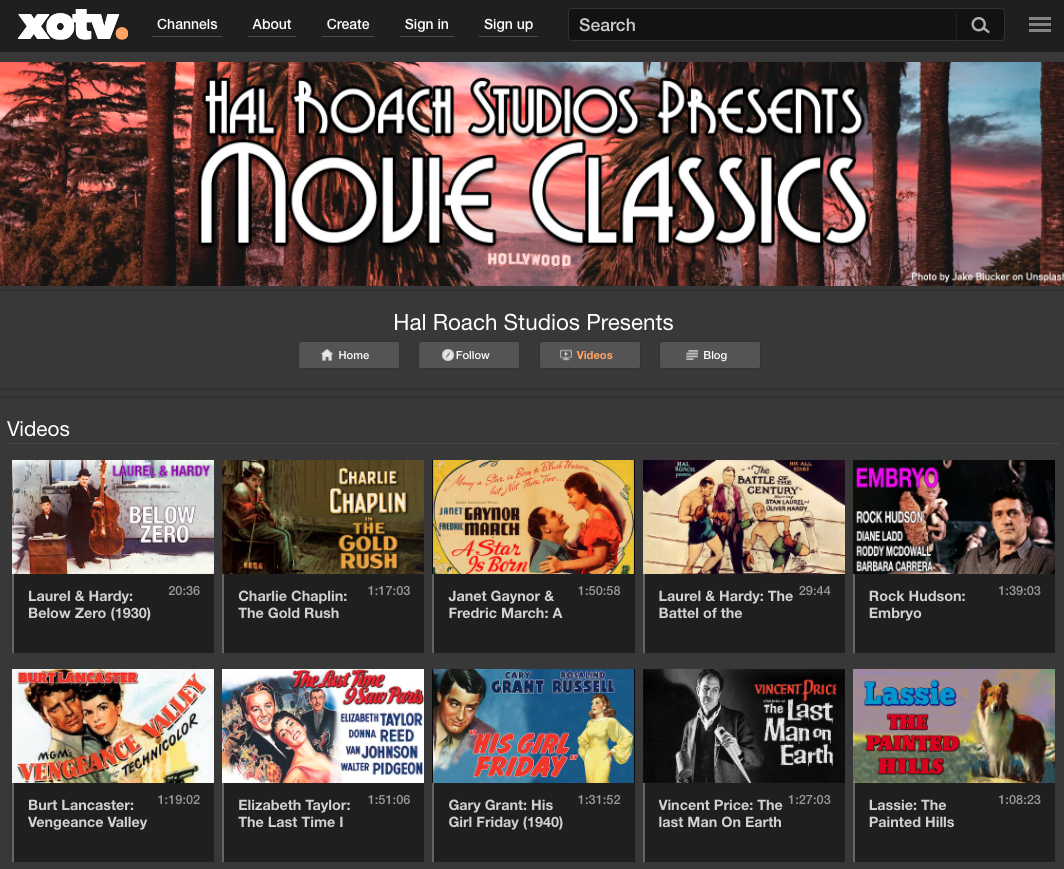
We also have a channel that features all of the movies and TV shows from the Hal Roach film library. It’s movie content, it’s TV shows, but then that’s sitting right next to somebody who’s walking around, it’s a five minute video of them talking about their day or something like that.
Do you have examples of channels that have adapted really well to your platform or had interesting innovation?
It’s almost like XOTV is a content accelerator for a lot of creators. The curation process brings you to sort of this extra level. The creator advisors support the creators and give them those little nudges and you see extreme jumps in quality.
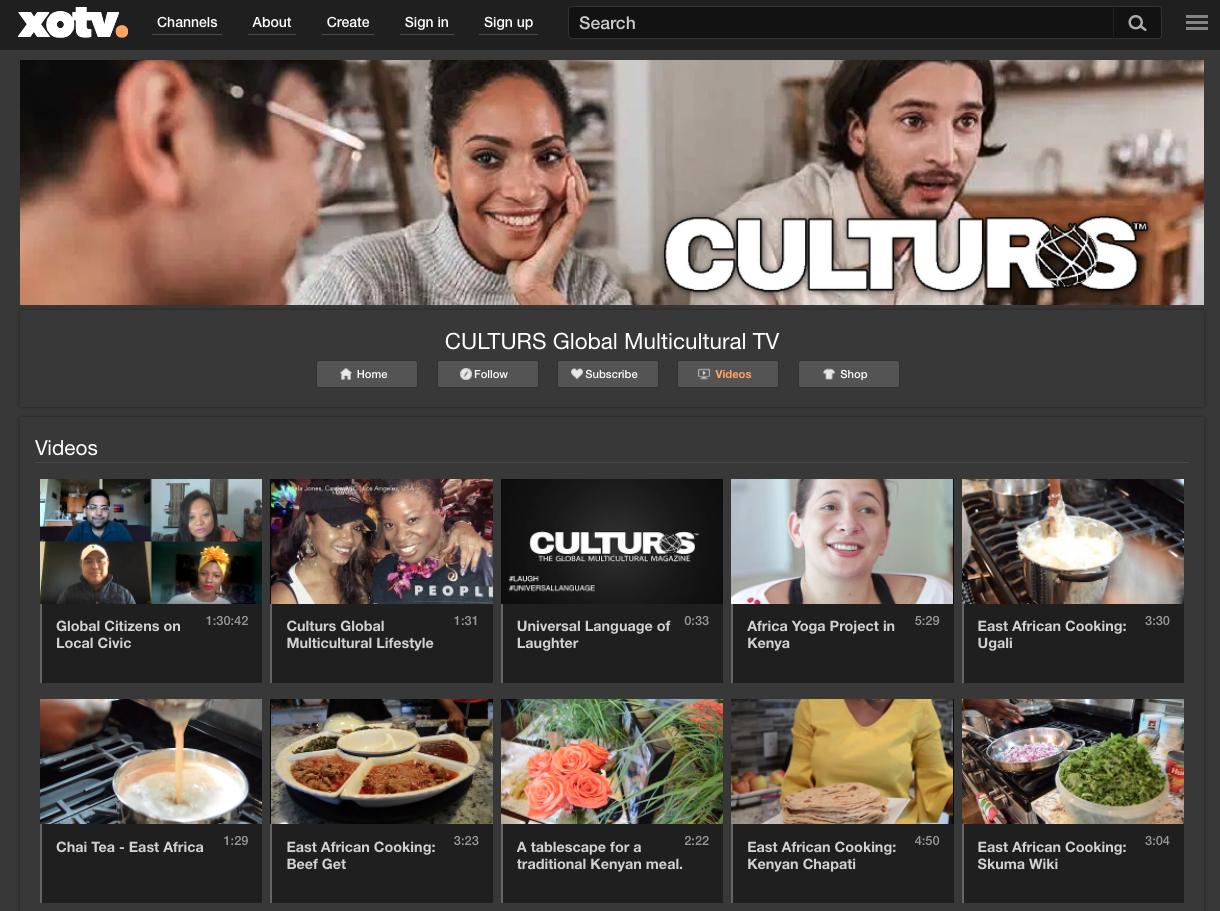
One example is we work with a magazine called Culturs Magazine. They’re doing basically a Netflix-like channel on XOTV. They had videos uploaded to YouTube but never launched their channel or worked on a strategy to it. XOTV encouraged them to the value of video and got the process started to get going. Since then, Culturs has created a solid strategy and are looking forward to continuing with a robust channel because they can see the value that XOTV offers.
How close do you feel like you are with all of your individual creators? Do you feel like there’s a community of creators who feel like they know each other and they know you?
Yes. Actually, I make a note to talk to every single creator that comes onto the platform at some point. A huge thing for us is that XOTV is a human platform.
And then a huge thing for us as we’re moving forward is that network of creators around the world. Our goal is to be building this network of creators that comes together and supports each other instead of pushing each other down. It’s a really great ecosystem for collaboration and we’ve been promoting that. The really nice thing is that you can work with your creator advisor and you can say “I saw this person on XOTV, I want to work with them.” That creator advisor can get in contact with the creator advisor that’s managing that other person and then you have the connection right there.
How did your background as a content creator affect the way you’ve structured XOTV?
It’s made a huge impact. I’m still creating content today. I have channels on XOTV where I make stuff, we have a weekly vlog that we post and make content on, and we have other people from the company that contribute to that as well. There’s a lot of platforms that say they’re creator focused, but we say to our core we are creator controlled. Every decision we make does look at it from that creator perspective. Because ultimately, we want the platform to be this thing where you can go on as a creator, you upload your content, and we take care of the rest. I want to make this platform that I would use.
Setting the standard for the future of privacy is another huge aspect for us.
What’s next for XOTV?
Right now, a lot of the integrated sponsorships that we’re doing are manual. But we’re actually building up a completely automated system that takes advantage of an overlay advertisement market that you see on something like Google AdSense and combines that with the advantages of an integrated advertisement market, so then advertisers have a marketplace they can go to, purchase ads just like you would purchase on the overlay side of things, and then those ads would be integrated into the content in this really cool way. There’s a lot of really awesome technology that’s going into it.
One of the other things that we’ve been working on now as we build up more of our analytics tools, because obviously advertisers want to see those details, is providing the user with the decision to say “okay, do I provide this data or not” before it comes up. It’s not an opt out, it’s an opt in, and it’s an educated opt in, saying “this is what your data’s used for, this is where it’s going, at any point you can opt out.” So really setting the standard for the future of privacy on that side of things is another huge aspect for us.